
Accountant Shortage 2026: Why the Supply Crisis Is Good News for Job Seekers
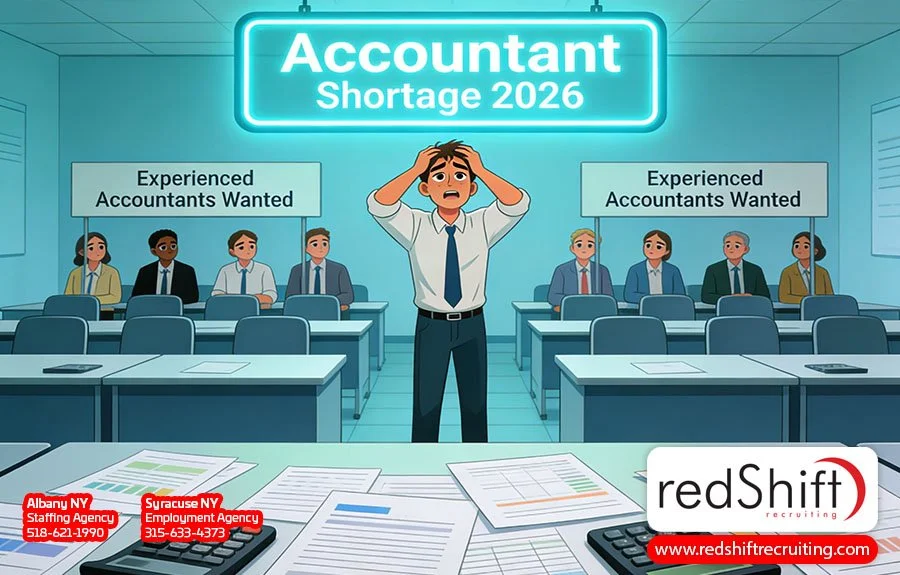
You've probably heard a lot about jobs changing or disappearing as artificial intelligence (AI) disrupts the employment market. But not every industry is facing the same structural stresses. In the accounting field, for example, one of the biggest issues isn't a lack of available work: it's a lack of qualified human professionals to fill the current openings.
While you may not see daily national headlines about the accountant talent deficit, the data tells a striking story. The Bureau of Labor Statistics (BLS) projects substantial, consistent demand for accountants and auditors, with an estimated 5% growth rate translating to more than 124,000 job openings every year through 2034. This expectation of high demand is in conflict with a professional talent supply chain that has been shrinking for a decade, creating a field that is growing, but chronically short-staffed.
This isn't a new issue: declining enrollment in accounting programs over the past decade has led to the market generating far fewer degrees than the open roles require. When you combine this with rigid CPA licensing requirements and an aging Baby Boomer workforce moving rapidly toward retirement, the result is an increasing number of corporate finance teams and accounting firms sitting on open roles for months on end.
For experienced and aspiring accounting professionals, this supply-and-demand mismatch has created a job seeker's market where candidates hold significant leverage over compensation, flexibility, and career trajectory.
Accountant Shortage 2026: A Supply Problem, Not an AI Problem
The accounting shortage didn't just appear overnight. The talent pipeline has been narrowing for years, driven by distinct factors related to structure, demographics, and perception.
The 150-Hour Barrier
To become a Certified Public Accountant (CPA), candidates have historically been required to complete 150 semester hours of college coursework—effectively a mandatory fifth year of tuition, book costs, and delayed earning potential. With starting salaries in public accounting often lagging behind flashier fields like tech or investment banking, the ROI on that fifth year became incredibly difficult for some students to justify. Consequently, first-time CPA exam candidates fell by more than 40% between 2016 and 2024.
To mitigate this growing emergency, regulatory officials are taking action to make the certification process more accessible and rebuild the CPA pipeline. Several states have passed legislation or updated state board regulations to create alternative pathways that allow candidates to achieve full CPA licensure with a standard 120-hour bachelor's degree combined with additional structured work experience, bypassing the traditional 150-hour academic requirement and reducing the time and expense of full certification.
The Demographic Shift
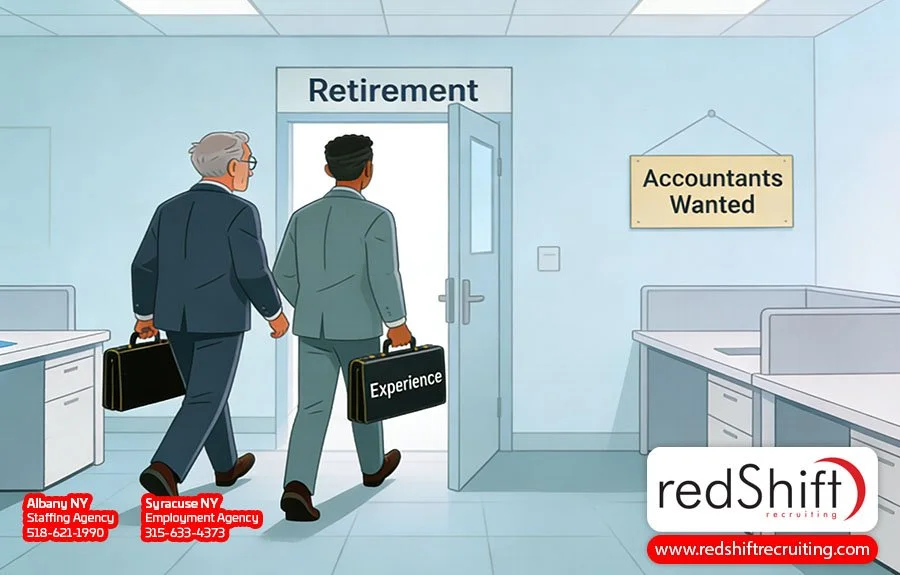
As the remainder of the Baby Boomer generation reaches retirement age, they are leaving with decades of institutional knowledge, tax nuance, and hard-won technical expertise. The millennial and Gen Z talent pools aren't large enough to absorb the resulting vacancies, creating a severe talent vacuum at both the staff level and upper-management tiers.
The Misconception of Automation
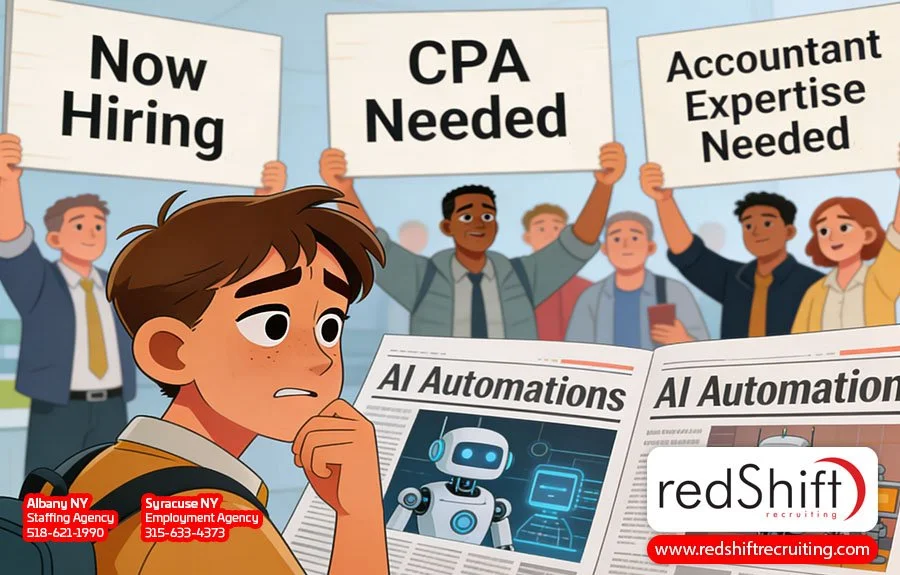
The accounting profession still battles an outdated reputation for being dull, repetitive, and highly prone to AI displacement. The irony is that this fear is driving students away at the exact moment the industry is becoming more dynamic and intellectually demanding.
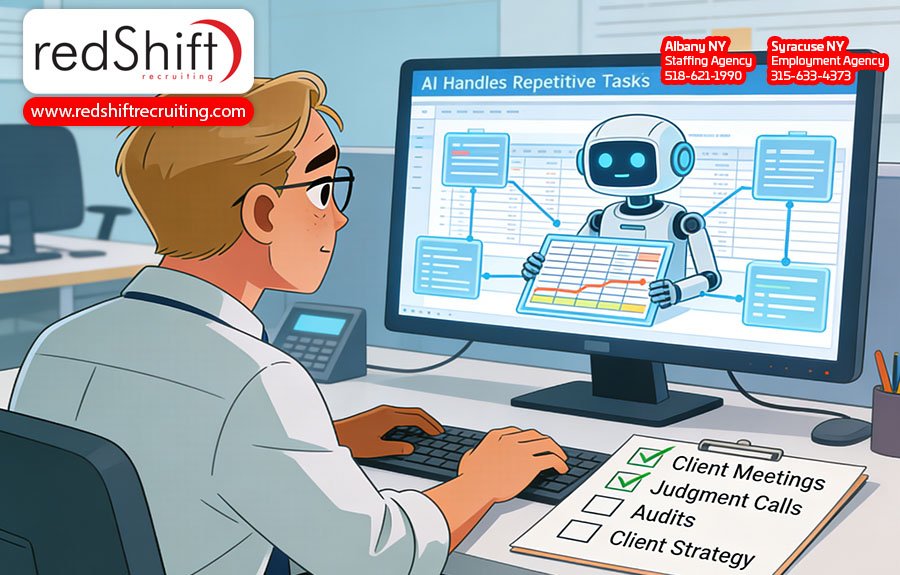
While GenAI and advanced automation are successfully taking over structured tasks such as data entry, basic reconciliations, and standard tax preparation, they cannot replace human judgment. AI cannot exercise professional skepticism during a complex corporate audit, it cannot navigate ambiguous tax gray areas, and it absolutely cannot sign a financial document where a human signature carries strict legal liability. By automating routine tasks, software is taking away the boring work, leaving behind higher-value, strategic accounting roles that require uniquely human skills.
Where the Accounting Talent Shortage Hits Hardest (And the Most Opportunity Is Available)
Notably, the accounting talent shortage isn't uniform across every corner of the field. Some specializations and markets are feeling the squeeze acutely, while others aren't as strapped. There's also encouraging new data showing an increase in undergraduate accounting program enrollments over the past few years as more students are attracted to career paths that offer long-term security and high earning potential. The pipeline gap won't close overnight, but the trend is moving in the right direction. For anyone weighing a career in accounting or looking for new opportunities in the field, it's a good time to make a move. Here's where hiring demand is outpacing supply most sharply and where qualified candidates have the most room to negotiate.
Public Accounting
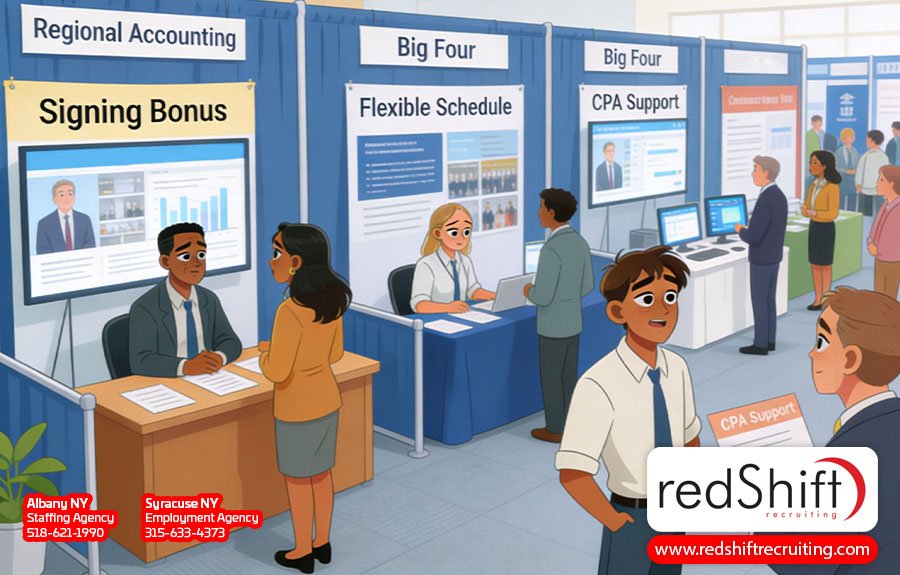
From regional practices to the Big Four, many CPA firms are struggling to find experienced staff and senior-level accountants. To compete with massive national firms, regional practices are aggressively raising starting salaries and offering sign-on bonuses to create more competitive compensation packages that attract qualified professionals.
The demanding “busy season” hours during tax season and audit cycles haven’t disappeared, and public accounting roles still require long hours at certain times of the year. This commitment can be a significant factor for some accounting talent, although rising salaries may help offset that tradeoff. Additionally, firms are promoting strong performers more quickly than they did in the past because experienced accountants are increasingly difficult to replace, making this field a strong choice for ambitious candidates who want to accelerate their career trajectory. Two or three years of high-level public accounting experience can now act as a major career catalyst, opening doors to corporate controller and leadership career tracks much earlier than many candidates expect.
Corporate and Industry Accounting
On the corporate side, accountant shortages are reshaping how companies build their teams. In the past, key functions like Financial Planning & Analysis (FP&A), internal audit, and corporate controller positions have been strictly gated by rigid experience requirements. But as many firms struggle to find mid-career talent to fill these critical accounting roles, they are increasingly investing in entry-level hires and training them internally. This trend is visible in highly regulated sectors, including:
Healthcare: Requires experienced professionals to manage medical billing cycles and highly complex compliance work.
Manufacturing: Strong need for professionals who understand real-time supply chain logistics and inventory cost accounting.
Government Contracting: Heavily reliant on specialized accounting to meet strict federal reporting frameworks.
The regulatory complexity, strict deadlines, and compliance work these roles deal with make them particularly difficult to staff, and talent gaps have real consequences. Understaffed teams fall behind on reporting cycles, resulting in delayed filings with federal agencies and material weaknesses in internal controls. Far from being minor compliance footnotes, these failures can damage a company's credibility, trigger regulatory scrutiny, and, in serious cases, expose leadership to legal liability.
Fractional and Advisory Services
For accounting professionals five to ten years into their careers, the talent shortage has unlocked a lucrative alternative to the corporate grind: fractional consulting. Small and mid-sized businesses that cannot find or afford permanent, full-time CFOs or controllers are turning to project-based professionals who can deliver high-impact accounting services and advisory work on demand. Fractional accountants can often command premium hourly consulting rates to lead system implementations, clean up messy ledgers, or guide organizations through annual audits, all while maintaining complete autonomy over their schedules.
Geographic Opportunities
While major metros like New York City or Chicago command the headlines, mid-sized regional labor markets and suburban corridors face a much harsher talent ratio. Because the local candidate pool is smaller, an ambitious professional looking at secondary markets may face significantly less competition, faster upward mobility, and local firms willing to negotiate on flexibility, work-life balance, and other perks.
What Employers Are Actually Looking For Right Now
A smaller accounting workforce has shifted the balance in candidates' favor, but that doesn't mean hiring managers are signing on anyone who can use a spreadsheet. If you're entering or changing jobs within the field, understanding what skill sets are actually showing up in job descriptions right now is an important competitive advantage for job seekers of all experience levels. The following traits and trends are consistently rising to the top:
Coachability Over Perfect Expertise
Employers facing a talent scarcity are increasingly willing to hire for potential. In place of extensive expertise, hiring managers want a baseline technical literacy and a strong, demonstrated willingness to learn. Research shows that soft skills, such as communication, project management, and the ability to stay calm under deadline pressure during busy seasons, carry more weight in initial screening processes than most candidates assume. These soft skills are often the difference between good accountants and truly exceptional ones.
AI Literacy Over Tech Fear
Modern accounting roles increasingly expect candidates to be comfortable working alongside automation tools. That doesn't mean you need a background in software engineering or a deep understanding of machine learning, but you do need to prove that you understand how modern automation platforms plug into accounting workflows, which routine accounting tasks are being handled by software, and where human oversight must step in to verify data. Treating automation as a tool to be used rather than a threat to hide from helps differentiate you from other candidates and helps you future-proof your skills for whatever changes come.
The Career Changer's Edge
Career changers bring real value that even experienced accountants who've spent their entire career in public accounting may not have: a native understanding of their specific industry. If you are transitioning from healthcare administration into healthcare accounting, or from plant floor management into manufacturing cost accounting, you possess deep operational knowledge that an accounting firm would otherwise spend years teaching you. Don't bury these specialized skills on your resume; make that industry context the focal point of your application materials so hiring managers clearly see what you bring to the table.
A Mutual Focus on Work-Life Balance
The old-school culture of working 80-hour weeks drove some accounting talent and future leaders out of the industry. Modern firms know they have to change to survive and stay competitive in a candidate market that increasingly values flexibility and work-life balance even over traditional draws like rising salaries and career growth. Flexible staffing models, mandatory hybrid/remote options, and capped busy-season hours are now primary recruiting tools, and firms that refuse to adapt are finding their talent pool shrinking faster than ever.
Frequently Asked Questions
What's Causing the Accountant Shortage?
The accounting shortage is the result of multiple factors compounding over the past decade: the traditional 150-hour CPA requirement, a wave of retirements among experienced CPAs and senior accountants, and a persistent perception problem that painted the industry as dull and repetitive, as well as vulnerable to automation. These barriers and misconceptions have led to fewer students choosing accounting programs or pursuing CPA licensure over the years, creating a shortage of available professionals just at a time when openings are increasing. CPA candidates peaked in 2016 and have declined significantly since that high point, according to AICPA's 2025 Trends Report. However, there is encouraging news on the horizon, as more flexible pathways are becoming available for aspiring CPAs, and recent data shows three consecutive years of undergraduate enrollment growth, making this the best time for ambitious professionals to take advantage of the current labor market.
Do I Need a CPA to Work in Accounting?
No. Most entry-level, corporate, and operational positions, such as staff accountant, junior FP&A analyst, and accounts payable/receivable specialist, do not require a CPA license. The credential becomes vital later in your career, as it determines your ability to sign official audits, step into executive advisory roles, and maximize your long-term earning potential. Furthermore, because of the current accounting shortage, many employers will now fully subsidize your CPA exam preparation materials and testing fees once you are on board.
Will AI Take Accounting Jobs?
AI is changing the nature of the accounting professional's workload, not eliminating the position entirely. The repetitive tasks and transactional routine work that used to dominate a junior accountant's day are being automated, but the complex, judgment-based work that software cannot replicate is more critical than ever, and professionals who can bridge routine work with strategic insight are becoming the most valuable people in the room. This means employees are being asked to step into analytical, strategic, and advisory work much earlier in their careers, creating a high demand for tech-literate professionals who can interpret data and translate it into clear recommendations for business and finance leaders. AI continues to be a major factor in automating routine tasks across the profession, making AI literacy one of the most valuable skills a candidate can bring to modern accounting roles.
What Accounting Specializations Are Most in Demand?
Corporate advisory opportunities, data analytics, and specialized compliance work are all growing rapidly. Additionally, finance and accounting leaders are aggressively seeking FP&A professionals who can provide forward-looking predictive forecasts to guide business strategy, rather than simply basic financial reporting. Forensic accounting and fraud examination are also increasingly sought after, as regulatory scrutiny has intensified and companies face growing pressure to detect and prevent financial misconduct.
Is Accounting a Good Career for Someone Without a Four-Year Degree?
Yes, an associate degree combined with a foundational bookkeeping, payroll, or specialized software certification is a completely legitimate entry point into corporate accounting support and local firms. Due to the overall talent crunch, entry-level salaries at this tier have risen significantly. Flexible opportunities in temporary and temp-to-hire positions can also help skilled talent without a bachelor's degree gain valuable experience and move into permanent roles that may otherwise have been unobtainable without meeting additional educational requirements. While you will eventually hit a career ceiling without a bachelor's degree or a CPA credential, a two-year degree or relevant certification can help you get your foot in the door while you build out your qualifications.
Conclusion: The Accounting Shortage Is Your Opportunity
While recent data shows improvement, the accounting talent crisis isn't going away quickly. Demographic headwinds, a leaner CPA pipeline, and the profession's ongoing evolution mean that finance leaders and hiring managers across every sector will spend much of the next decade competing aggressively for a finite pool of qualified professionals. For job seekers—whether you're a recent graduate, a mid-career professional eyeing a pivot, or an experienced CPA ready to step into advisory roles—that competition works directly in your favor. Compensation is rising, flexibility is becoming more common, and the traditional gatekeeping that once made accounting careers slow to climb is giving way to faster tracks and broader opportunity. The firms and companies that will win are the ones investing in talent now, and the professionals who will thrive are the ones who recognize that the shortage has shifted the leverage to their side of the table.
Whether you're looking for your next accounting role or trying to build a team in a market where qualified candidates are hard to find, redShift can help.

Article Author:
Ashley Meyer
Digital Marketing Strategist
Albany, NY