
Manufacturing Jobs That Can't Be Automated — And Why Employers Can't Fill Them
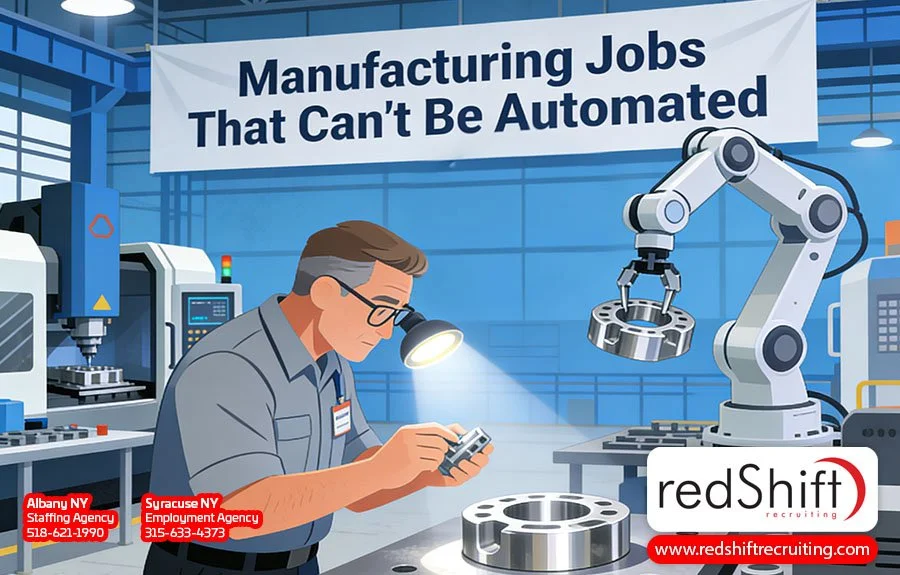
Somewhere on a factory floor right now, a machinist is making a call that isn't in the manual. The part just came off the machine looking fine — the dimensions are within tolerance, and the surface finish is acceptable. But the machinist picks it up anyway, turns it over, and finds something: a subtle warp that will cause the assembly to fail under load. It won't happen today or tomorrow. But it may happen three weeks, three months, or three years from now, at the customer's facility, at precisely the moment when it counts the most. So the machinist flags it, adjusts the setup, and moves on.
Those few minutes don't show up in the statistics. And it wasn't an algorithm that caught the mistake. The human professional did, because they've run thousands of these parts, and they know what right feels like. This human judgment and expertise are what quietly keep production runs from failing.
The public conversation about AI and jobs often focuses on white-collar work, but manufacturing isn't exempt from the automation discussion. Some roles are genuinely at risk: repetitive, single-motion assembly has already been a target for decades. But alongside the disappearing roles is a separate problem: a shortage of skilled workers in essential jobs that can't be replaced by robots. That shortage isn't a product of recent economic volatility. The tariff headwinds, supply chain realignments, and shifting consumer demand of 2025 and 2026 have made some employers cautious about expanding general headcounts, but the hunt for specialized talent hasn't slowed down.
Why Manufacturers Can't Find Enough Skilled Workers
Artificial intelligence and automation have been reshaping manufacturing for decades, gradually absorbing more repetitive and predictable work as the technology becomes more advanced. These are the tasks machines can perform more cheaply and reliably than humans, and the appeal to employers is obvious. Machines don't have salaries, benefits, or overtime rates. They can run back-to-back shifts without exhaustion, and they don't need onboarding, management, or sick days. They can also take on dull, dirty, and dangerous work, protecting human workers from the injury risks those jobs can carry. It's not hard to understand why automation is an attractive option for manufacturers trying to control costs and reduce risk.
Just as understandable are the concerns of the workers watching it happen. Some roles are genuinely at risk, including entry-level positions that have historically been accessible on-ramps for candidates without advanced degrees or specialized credentials.
But while the jobs being lost to machines tend to dominate the conversation, there's another side to the story. Manufacturing jobs that can't be automated are in serious and growing demand, and there aren't enough skilled workers to fill them.
To understand why, consider the types of tasks a robotic system actually does well on a manufacturing floor: moving product down a conveyor belt, joining the same two components thousands of times per hour, applying labels without variation, and other high-volume, consistent tasks. What it struggles with is determining why a machined part is developing a pattern of subtle defects that don't appear in the sensor data or making the real-time judgment call that salvages a borderline batch before it becomes scrap. These require human skills that AI can't easily replicate: the kind of problem-solving that requires not just technical knowledge, but familiarity with a specific machine, a unique process, and the particular ways a line behaves when something is off. It's the ability to read a situation that no algorithm has been trained on, because no two situations are quite the same.
These types of roles offer real and growing career paths. According to a 2024 study by Deloitte and The Manufacturing Institute, U.S. manufacturing could need as many as 3.8 million new workers between now and 2033, with up to 1.9 million of those positions potentially going unfilled if the underlying workforce challenges aren't addressed.
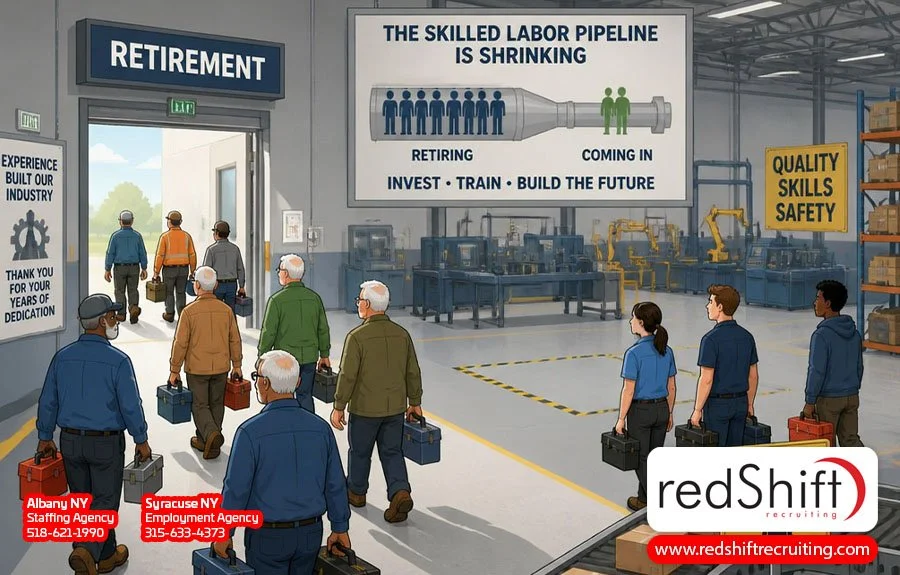
Those challenges are structural, not temporary. An aging skilled workforce is retiring from the trades faster than new workers are entering. Education pipelines that once produced machinists, welders, and technicians were dismantled or reduced over decades of cultural pressure steering students toward four-year degrees, and rebuilding them will take time. And then there are macro pressures ranging from shifting immigration patterns and laws affecting the broader labor pool to decades of offshoring that eroded domestic manufacturing culture.
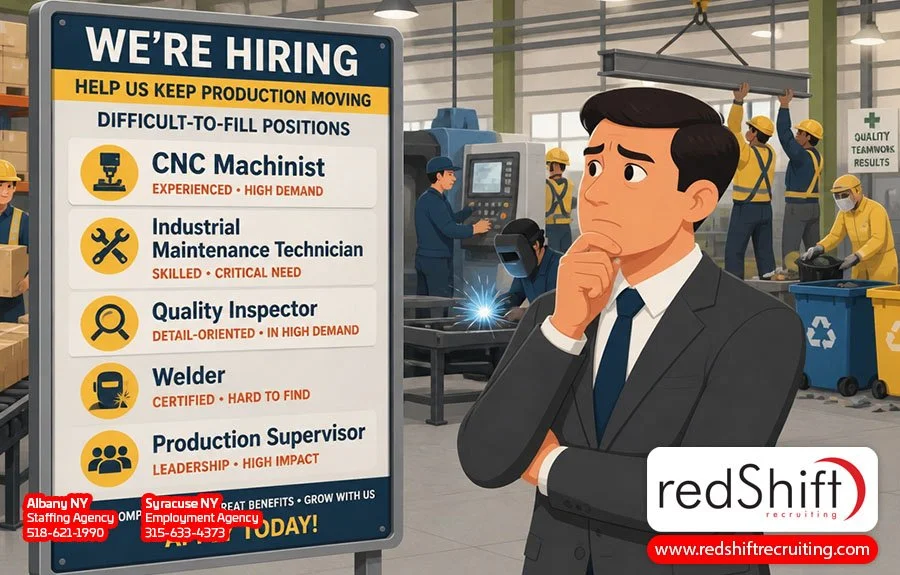
The roles facing the widest gap between open positions and available workers are those requiring the most hands-on experience, such as:
CNC machinists and operators
Quality control inspectors
Custom fabricators and welders
Maintenance and industrial repair technicians
Production line leads and floor supervisors
When manufacturers talk about hiring for these types of roles, they're quick to clarify that finding applicants isn't the hard part. Finding people who can actually do the job is. Unlike some roles where the knowledge gap can be closed fairly quickly, a manufacturer can't employ a general candidate and expect them to be fully productive within a week. Turning a new hire into a reliable machinist or inspector takes months or even years, requiring extensive training on specific equipment, tolerances, and processes that vary from one facility to the next, as well as the intuition and situational awareness that only come from significant work experience. Some companies have built their own apprenticeship pipelines because the external one simply wasn't keeping up, demonstrating how acute the shortage has become.
Why These Manufacturing Jobs Resist Automation
When most people think about AI-proof jobs, they tend to picture occupations built around human interaction, building relationships, and serving the community. These include doctors, nurses, teachers, counselors, and first responders, who all rely on judgment, emotional intelligence, and communication skills that are difficult to automate. Even highly advanced forms of artificial intelligence struggle to replicate the empathy, emotional support, trust, and relationship-building these roles require.
Manufacturing often gets left out of this conversation. That's partly because public perception of manufacturing often associates the industry with assembly lines, repetitive tasks, and industrial robots, creating the impression that factory jobs are highly automated or easily replaced. In reality, many of the most in-demand manufacturing roles have far more in common with these judgment-intensive roles than many people expect. Like health care workers and educators, the nature of some manufacturing jobs is what makes them resistant to full AI automation: their physical variability and need for human judgment.
Dexterity, Variability, and Real-Time Adaptation
A machinist may run the exact same digital file day after day, but the raw metal alloy itself behaves slightly differently. A welder may work from the same specifications, but joint fit-up, heat transfer, and material condition vary from one part to the next. A maintenance technician may encounter the same equipment failure multiple times, only to discover a different root cause each time.
Modern AI technology, sensors, and machine learning systems are increasingly capable of handling repetitive or process-driven work. They can perform advanced big data analysis, identify patterns, detect anomalies, and provide valuable decision-making support. But they work best when conditions are predictable, measurable, and repeatable.
Manufacturing exists in the real world, where materials wear, machines drift out of alignment, tooling degrades, temperatures fluctuate, and unexpected problems emerge without warning. For example, a quality inspector evaluating a questionable part often relies on more than measurements alone. Surface finish, subtle deformation, unusual tool marks, or a pattern that "doesn't look right" may indicate a problem that doesn't appear in the production data.
The physical variability of real production environments means critical thinking, problem solving, human insight, and practical experience remain essential parts of the process. Experienced workers in the skilled trades don't just follow procedures; they continuously adapt those procedures to conditions that are changing in real time. Those are the kinds of human skills that remain difficult to automate.
Floor Presence and Judgment Under Constraint
Technology can provide information, but it can't replace physical presence. Remote monitoring systems, predictive maintenance platforms, and modern AI tools can help identify trends, perform data analysis, prioritize maintenance activities, and improve visibility across operations. What they cannot do is walk the floor, observe conditions firsthand, and connect dozens of small observations into a meaningful decision. That is where human leadership remains critical.
Consider a production supervisor or line lead. They spend much of their day making decisions with incomplete information and limited time. They monitor machine performance, coordinate personnel, respond to production disruptions, manage shifting priorities, and address quality concerns as they arise. They must balance productivity, safety, quality, and customer commitments simultaneously, often while conditions continue changing around them.
This is where physical floor presence matters. An experienced machinist may hear an unusual vibration before a sensor detects a problem. A maintenance technician may notice a subtle change in machine behavior during a routine inspection. A supervisor walking the floor may recognize that a production bottleneck is developing long before it shows up on a dashboard.
These aren't simply technical decisions. They require observation, context, and complex decision-making under pressure. The information available is often incomplete, the timeline is short, and the consequences of getting it wrong can be expensive. Technology supports these decisions, but it's still human judgment that makes them.
The Economics of Automation Are More Complicated Than They Appear
The belief that robots will eventually replace most manufacturing workers has been around for decades. In some areas, that prediction has largely come true. Highly repetitive, high-volume production tasks have been automated successfully across many industries, particularly where the work is predictable and the process rarely changes.
But custom manufacturing is different. Low-volume fabrication, specialized machining, repair work, and complex quality inspection remain heavily dependent on skilled operators, because while technology is continuously improving, the economics still don't justify removing the human element.
Every automated system requires programming, setup, maintenance, tooling, integration, and oversight. When products vary significantly, production runs are short, or customer requirements change frequently, those costs can quickly outweigh the benefits of automation. For many manufacturers, a skilled machinist who can solve unexpected problems, adapt to changing conditions, and maintain quality across a wide variety of work remains the more practical choice.
That doesn't mean these jobs aren't changing. A CNC operator today uses software, automation systems, and digital tools that didn't exist fifteen years ago. Maintenance technicians increasingly rely on predictive diagnostics, while inspectors work alongside advanced vision systems and automated measurement equipment. Technology is changing how the work gets done and which tasks people focus on. But the judgment layer at the center of these roles remains difficult to automate, and that makes them much more secure than many people think.
Compensation and Career Paths in Manufacturing
One reason manufacturing continues to struggle with hiring is that many people still assume the skilled trades pay significantly less than careers that require a four-year degree. Pay varies widely by role, experience level, industry, and location, but experienced machinists, welders, maintenance technicians, and quality professionals can earn highly competitive wages, particularly when overtime opportunities are available. In many cases, someone who completes a two-year technical program and gains a few years of shop-floor experience can reach a compensation level comparable to — and in some cases exceeding — certain careers that require a bachelor's degree, often without taking on the same level of student debt. In fact, an experienced CNC programmer or industrial maintenance tech frequently out-earns entry-to-mid-level roles in industries like education, social services, or corporate administration — positions that often require a four-year degree and carry significant student loan debt.
For candidates considering a career in manufacturing, the conversation shouldn't be limited to starting pay. Long-term earning potential, job stability, and opportunities for advancement are all important factors to consider, and can add to the real value of a job offer. Experienced workers often also have opportunities to move into specialized or senior positions that offer increased compensation, such as team lead, supervisory, quality, programming, training, or maintenance management roles.
How to Get Started in Manufacturing
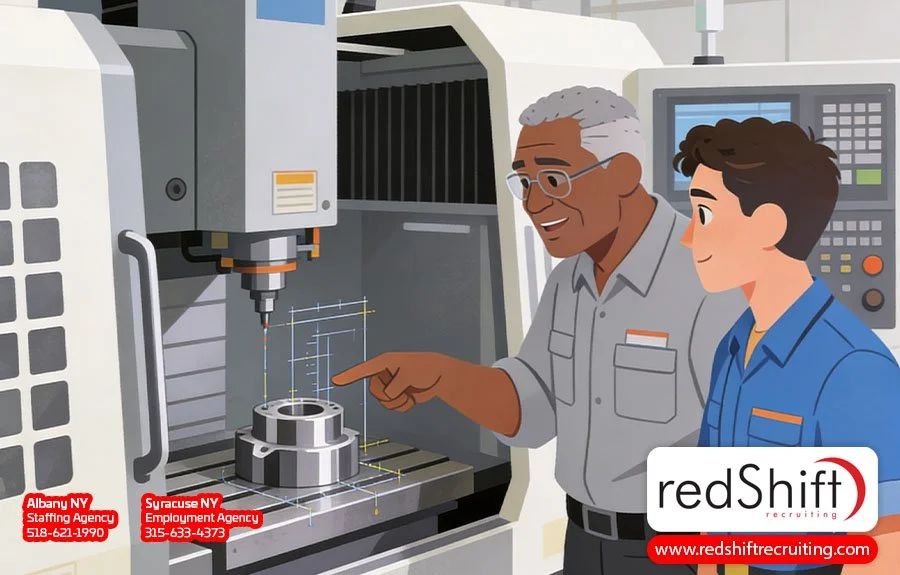
There isn't just one path into manufacturing. Many workers enter the job market with an associate's degree or technical certificate in areas such as machining, welding, industrial maintenance, or quality control. These programs are often completed in two years or less and provide a direct pathway into the workforce. Others enter through apprenticeships, which combine paid work experience with classroom instruction. Apprentices earn while they learn and develop valuable skills under the teaching and guidance of experienced workers.
Some manufacturers are also willing to hire candidates with limited experience and train them on the job. Rather than requiring a technical degree or formal apprenticeship, these employers often look for mechanical aptitude, reliability, and a willingness to learn. In a tight labor market, trainability can be just as valuable to a company as existing experience. For someone looking for a new job or a different career path, these opportunities can be a way to get their foot in the door while earning a paycheck.
Many skilled manufacturing professionals also begin in entry-level production roles and advance over time. Production workers, assemblers, machine operators, and material handlers often gain exposure to equipment, processes, and manufacturing environments that help prepare them for more specialized positions. While some of these jobs involve routine tasks that are increasingly being automated, they can still serve as an important stepping stone to higher-skilled and higher-paying careers. Location matters as well, as manufacturing opportunities tend to cluster around major industrial regions and production hubs.
Ultimately, for people willing to develop technical skills and gain hands-on experience, manufacturing remains one of the more accessible paths into a stable, in-demand career with strong opportunities both today and in the future.
Frequently Asked Questions
Is Manufacturing a Good Career in 2026 With All the Tariff Uncertainty?
Short-term policy shifts and long-term industrial demand are two different things. While changing tariff policies, supply chain realignments, economic slowdowns, and changing business conditions can cause individual companies to adjust their hiring timelines in any given year, the underlying workforce shortage is structural. Manufacturers have been struggling to find skilled talent for over a decade.
In fact, macro pressures like tariffs often encourage companies to "nearshore" or bring production capacity back to domestic soil to avoid the disruptions that can come with international supply chains. While individual quarters may see cautious hiring, the long-term structural need for machinists, welders, and technicians to run these domestic facilities remains secure.
What Manufacturing Jobs Pay Well Without a Four-Year Degree?
Some of the highest-paying manufacturing roles that don't require a bachelor's degree include CNC machinists, industrial maintenance technicians, welders, tool and die makers, and quality control specialists.
For example, maintenance technicians often earn strong wages because they combine mechanical, electrical, and troubleshooting skills that are difficult to replace. Similarly, experienced CNC machinists can become extremely valuable because they help a company maintain production quality while minimizing downtime and scrap.
Pay varies by region, industry, and experience level, but specialized skills generally command higher compensation than entry-level production work.
How Long Does It Take to Become a CNC Machinist?
It depends on how you enter the field and how advanced you want your skills to become. Some entry-level operators begin working after a relatively short training period and continue learning on the job. Candidates pursuing more advanced machining roles often complete a technical program, apprenticeship, or several years of shop-floor experience before reaching a high level of proficiency.
Like most skilled professions, machining is a continuous learning process. New equipment, new materials, and new ideas continue to emerge, creating opportunities for ongoing growth and specialization.
What Jobs Are Most Likely to Be Replaced by Artificial Intelligence and Automation?
The jobs most vulnerable to automation tend to involve predictable, rules-based work with limited variation. Tasks such as routine data entry, highly structured administrative work, and some forms of basic customer service are often easier to automate because the work follows consistent patterns.
Technology can also assist with tasks such as generating reports, organizing information, and even helping businesses create content and write copy. Modern generative AI systems are becoming increasingly advanced, causing changes in careers requiring creativity as well as those focused on more repetitive tasks. However, regardless of their industry, jobs that require judgment, adaptability, relationship-building, or physical problem-solving are generally more difficult to automate.
Are Manufacturing Jobs the Only AI-Proof Jobs?
Not at all. Any occupation that relies on a heavy "judgment layer" — human context, emotional intelligence, interpersonal skills, or physical adaptability — is likely to remain fairly safe from AI. For example, roles in human resources, specialized healthcare (whether patient care or animal care), education, and mentorship rely on building trust and navigating human relationships in ways that technology struggles with.
Likewise, many creative jobs will continue to require human involvement even as technology improves. While AI can assist with content creation and routine tasks, originality, context, taste, and judgment remain difficult to automate. The same is true for professions centered on teaching, mentoring, coaching, and developing other people, such as personal trainers, instructors, and career coaches.
The common thread between a health care worker, a high school teacher, and a custom welder is that none of them operate in a perfectly predictable, rules-based box. Technology will continue to change how these jobs are performed over the next decade, but the roles themselves will stay in demand because their core value relies on human judgment. The only jobs that remain truly resistant to automation are those where human judgment, relationships, creativity, or physical adaptability are central to the work itself.
Conclusion: Why Some Manufacturing Jobs Remain Safe From AI
Manufacturing isn't the right path for everyone, and no career comes with guarantees against technological change. But manufacturing does provide an interesting case study in how technology changes work and where human value remains difficult to replace. While headlines often focus on the jobs AI is replacing, the manufacturing sector continues to face a shortage of people willing and able to perform hands-on, judgment-intensive work.
It's true that some occupations will become increasingly automated. Others will evolve with the technology as it becomes more advanced and precise. But work that depends on experience, adaptability, and decision-making in unpredictable environments will continue to be highly valued. For people willing to develop the required technical skills, the path into manufacturing and skilled trades is worth considering. If you want to stay ahead, don't focus solely on what technology might replace tomorrow; focus on the skills employers are struggling to find today.

Article Author:
Ashley Meyer
Digital Marketing Strategist
Albany, NY