
Will AI Really Take Your Job? What We Know, What’s Uncertain, and How to Prepare
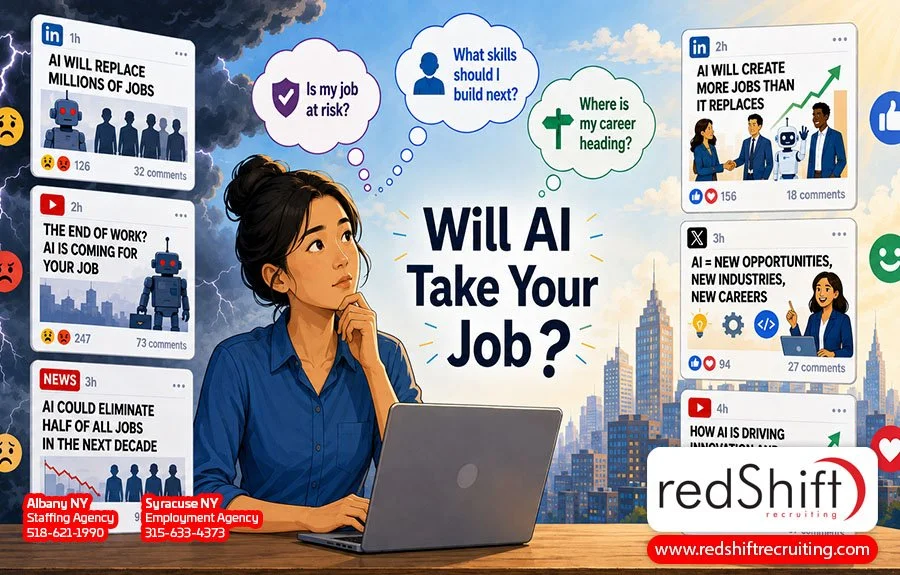
Across industries, AI is becoming an integral part of day-to-day work, whether it's flagging defects on a manufacturing line, reconciling expense reports, or writing and debugging code. An AI tool can now do in seconds what used to take you an hour, and that can be both exciting and unsettling at the same time.
Many people seem certain about what all this means for the future — they just don't all agree. Spend a few minutes scrolling social media or online forums, and you'll find someone confidently predicting AI will gut the workforce, right alongside someone just as confident it's about to unlock a wave of new jobs and productivity. So who's right? Should you prepare for fewer jobs, or just different ones? Are the loudest voices the ones you should listen to, or are they just... loud?
The reality is AI is already changing how certain work gets done, and some workers have experienced displacement or restructuring because of it. But what a technology can do and what it will do to your job, at your employer, in your field, are different questions—and the answers aren't yet clear. In the meantime, you still have to make real decisions about what skills to build, where to focus your job search, and what direction your career should go.
So, will AI really take your job? This article looks at which concerns about AI and jobs are grounded in real changes, what both the doom and the hype get wrong, what's still uncertain, and how to prepare without betting your career on a guess dressed up as a certainty.
What's Real, What's Hype, and What's Still Uncertain About AI and Jobs?
The confusing part is that both sides of the AI jobs debate can point to something real. AI has already replaced or reduced some work, but it has also made some workers faster and created demand for new skills and roles. The trouble starts when evidence of one outcome gets treated as proof of where the entire job market is headed.
What's Real
AI is already changing work. Companies are using AI tools to automate or accelerate tasks, change workflows, and rethink which skills they need from employees. In some workplaces, that has contributed to restructuring, reduced demand for certain work, or even job loss. The concern that AI could displace workers isn't imaginary, nor should it be disregarded.
AI's impact also isn't limited to whether a job exists or disappears. It can change workloads, performance expectations, staffing levels, responsibilities, and potentially the value employers place on different kinds of work—for example, by shifting which tasks take up most of your time, expanding what one role is expected to cover, or expecting you to get more done because AI has made part of the work faster.
But the more optimistic side has evidence behind it too. AI can produce real productivity gains without replacing the worker using it. A National Bureau of Economic Research study of more than 5,000 customer-support agents found that access to a generative AI assistant increased productivity by about 14% on average, with much larger gains among newer and less-experienced workers. Those kinds of productivity gains can also translate into increased demand and, in some cases, more job opportunities. If AI makes a product or service faster or less expensive to provide, companies may be able to serve more customers or expand what they offer, creating additional work rather than reducing it. We can't predict what every company will do with these gains, but the research does show that AI can support human workers rather than simply replace them.
AI is also creating some entirely new roles and specialties, with some potential job titles including AI ethicist, human-AI interaction designer, and AI governance specialist. Other roles may emerge as companies figure out where they need people to design, oversee, evaluate, and work alongside AI systems. At the same time, you don't need an AI-specific job title for AI skills to become relevant. Employers are increasingly prioritizing workers in existing roles who can use AI tools effectively in their day-to-day work, making AI proficiency increasingly important for staying competitive across a wide range of fields.
The World Economic Forum captures both possibilities in its 2025 Future of Jobs Report. Survey respondents expected AI and information-processing technologies to contribute to roughly 11 million jobs being created globally by 2030 while displacing about 9 million. Across all of the major forces the report examined, it projected 170 million jobs created and 92 million displaced, a net gain of 78 million. Those are projections, not guarantees, but they illustrate that disruption and opportunity can happen at the same time.
What Gets Overstated
Where both sides tend to go wrong is taking something that is genuinely happening and treating it as proof of what happens next.
On the more pessimistic side, an AI system being able to perform part of a job does not prove that companies can or will replace the person doing it. Even when AI technology performs some routine tasks well, employers still have to consider accuracy, cost, integration, oversight, customer expectations, data privacy, legal and compliance requirements, and how much human judgment the broader work requires. AI can reshape what someone does day to day without eliminating the job title entirely.
The optimistic version can make a similar leap. Saving workers time doesn't guarantee that everyone gets to shed repetitive tasks and spend the rest of the day on more interesting work. A company could use that extra capacity to expand production, reduce staffing, raise performance expectations, reorganize responsibilities, or some combination of those things. Likewise, the creation of new jobs doesn't mean the workers displaced from existing jobs will automatically have the location, experience, or new skills those opportunities require.
There's also an argument for being skeptical when AI gets treated as a simple explanation for every bad job market headline. Companies may cite AI when announcing job cuts even when restructuring, cost-cutting, overstaffing, weaker demand, underperformance, or other business pressures are also part of the story. Framing layoffs around AI can make the decision sound like a forward-looking technology shift rather than the result of financial pressure or poor staffing decisions. So far, the evidence also doesn’t point to widespread white-collar replacement across the economy, even while some areas, including customer service and entry-level work, appear more exposed.
So while AI may play a part in current layoffs or hiring changes, the true causes may be messier than either extreme allows. “AI did it” can be too simple, but so can insisting that AI is only solving problems, not contributing to them.
What's Still Uncertain
The biggest unknown is not whether AI will change work, because it already is. The harder question to answer is how those changes add up in the future.
We don't know how often AI adoption will lead to fewer positions versus different responsibilities, higher expectations, or demand for different kinds of workers, or how much of the resulting benefit will ultimately flow to workers, employers, or customers. It's also unclear which occupations will see lasting decline, which will mostly evolve, or how much job growth will come from work that AI helps create or expand. Entry-level work is one area where we're already beginning to see a different pattern emerge, particularly in fields where AI can take on tasks traditionally given to junior employees. That doesn't mean entry-level jobs are disappearing across the board, but if employers eliminate too much of that work without creating other ways for early-career employees to build experience, it could create a serious talent-pipeline problem down the road.
Questions about how many jobs may ultimately be affected, and which workers will feel those effects most, also have a human dimension, and policymakers, employers, and labor researchers are still trying to understand how displacement, retraining, and changing career paths may affect the human beings behind the numbers.
Today's limits aren't fixed, either. AI systems are likely to continue improving, but that doesn't tell us how quickly companies will use them, whether they will be worth the cost, where customers will push back, or how regulation and liability may slow adoption.
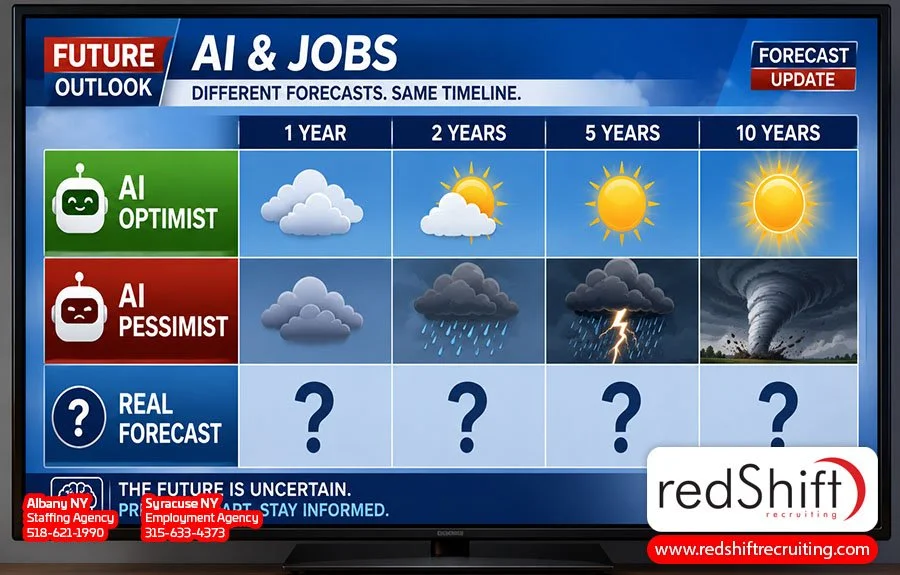
So there is still a lot neither side can claim with confidence. AI may eliminate some jobs and create or reshape others, but we don't yet know how it will affect a particular field, how quickly major changes will happen, or what the end result will look like years from now.
What Should You Pay Attention to in Your Own Career?
Headlines can help you understand the bigger picture, but the strongest signals usually come from your own field and job market. Pay attention to what's changing at your career level and among the companies hiring people with your background.
Look for patterns such as:
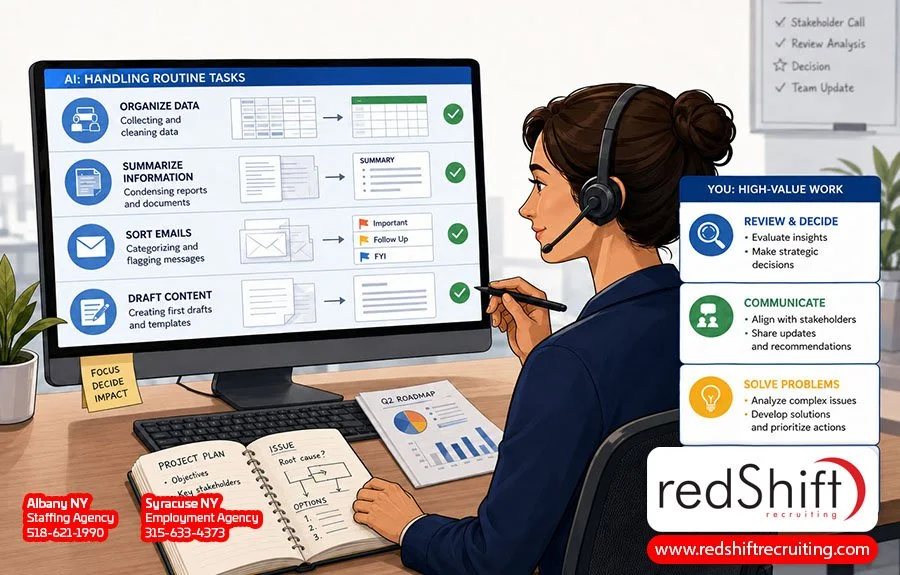
Changes in the work itself. Are parts of your role being automated, reassigned, or reduced? Are core tasks and human interaction disappearing, or is your employer mainly using AI to speed up repetitive work while still relying on people for open-ended problem-solving, oversight, and decision-making? A few tasks disappearing is much less concerning if they're replaced by other responsibilities than if the job itself seems to be getting smaller.
Changes across your industry. Check job postings, research employment data, and talk with recruiters to understand how much demand there is for your role and which skills employers are looking for. This can show you where employers are combining or eliminating positions and where there is new demand. Look for the same patterns appearing over time and across several employers; don't make assumptions based on a handful of postings or a single report.
Changes at your career level. AI may affect different stages of the same career in different ways. Entry-level roles can be especially exposed when much of the work involves things like data entry, basic research, scheduling, first-pass drafting, or other tasks that are easier to automate. Further along in a career, the issue may be less about the role disappearing and more about what employers expect from someone at your level. They may look for stronger AI skills, broader responsibilities, or experience reviewing and correcting AI-assisted work. If your current job hasn't required you to build those skills, you could eventually find that your experience no longer matches comparable roles elsewhere.
Changes in your specialty. Broad predictions about a profession can hide major differences within it. One specialty may be seeing more automation or weaker hiring while another is experiencing new demand or changing more slowly. Look at the specific type of work you do, not just the broader job title, when judging how exposed your career may be.
Changes in your marketability. A job can feel completely secure because your current employer hasn't changed much, but that doesn't necessarily mean you would be in a strong position if you had to look for work tomorrow. Compare your responsibilities, tools, and skills with similar roles elsewhere to see whether your experience still lines up with the market and identify areas for targeted skills development. Addressing these gaps earlier will help you avoid being caught unprepared if you need or want to change jobs in the foreseeable future.
Regardless of how secure your current position feels, paying attention to both internal signals and the wider market gives you a better idea of whether you're looking at a company-specific change or something broader. If you repeatedly see employers needing less of your current work, expecting different skills, or changing how they hire for the role, that's a sign to take a closer look at how you should prepare.
How Should You Prepare for AI Without Overreacting?
The next steps you should take depend on what's actually happening in your field. Someone whose work is mostly being assisted by AI needs a different response from someone whose role is shrinking or being combined with another.
If AI is mainly helping people work faster, learn how to use it well enough to keep pace. If certain responsibilities are disappearing, focus on the work that is becoming more important. If employers are combining roles, look at the adjacent skills now being bundled together. And if demand for your role is clearly weakening over time, start exploring related career paths before you're forced to make a move.
Learn What Your Field Actually Needs
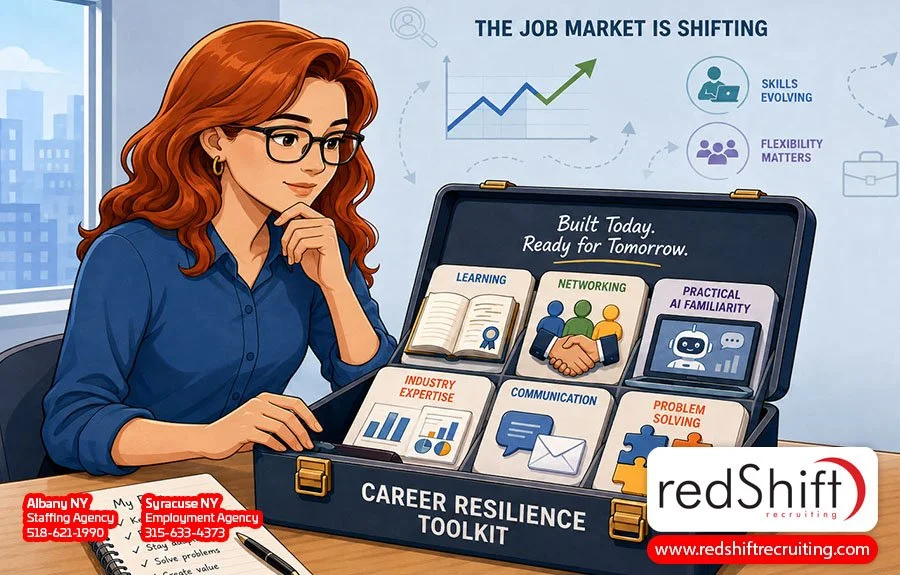
Practical AI familiarity may help you stay competitive, but you don't need to learn every new tool. Focus on the ones that fit the systems and workflows employers in your field are actually using.
For a worker in software engineering, that may mean getting experience with AI-assisted coding tools and learning how to check their output. Someone in financial analysis may need to understand where automated analysis is useful and where it still needs careful review. Meanwhile, in content marketing, AI may speed up research or drafting while strategy, accuracy, and editorial judgment remain part of the job.
Specific platforms and technologies will keep changing, so learning one tool is not a one-time fix. You also don't necessarily need to become an expert in machine learning, large language models, or AI agents unless your job requires specialized knowledge in those areas. What you do need is a working understanding of how these technologies affect your job: where they can improve productivity, where they fall short, how to review their output, and how to use them appropriately in your field. Those skills are more likely to stay valuable and relevant as artificial intelligence and other technologies continue to evolve.
Keep Building the Skills Around the Technology
While AI skills are increasing in importance, they aren't the only thing employers are looking for in prospective employees. As tools take on more of the repetitive or analytical work, your value may be more dependent on the expertise and judgment you bring to the parts that still require context, interpretation, communication, or accountability. This extends to knowing when you shouldn't use AI, as employer policies, confidentiality requirements, client data, and security rules may limit which tools you can use or what information you can share with them.
That can include deeper subject matter or technical knowledge, but it can also include problem-solving, communication, customer experience, collaboration, and emotional intelligence. A data-heavy role may still depend on someone who understands the information well enough to spot a bad assumption or questionable output. Other jobs rely more heavily on physical presence, direct interaction, or decisions that affect customers, coworkers, or the business itself. Uniquely human traits are increasingly becoming major differentiators as more routine and repeatable work becomes easier to automate.
None of those skills guarantees job security, and their importance will vary by role. The question you want to ask yourself is whether the mix of skills employers want for your job is changing. Your current company may offer training as its workflows evolve, but keep an eye on the broader market too. If you spot a gap in your skill set, don’t wait to address it.
Make Smaller Moves Before Bigger Ones
There's a difference between preparing for a possibility and rebuilding your entire career around it. Avoid making dramatic life changes before you're sure it's necessary. Instead, start with smaller steps that will both improve your value at your current job and prepare you in case those big decisions do need to be made.
These might include:
trying a tool that is becoming common in your field;
taking a short course or adding a complementary skill;
updating your resume or portfolio as your responsibilities and skills change
exploring another specialty, AI-related jobs, or emerging roles connected to experience you already have;
talking with recruiters and people in your field to learn what they're seeing in the market;
monitoring openings and hiring requirements.
Those are relatively low-risk steps, and most will still be useful even if the market develops differently than expected. In contrast, the hidden costs of quitting a job, abandoning a degree, ruling out a profession, or paying for extensive retraining may be higher than they first appear. The harder a career decision is to reverse, the stronger the evidence should be before you let an AI prediction drive it.
Consider the Cost of Being Wrong in Either Direction
Underestimating the change that happens can leave you with a skill gap, fewer opportunities, or less time to adjust later.
Overestimating the change can be costly too. You could leave a viable career, give up years of useful experience, spend money retraining for work you do not want or that turns out to have weak demand, or move into another field whose future career options are no more certain.
The same caution applies to overly optimistic and pessimistic forecasts. Even if AI creates more jobs overall, workers leaving existing jobs will not automatically have the right experience, location, or interests to move directly into them. On the other hand, even if AI eliminates significant amounts of work in some fields, that doesn’t mean every occupation or every worker within it will face the same employment outcome.
Know What Would Make You Change Course
Set a few practical thresholds for yourself so every new headline doesn’t trigger a fresh career crisis.
For example:
If the same new skill keeps appearing in relevant postings, learn it.
If employers consistently change the responsibilities attached to your role, make sure your experience keeps pace.
If hiring at your level declines for an extended period while more of the work is being automated, start exploring adjacent paths.
If demand remains strong as AI use increases, that’s a sign the role may be changing rather than disappearing, and you may be better served by adapting your skills than abandoning the field.
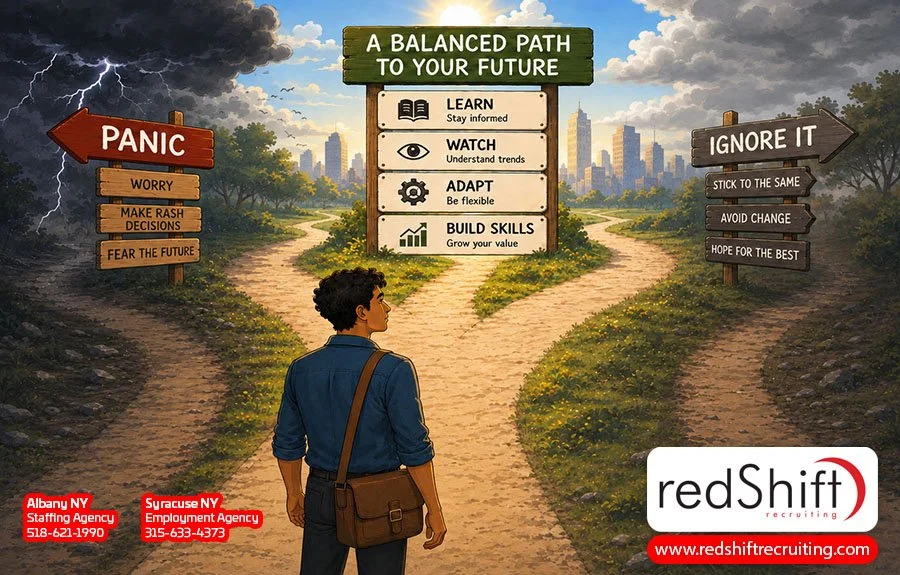
You do not need certainty before taking action. You need enough evidence to choose a response that fits the size of the change you are seeing. Keep checking that evidence over time, make smaller adjustments when the signals are still mixed, and save the biggest career decisions for when the pattern is much harder to ignore.
Frequently Asked Questions
Which Jobs Are Most at Risk From AI Automation?
Jobs may be more exposed to AI automation when a large share of their work tasks can be completed digitally, follow relatively predictable patterns, and require limited interaction with the physical world. Even then, being suitable for automation doesn't mean AI will replace the entire occupation. Although it may be able to take over part of a role, AI struggles to reliably handle exceptions and ambiguous situations without human oversight, and some decisions still require a person to review, approve, or take professional responsibility for the outcome. Jobs that depend heavily on judgment, interpersonal interaction, physical work, or adapting to unpredictable situations may therefore be more difficult to fully automate.
Will AI Replace All the Jobs It Can Technically Perform?
Probably not. Whether companies automate work depends on more than whether the technology can perform it. Business leaders also have to consider cost, accuracy, integration, legal and reputational risk, customer expectations, and how much human judgment the work requires. The calculation may look very different for small businesses than for large employers, and higher-risk fields such as legal services or healthcare may require more oversight even when AI can perform part of the work.
The question is often more complex than whether AI can replace a person at one particular task. Employers have to decide whether replacing or reducing human labor actually makes sense across the role as a whole.
Will AI Create More Jobs Than It Eliminates?
We don't know the answer to that yet. The balance between job creation and displacement will depend on how quickly AI is adopted, which new jobs and industries grow around it, how workers adapt, and what happens in the wider economy. In the US labor market, interest rates, consumer demand, investment, demographic changes, and other factors can all influence hiring alongside AI.
That also makes it difficult to look at changes in US jobs and attribute them entirely to artificial intelligence. Even if the labor force eventually sees a net increase in opportunities, those gains may not occur in the same places, occupations, or time periods as the jobs being displaced.
Are Entry-Level Jobs More Vulnerable to AI?
Some entry-level positions are already showing signs of greater pressure, particularly where the work includes research, drafting, data processing, scheduling, and other tasks employers may increasingly automate or accelerate. But reducing too many junior positions can create another problem: those jobs are often how workers develop the experience, institutional knowledge, and the subject-matter judgment they later need to catch mistakes, question assumptions, and handle more complex work in advanced roles.
That gives employers a longer-term issue to consider as well: HR managers and other leaders involved in workforce planning have to think about where future specialists and managers will come from if fewer people are given opportunities to develop at the beginning of their careers.
Should I Avoid Entering a Career Because AI Might Change It?
A prediction that “AI will take these jobs” is not enough reason on its own to abandon a career you are considering. Look at current demand, the cost and length of training, compensation, the range of specialties available, and how the work itself is changing. These questions extend well beyond tech companies; AI is affecting jobs across industries in different ways.
The same applies to career coaching that presents a profession as either completely safe or doomed. From a senior partner or managing director to someone just starting a career, workers need to keep learning as technologies and employer expectations change. Staying informed about your field and building relevant skills can help you stay ahead without basing a major career decision on an uncertain forecast.
Conclusion: Prepare for What Could Change Without Assuming What Will
So, will AI really take your job? No one can answer that with certainty for every worker, occupation, or industry. What you can do is separate real changes from sweeping predictions, watch your own market for stronger signals, and keep building the skills and options that leave you prepared for more than one possible future.
Whatever AI changes, build a career that can change with it.

Article Author:
Ashley Meyer
Digital Marketing Strategist
Albany, NY