
AI-Proof Careers: The Definition of 'Safe' Has Changed
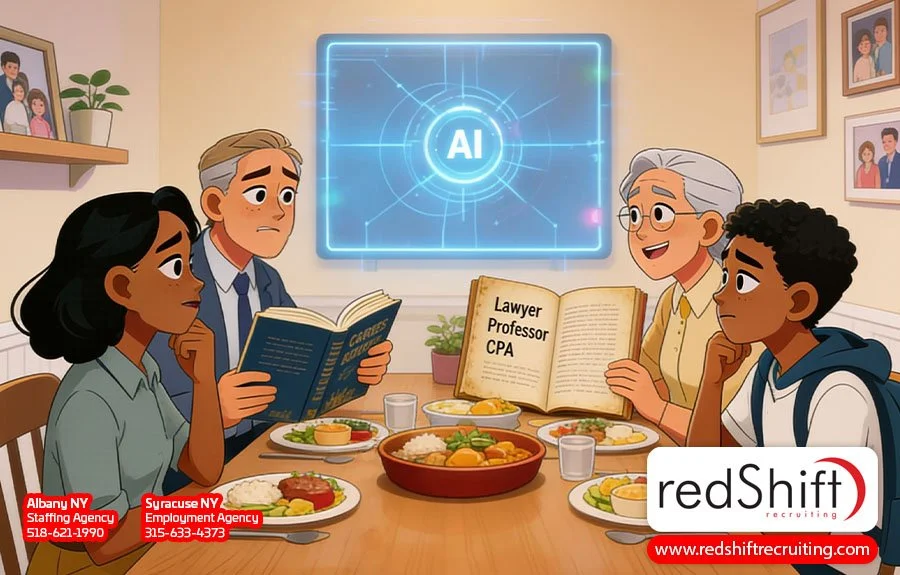
For generations, parents have steered their kids toward careers that felt safe: respected, well-paying, stable, and recession-resistant. The kind of job that would still be there in twenty years, no matter how the economic winds blew. That meant that when the "so what do you want to do with your life" conversation started around the dinner table, it was frequently jobs like doctors, lawyers, CPAs, professors, IT professionals, and government careers that topped the suggestion list.
But that conversation is changing. AI and automation technology is improving faster than almost anyone predicted, disrupting industries and rewriting job descriptions as it absorbs the rules-based and repetitive tasks that once formed the training ground for entry-level workers. The disruption isn't staying at the entry level either. Some of those traditionally safe career paths are also facing their own restructuring across experience levels.
That's left many people asking new questions: Are any careers actually safe anymore? Do the old definitions of stability still hold, or have new ones taken their place? And how do you make a smart decision about a career when so much has changed in just the last two years?
We don't claim to have all the answers — no one does. Technology is changing too quickly for anyone to guarantee a list of AI-proof careers. But we can look at what's actually happening in the job market to find the patterns and traits that make some careers far more resilient than others, as well as what you can do, no matter what field you're in, to stay ahead instead of waiting to fall behind.
Why This Job Market Feels Different
Not long ago, the answer to the question, "Is this a good career path?" had a reasonably predictable answer. Pick something with a respected credential, a progressive career ladder, or an in-demand service, and yes, it was most likely a safe bet. Automation was something that happened on factory floors — not in law firms, accounting departments, or hospital billing offices.
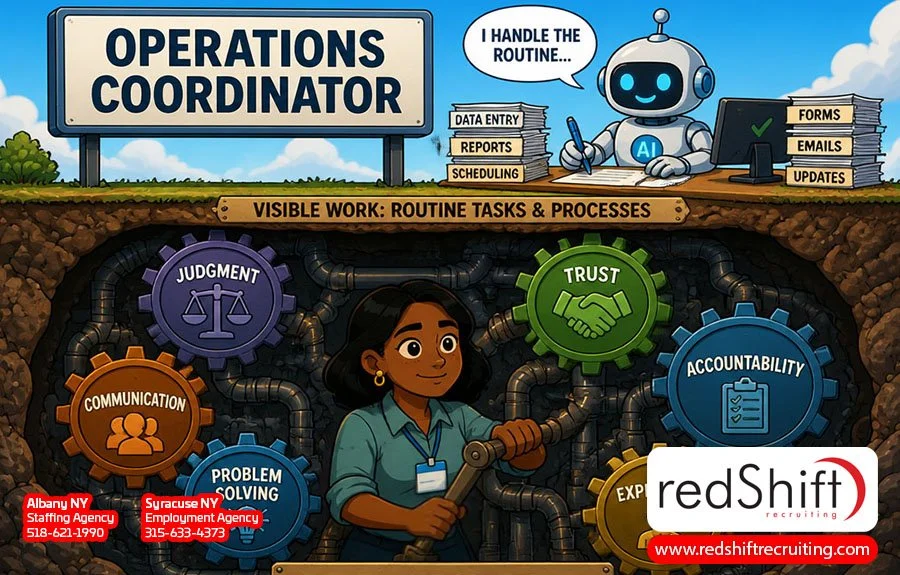
Until artificial intelligence changed everything. Now people are encountering AI tools more and more in their day-to-day work, as automation technology takes over many routine tasks across a wide range of white-collar fields, from simple data entry to researching and drafting documents to performing complex data analysis.
But this isn't the first time technology upended the job market: the first, second, and third Industrial Revolutions all fundamentally changed the nature of work, including which skills were valuable, which jobs disappeared, and which new ones emerged. So why does this time feel different? Possibly because of the sheer speed of the transition. The advice someone gave a student or entry-level worker just a few years ago may already need updating — not because it was wrong then, but because the ground keeps moving.
That's disorienting for many people, and it raises an important question: if the traditional frameworks no longer apply, what does?
What "Safe" Careers Used to Mean and Why That's Changed
While preferences and opinions will always vary, most people would consistently put the same careers at the top of the "safe" list: careers in areas like law, medicine, accounting, finance, IT, and education. These were fields that required years of specialized training, often paid well, and were always going to be in demand. The biggest hurdle for aspiring professionals was getting through the credential process: the degree, the licensing exam, the years of supervised practice. But, once you were in, you were in.
Advising someone to become a doctor, a cybersecurity analyst, a legal professional, or a financial advisor made sense because the biggest threats to those careers were events like economic downturns, outsourcing, or industry consolidation, and a strong professional credential offered real protection against all of those. What the old framework didn't account for was a technology capable of performing the knowledge-based work that underpinned these careers.
Knowledge work — the research, analysis, drafting, pattern recognition, and problem-solving that white-collar careers are built on — has always been considered inherently human because it required education, judgment, and expertise that took years to develop. That's also why it often commanded high salaries and offered long-term stability. And that's exactly what makes AI's rapid advancement so disruptive: technology is capable of performing much of that cognitive work faster and more cheaply than a trained professional.
The disruption stretches across experience levels and industries. A paralegal credential doesn't offer the protection it once did when an AI agent can handle legal research, draft documents, and summarize case law in minutes. In healthcare, roles like medical billing and coding are increasingly vulnerable to automation because they're built almost entirely on rule-governed tasks: applying the correct codes to the correct procedures according to defined guidelines. AI-powered fitness apps are putting pressure on entry-level personal trainers competing for clients who don't want to pay for what an app can offer for a fraction of the cost. And in IT, help desk technicians handling routine troubleshooting are finding that tier-one support is one of the first things companies hand off to automated systems. These aren't isolated cases; they're part of a pattern playing out across the workforce.
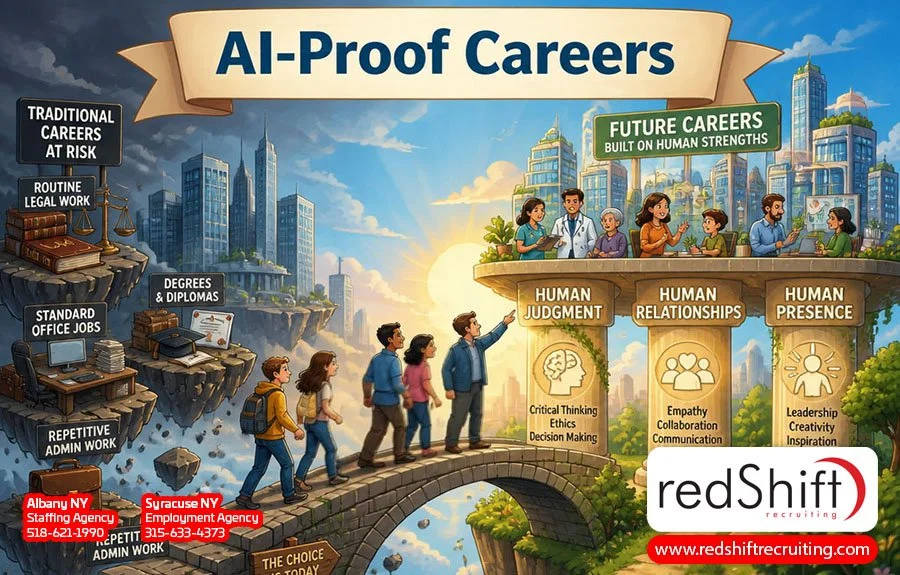
What we can take from this isn't that credentials no longer matter or that white-collar careers are going away. What makes a job AI-proof, or at least AI-resistant, isn't the prestige of the title or the difficulty of the licensing exam. It's whether the work itself — the day-to-day substance of the role — is something AI cannot replicate. And that turns out to be a different set of characteristics than you may think.
What Do the Careers Holding Their Value Have in Common?
So what are the characteristics of an AI-resistant job? Looking across the fields showing the lowest risk of automation, a few clear patterns emerge. This isn't an exhaustive list (technology is moving too fast for anyone to make that claim confidently), but these are the traits that consistently show up among the most resilient career paths.
Work That Requires Human Judgment
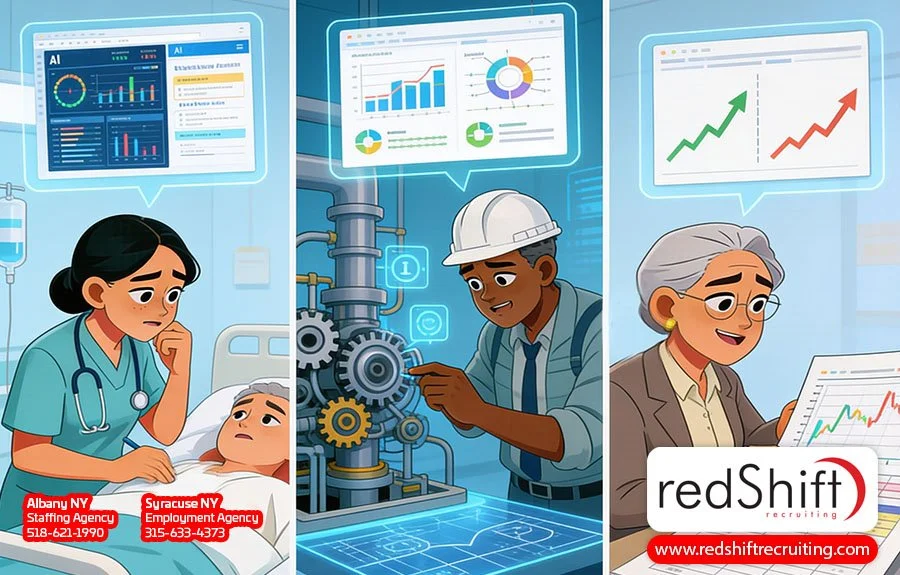
First, consider roles where the value isn't in gathering or processing information, but in what you do with it. A doctor diagnosing a complex case, a structural engineer deciding whether a building is safe to occupy after an inspection, or a senior accountant advising a business through a complicated restructuring — these are roles where AI can analyze the results, run the numbers, and flag the anomalies, but can't take responsibility for what happens next. It can't navigate the gray areas that high-stakes decisions almost always involve, or bring the strategic thinking and professional expertise that comes from having seen dozens of similar situations play out differently.
These are the roles where nuanced judgment is the actual product, and where experience compounds in ways that are hard to replicate. Of course, building that judgment takes time. It isn't just finishing a degree; it's years of applying that knowledge in real situations, making calls, and learning from the outcomes. But that’s also why experienced professionals in these fields are often more insulated than their junior counterparts, whose entry-level tasks tend to be the first ones automated.
The good news is that some of these careers are in genuine demand right now. The accounting profession is facing a significant supply shortage, and while some IT roles are negatively affected by automation, others have seen entirely new positions created for people who can supervise and quality-check the automated systems doing the routine work.
Work That Requires a Human Connection
Next are the roles where the relationship itself is the service: social workers and counselors helping someone navigate a crisis; healthcare professionals holding a patient's hand as they receive a difficult diagnosis; teachers using patience and creativity to adapt to students' needs; event planners managing someone's highest-stakes day. In these roles, emotional intelligence, empathy, and interpersonal skills are more than soft skills listed on a resume. They're the core of what's being delivered.
Artificial intelligence can draft a message, suggest a resource, or generate a care plan; it can't earn the trust that allows someone to share difficult truths, navigate the nuance of a complex family or workplace dynamic, or assume responsibility for the judgment calls that can profoundly affect another person's life. In these roles, the human touch isn't a differentiator—it's the service itself.
The assumption that these fields are underpaid relative to their demand is also starting to shift. Scarcity moves compensation, and several social work, counseling, and healthcare fields are facing real shortages — meaning the "helping professions don't pay well" generalization is becoming less accurate in more places. That said, these roles are both emotionally and physically demanding, which is part of why they're harder to fill and likely to stay that way.
Work That Requires Physical Presence
Some of the most resilient career paths are the ones that require manual dexterity, physical presence, analytical thinking, and strong judgment. From electricians, plumbers, and HVAC technicians to construction managers and specialized equipment operators, these careers require physical presence and hands-on expertise that remote systems can't replicate. Although many of these skilled trades have been historically undervalued, for those with strong mechanical aptitude or an instinct for hands-on problem-solving, they can be highly valuable career paths.
Physical presence and hands-on expertise are what allow a skilled tradesperson to notice when something doesn't look right, such as the fitting that's slightly off or the load-bearing element that wasn't in the plans, and then make the call before it becomes a problem. Intimate knowledge of system design lets an engineer or technician troubleshoot in ways that require understanding not just what the system does, but how it behaves under the specific conditions in front of them. Also key are the leadership skills needed to keep a crew on track under pressure, resolve a conflict before it disrupts a project, or make the judgment call that only makes sense if you're actually there. While physical work does have physical demands that can take a toll over the course of a career, these fields are reliably in-demand, with lucrative salaries, challenging work, and long-term opportunities.
AI-Based Roles
Finally, some of the most AI-proof jobs are the ones where the most valuable thing a person brings is the ability to work effectively with AI itself. A cybersecurity analyst who can interpret what an AI threat-detection system is flagging, decide what it's missing, and employ split-second decision-making skills needed to handle a cyber threat fast is doing something the AI genuinely cannot do alone. A healthcare professional who can contextualize an AI-generated diagnostic recommendation against what they're actually seeing in the patient is more valuable, not less, because of the AI in the room. And an accountant who understands both the output of an automated analysis and the business reality it doesn't capture is occupying a position that's hard to replace precisely because it requires both.
The World Economic Forum's Future of Jobs Report 2025 projects that 170 million new roles will be created globally by 2030, even as 92 million are displaced, resulting in a net gain of 78 million jobs. While many of those jobs will look different from the ones they replace, the projection reinforces an important point: AI is changing work, not simply eliminating it. The hybrid roles that combine human expertise with AI literacy are likely to become some of the most resilient positions in the job market, and some of the most interesting as well.
How to Choose a Career Path When the Ground Keeps Moving
So does this mean a four-year degree is no longer a good choice? No, but it does mean that an unconsidered one carries more risk than it used to. The credential itself isn't the problem; many employers still place a high value on the right degree or certificate. The real issue is what skills a particular career path requires, and whether those human skills are likely to continue to be in demand in the future.
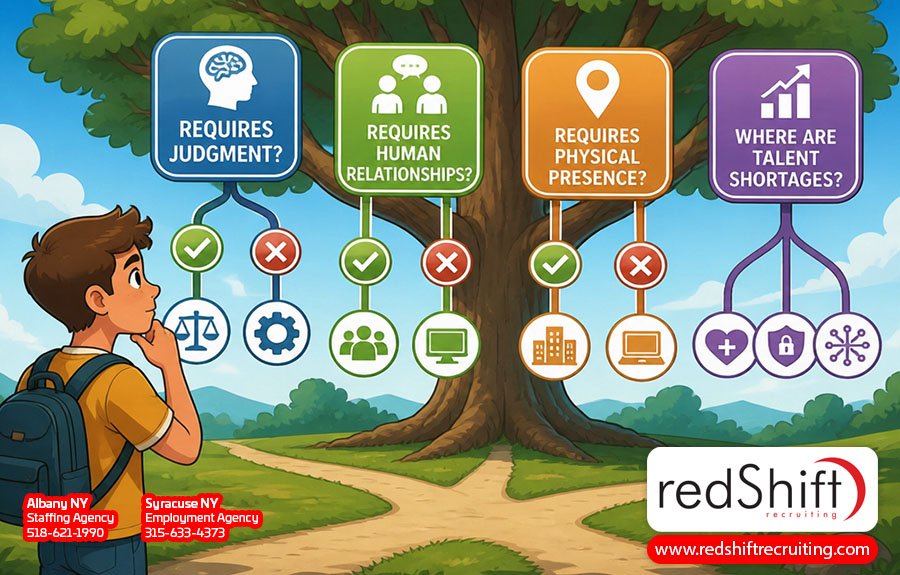
Before you commit to a direction, take time to consider the following questions:
What does the day-to-day work in this field actually look like at the human level — not the job title, not the task list, but the judgment calls, the relationships, and the parts that require someone physically or emotionally present to do them well? That's the layer with the lowest automation risk.
Where are the talent shortages appearing in this field right now? Scarcity is a leading indicator of value, and it tends to show up before salary data catches up. A field with a documented supply shortage is telling you something about job durability that a traditional prestige ranking isn't.
What's the realistic entry point, and what does the career actually look like five years in? Some fields that look vulnerable at the junior level open up considerably once someone has built the level of experience and human judgment that AI will struggle to replicate.
The reality is that the question, "Is this a good career?" is no longer something you ask once at seventeen or twenty-two and then set aside. The people navigating this job market well are revisiting this question regularly, no matter how many years they've spent in a particular field. Checking in on where your chosen field is moving, what's being automated, and where new demand is appearing is basic career maintenance — and it's key to protecting your career long-term. If you feel like your chosen career path or your current role is at risk, don't stay still: ask yourself what you can build alongside your credentials. Look for opportunities to gain more hands-on technical experience, take on client-facing work, build your analytical thinking skills, and develop genuine AI fluency. Being proactive now — before a disruption forces your hand — puts you in a fundamentally stronger position than waiting to react.
How to Future-Proof Your Career
No career is immune to change. But there's a difference between being vulnerable to change, and being prepared for it. Here are some areas to focus your attention:
Build the Skills AI Can't Easily Replicate
Leadership, creativity, strategic thinking, and emotional intelligence aren't just resume buzzwords; they're the capabilities that consistently sit at the judgment end of the spectrum, where AI has made the least progress. These are also skills that develop through practice and experience, not coursework. Seek out the decisions, the difficult conversations, and the projects that push you into territory where there's no clear playbook.
Develop Real AI Fluency
This goes beyond taking a course. It means using AI tools regularly enough in your actual work to understand what they do well, where they sound confident but say very little, and when you should override them. The professionals who will stay ahead will be the ones who know how to direct AI and use it as a tool, not a replacement for human thinking. Learning to use AI tools daily in your specific field is one of the most valuable things you can do right now, in almost any role.
Treat Your Career as a Living Document
"Is this still a good path?" is a question you should be regularly asking yourself, because the fields showing automation risk today looked very different three years ago. Set aside time periodically to look honestly at how the field is changing, from what's being absorbed by AI to the key skills employers are searching for. Avoid giving in to panic or constantly second-guessing yourself. You won't always read it correctly — nobody does — but the habit of paying attention is itself a form of career protection.
Know What You're Actually Selling
Whether you're updating a resume, preparing for a job search, or figuring out how to frame a career change, ask yourself, "What do I bring to this role that software can't replicate?" The relationships you've built, the high-stakes decisions you've owned, and the professional judgment you've developed on real projects are the types of experience that differentiate you, so don't be shy about highlighting them. If you're early in your career, lead with your adaptability, your AI fluency, and any hands-on experience you gained, as these signal the kind of judgment-in-progress that good employers know how to develop.
If You Advise Others
The framework in this piece — judgment, relationships, and physical presence — is worth building into how you have career conversations, whether you're a parent, a teacher, a mentor, or a recruiter. Don't end the conversation after "What do you want to do?"; encourage the person you're advising to consider, "What is it about that work that a machine couldn't do well, and how do you get good at that part?" The most valuable thing you can teach someone right now isn't which career to pick; it's how to keep asking the right questions as the answer keeps changing.
Frequently Asked Questions
What's the Difference Between a Job Being Automated and a Job Being Eliminated?
Automation typically means that specific tasks within a role are being handled by AI; not necessarily that the role itself is disappearing entirely. A paralegal's document review tasks may be largely automated while the paralegal's value shifts toward client communication, judgment calls, and oversight of the AI's output. A radiologist may use AI to flag anomalies while spending more time on the complex cases and patient conversations the AI can't handle. In fields at higher risk, the roles most likely to be fully eliminated are the ones where automation has absorbed nearly every meaningful task, many of which are entry-level positions built almost entirely on repeatable processes. Most roles sit somewhere in the middle: significantly changed, but not gone. The practical question isn't, "Will this job exist?" but, "What will it actually require from a human, and am I building toward that?"
My Field Is Already Being Affected by AI. How Do I Know if I Should Stay or Start Planning an Exit?
Start by separating the parts of your role that are being automated from the role itself. In most fields, what's disappearing first are the rule-governed, repeatable tasks, not the whole job. If your current role still has a meaningful judgment layer, a relationship layer, or requires your physical presence, that's a reason to stay and move deliberately toward those parts of the work. If you look at your day honestly and find that most of what you do could be described as processing, routing, or applying defined rules to defined inputs, that's a potential cause for concern. The question isn't whether AI is affecting your field, but whether there’s work available to you that organizations genuinely can't automate.
How Do I Actually Build AI Fluency if I'm Not Technical?
Start with the tools already showing up in your field and use them regularly enough to form real opinions about them. A nurse doesn't need to understand how a diagnostic AI model was trained; they need to know when its recommendations align with what they're seeing in the patient and when to push back. A social worker doesn't need to code; they need to know what an AI-generated case summary is likely to miss. A tradesperson estimating a job can use AI tools to speed up the paperwork side without needing to understand the underlying model. In every case, the goal is the same: enough hands-on familiarity to direct the tool, evaluate its output, and know when your judgment should override it. That comes from using it, not from studying it.
Are There Specific College Majors That Are More AI-Resistant Than Others?
The major matters less than what it develops. A psychology degree that builds deep interpersonal and analytical skills is more durable than a business degree focused primarily on processes that software now handles. A computer science degree that emphasizes system architecture and problem-solving under real conditions holds up better than one focused on the kind of routine coding AI is increasingly capable of generating. Rather than hunting for the "safe" major, look for programs that build judgment, relational skills, or hands-on technical expertise.
Conclusion: The Definition of 'Safe' Will Always Be Changing
The definition of a safe career has always shifted over time — it's just never shifted this fast. The fields that topped the suggestion list a generation ago aren't going away, but their career path may look different, and the ones that were once too unglamorous to mention are proving more resilient than anyone expected. What's held constant through every disruption, and what the data consistently points to now, is the value of work that requires a person to actually be present: in judgment, in relationships, in presence.
No one can tell you with certainty which careers will look the same in ten years. But the people best positioned for whatever comes next aren't waiting for that certainty. They're building the skills that compound, developing the fluency to work alongside AI rather than against it, and asking better questions about what they bring to their work that a system genuinely can't replicate.

Article Author:
Ashley Meyer
Digital Marketing Strategist
Albany, NY