
Seasonal Hiring Strategy: What to Review Before You Hire Again
Is your seasonal hiring strategy working, or just repeating itself?
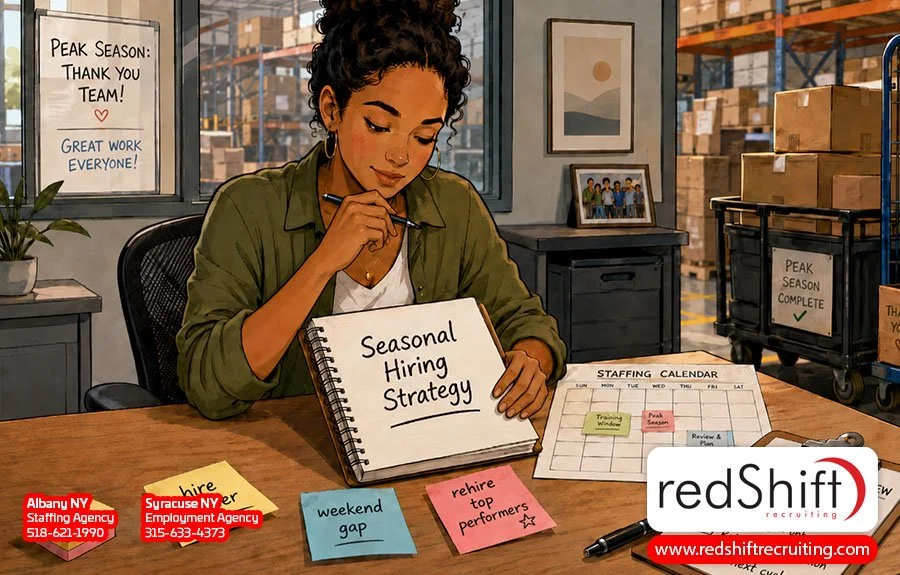
Picture the last day of your busy season. The rush is finally over, the seasonal staff members are heading out, and there's a strong pull to just... exhale. Box it up and deal with it again next time.
But that would be a mistake. Because if you're bringing on the same number of people, in the same roles, trained and managed the same way year after year, you're probably repeating problems you don't even remember having. The week after peak periods is one of the most valuable weeks of the entire hiring cycle, and too many employers waste it.
This is the week when you know the things that your staffing plan couldn't have told you. Maybe customer demand peaked a week later than you'd budgeted for. Maybe one department was overstaffed while another spent three weeks short-handed. Maybe a role you assumed would be easy to fill sat open for a month, or the people you did hire took twice as long as expected to get up to speed.
These are the details that weren't in your notes when you started planning, and that you likely won't remember once next season rolls around and your team has moved on to putting out the next fire. Skip the review, and you're not just risking the same mistakes—you're risking being short-staffed at the exact moment you can least afford it, for reasons you could have caught months earlier.
So before you start hiring seasonal employees the same way next time, spend a little time asking what this season actually told you. Was a role genuinely hard to fill, or was it hard to fill at the pay and schedule you offered? Did people quit, or did no one train them properly once they showed up? In this article, we'll walk through how to stop treating the gap between hiring cycles as just a breather, and use it instead to figure out what worked and what didn't, who you'd hire again in a heartbeat, and what to change before you post the next job description.
Did Your Seasonal Hiring Plan Match What You Actually Needed?
Start by comparing the seasonal workforce you planned for with what the business ultimately needed. A season can look adequately staffed overall while one shift, department, or role was consistently short. A single headcount number won't show those gaps, which is why the review needs to look at staffing shift by shift and role by role.
Staffing and Coverage
Start with the numbers: did headcount and coverage match what you planned?
Did you hire enough people overall?
Were particular shifts, days, or departments regularly overstaffed or understaffed?
Did demand peak when expected, or did your busiest weeks arrive earlier, later, or last longer than planned?
Were there areas where additional seasonal help was needed unexpectedly?
Being "fully staffed" at the company level can still mean short-staffed in the one department protecting your service levels, which is why maintaining operational efficiency depends on checking coverage role by role, not just in total headcount.
Hiring and Start Dates
Filling the role on paper and having someone ready to do the actual job are two different milestones.
Did your recruitment efforts start early enough to fill the positions you needed?
Were hiring managers still trying to fill openings after the workload had already increased?
Did employees have enough time to complete the onboarding process and training before the business needed them to be able to work at full capacity?
Filling positions by a target date isn't enough if workers are still learning the job once the lines are already out the door and the phones won't stop ringing.
Readiness and Productivity
Having new hires present isn't the same as having them ready when demand peaks.
Were employees fully productive by the date you expected?
Did any roles take longer than planned to reach normal productivity?
Were employees able to handle the expected pace and workload when demand increased?
At this stage, simply note where readiness fell short. The next part of the review is where you determine whether training, supervision, job expectations, or something else caused the delay.
Unexpected Gaps
Some disruptions are one-offs, while others are a pattern. Recognizing the difference helps separate a one-time event from an issue that should be addressed before the next season.
Did turnover, absenteeism, scheduling conflicts, vacancies, or sudden workload changes leave gaps?
Were some seasonal jobs consistently harder to staff than others?
Did particular shifts or departments require frequent last-minute coverage?
One unusual absence or unexpected spike in demand may not justify rewriting the whole staffing plan. Repeated problems in the same role, shift, or department tell you far more about what to change before future seasons than a single bad week does.
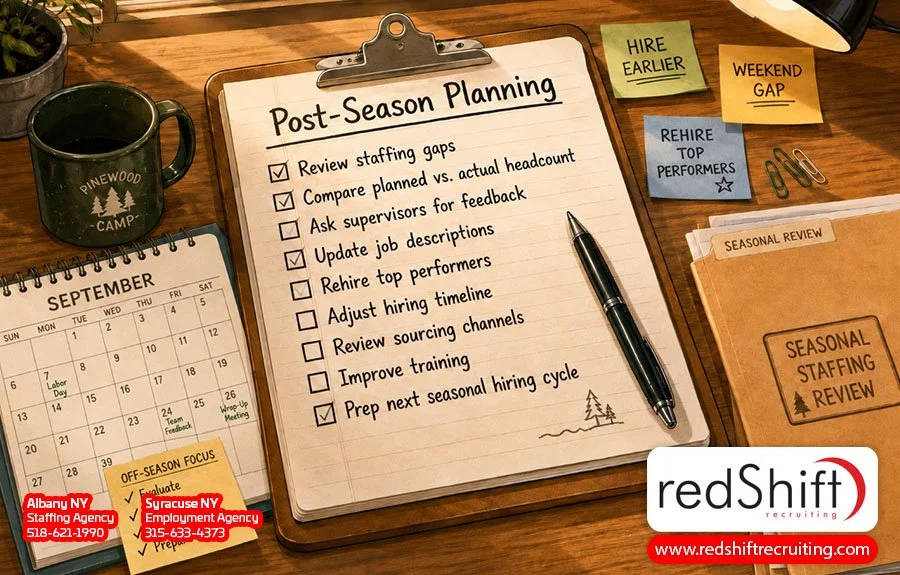
Ask supervisors for feedback while the experience is still recent, then document the information you will want when planning again: projected versus actual headcount, hiring dates, recurring coverage gaps, early departures, time-to-productivity, and difficult-to-fill roles.

Were Your Seasonal Staffing Problems Really Hiring Problems?
When a seasonal role stays open too long or turnover is higher than expected, recruiting often gets the blame. Sometimes that's accurate, but if the real problem is the job itself or what happens after employees start, attracting more candidates simply means cycling through people faster without fixing the cause.
During Recruiting
First, look at the candidate pipeline.
Were enough qualified candidates applying?
Where did applicants come from, and which sources actually produced hires?
Where were seasonal candidates dropping out of the process? Can the application process be streamlined, or is the hiring process unnecessarily complex?
Compare results from job boards, referrals, social media platforms, and other channels. Look at quality, not just quantity: a source may have produced plenty of applications without producing the right candidates for the roles you needed to fill.
Also look at what happened between the initial application and the start date. Did candidates abandon the application process midway, withdraw while waiting for a decision, decline offers, or accept and then never start? Identifying patterns at each step can help show whether the problem was sourcing, speed, offer competitiveness, or a combination of factors.
Finally, revisit the job posting itself. Did the job ad clearly explain the schedule, responsibilities, pay, and temporary nature of the work? If applicants repeatedly seemed surprised by the hours or duties once you spoke with them, unclear expectations may have contributed to the problem.
After Employees Started
A successful hire can still fail after the person starts.
Did new hires leave within days or weeks?
Were schedules, hours, duties, or working conditions different from what they expected?
Did temporary workers receive enough training and support to become productive?
Were supervisors too stretched to coach new workers effectively?
Was the work environment positive and supportive, enhancing employee loyalty through a good experience?
Repeated early departures can point to a poor onboarding process, supervision, scheduling, or company culture rather than a shortage of applicants. Noting that distinction is important, because struggling to attract seasonal candidates calls for a different response than struggling to keep and support them after they arrive.
In the Role Itself
Some seasonal positions are hard to fill or keep filled because of the way the job itself is designed.
Was the job description accurate, or did the work employees actually performed look different once they started?
Were scheduling requirements realistic? Were flexible scheduling options available?
Did compensation, location, working conditions, or other job characteristics make the role less competitive in the local labor market?
Which of the qualifications that you originally required actually influenced success, and which mattered less than expected?
Did a skill that seemed minor during hiring turn out to matter once employees were actually doing the work?
If you were offering incentives such as signing or end-of-season bonuses, referral bonuses, or attendance incentives, review whether they changed anything. Did they improve application volume, offer acceptance, attendance, or retention? If not, repeating the same incentive may simply add cost without addressing the underlying problem.
Where appropriate, ask for brief feedback about the role as well. Employees who just completed the work may notice scheduling issues, unclear expectations, training gaps, or other problems that managers didn’t see firsthand.
Ultimately, better recruitment strategies can address a genuine shortage of applicants, but they can't correct issues with the job itself. Until you know where the issues started, it is easy to spend more time and money solving the wrong problem.
Which Seasonal Employees Would You Hire Again?
Before the season ends, ask supervisors a simple question: Who would you be happy to see walk back through the door next year?
Make note of your high-performing seasonal workers while their performance is still fresh. Record enough detail to make those notes useful later, including the role they held, why supervisors would rehire them, and whether they expressed interest in future roles.
Strong seasonal talent may be worth considering for:
future seasonal opportunities
another temporary assignment
job openings in a different department
open or upcoming permanent positions
Before they leave, ask whether strong seasonal staff members would be interested in returning and make sure you have an appropriate way to follow up about future opportunities. Keeping a running list of former employees who performed well and are open to returning gives you proven candidates to contact when seasonal hiring begins again.
Returning employees may also require less ramp-up than completely new hires because they already understand the job, workplace, and expectations. That can reduce some of the time and training needed to prepare the next seasonal team. But returning next season may not be the only option worth discussing. Some employees value the additional income or flexibility of temporary work, while others may be looking for full-time employment or permanent roles. Asking now can also help identify seasonal workers who could become strong permanent hires, rather than continuing to think of them only as short-term employees.

What Should Change Before Your Next Seasonal Hiring Cycle?
Once you've identified where the last cycle was effective or fell short, turn those findings into specific changes before hiring starts again. Your seasonal hiring strategy should reflect what you learned, not simply repeat what worked well enough last time.
Adjust Staffing Levels and Timing
Revise expected headcount using actual staffing results, historical demand, and, where useful for high-volume hiring, predictive analytics or other forecasting tools.
Move recruiting or start dates earlier if workers were still being hired or trained once peak season was underway. Many employers start the hiring process between six and eight weeks in advance, but the exact timeline may vary by business.
Make sure the revised headcount and timing account for budget, training capacity, and supervisor availability.
Factor returning temporary employees into the plan instead of assuming every opening requires completely new candidates.
Update Roles and Candidate Requirements
Revise job descriptions so duties, schedules, physical requirements, and expectations reflect the actual work. Clear communication about what roles entail helps ensure the right candidate is hired the first time.
Remove qualifications that weren't truly necessary for employee success.
Emphasize the traits your best seasonal employees consistently demonstrated, such as reliability, availability, adaptability, or customer service.
Reconsider compensation, scheduling expectations, location requirements, or other job characteristics if evidence suggests they contributed to recruiting or retention problems.
Base changes on recurring patterns, not one unusual employee or assignment.
Refine Screening and Hiring
Update screening and interview questions based on the qualities you observed in your best employees.
Be more direct about schedules, workload, physical demands, and other unique challenges.
Adjust the sourcing mix where certain channels consistently underperformed. Use multiple recruiting channels, including social media, to post seasonal job openings and consider working with a staffing agency for direct support.
Revisit qualified past candidates or other potential candidates already in your applicant tracking system before starting a new search.
Improve Preparation
Offer more training, onboarding, or supervisor support in areas workers repeatedly struggled.
Build in extra ramp-up time or targeted training for roles with changing schedules, heavy customer interaction, or other high-pressure periods.
Document the Changes
Before the next seasonal hiring cycle, record what's changing, who owns each update, and when it needs to be completed. That keeps the review from disappearing into meeting notes and gives the team a concrete plan to return to when hiring begins again. Assigning ownership now also makes it less likely that the same issues will simply reappear next season, helping teams make fewer mistakes and better decisions.
Apply the Lessons Without Copying the Same Plan
Summer tourism, holiday retail, tax season, manufacturing peaks, and major events can create very different seasonal needs. Use the previous season as evidence to build on, not a template to copy.
A retailer may need more floor coverage to support a smooth shopping experience during the holiday rush, while a hotel or resort may need stronger guest services coverage to get through its busiest weeks. Employers moving directly from summer staffing into holiday hiring may be able to carry forward lessons about timing, training, or worker availability, but each type of seasonal work still deserves its own plan.

Frequently Asked Questions
When Should Employers Begin Planning for the Next Seasonal Hiring Period?
Start as soon as the review from the last cycle is done, rather than waiting until the next busy season approaches. Set clear expectations early for headcount, timing, and job requirements so hiring managers aren't recreating the plan from memory under pressure.
Should Employers Rehire Former Seasonal Employees?
Strong former seasonal employees are often worth prioritizing over sourcing more candidates, since you already know how they perform and whether they work effectively with full-time employees. Some may be interested in returning seasonally, while others may be looking for more permanent opportunities. Traits like reliability, availability, and cultural fit should factor in as much as past performance when considering whether to rehire.
What Metrics Should Employers Track During Seasonal Hiring?
Useful metrics include planned versus actual headcount, time to fill, offer acceptance, early turnover, attendance, time-to-productivity, and recurring coverage gaps. Employers don’t need to track everything, but keeping a consistent set of measures makes it easier to compare one seasonal hiring cycle with the next.
How Can Employers Build a Reliable Pool of Seasonal Talent Over Time?
Building a reliable talent group takes more than following a few quick tips or having one good season. It develops as a habit across multiple hiring cycles. Track top talent across seasons, consider candidates from diverse backgrounds who bring different strengths, and treat strong performers as valuable long-term assets rather than one-time hires. Over time, this reduces reliance on traditional hiring for every opening and gives employers a shortlist to draw from before recruiting even begins.
Can Technology Help With Seasonal Hiring Reviews?
Yes, a few ways technology can help include identifying past candidates in your applicant tracking system, comparing historical staffing patterns, using predictive analytics to support forecasting, and automating parts of scheduling or onboarding. It should support the review, however, not replace feedback from supervisors or managers who saw the season firsthand.
Conclusion: Use What This Season Taught You
Every seasonal hiring cycle gives you information the last one didn't have: what your staffing plan got right, where it fell short, and which employees are worth calling back before you post another job description. A short review now, while those details are still fresh, gives you much more to work with than trying to reconstruct the season from memory months later.
The employers who get the most value from seasonal hiring are not necessarily the ones with the biggest applicant pool. They are the ones who learn from each cycle, keep track of the people worth bringing back, and make the next plan with better information than they had the year before.

Article Author:
Ashley Meyer
Digital Marketing Strategist
Albany, NY