
What to Do Before Posting a Job Opening: Questions to Answer First
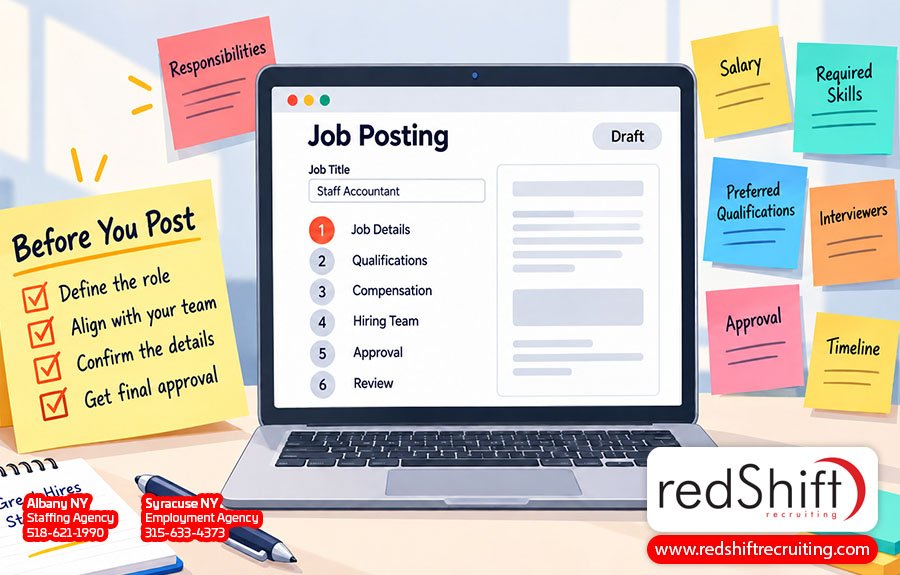
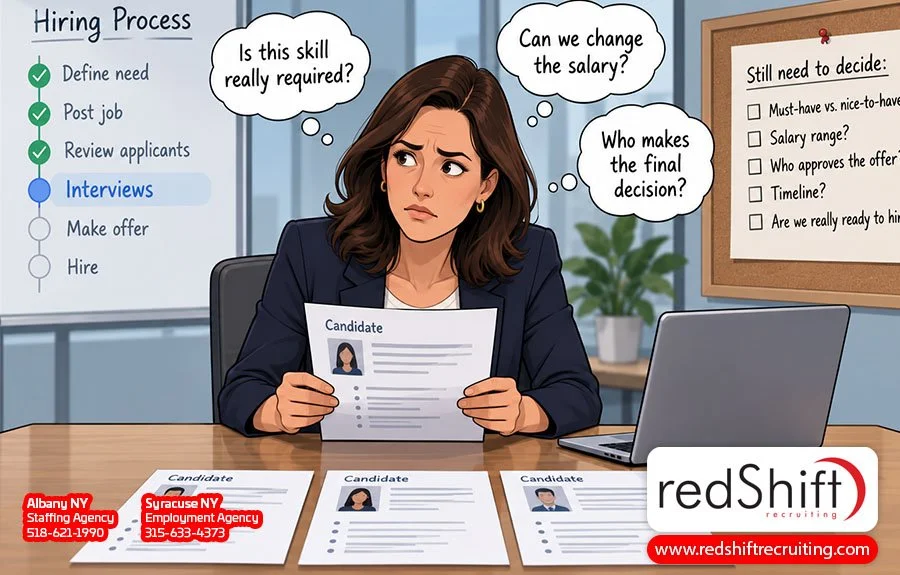
Two weeks into a search, a promising candidate asks the recruiter whether a specific certification is really required, or if the company would consider equivalent experience instead. The recruiter isn't sure, so she checks with the department head—who admits the job description posted for the role is outdated. The team has grown since it was last reviewed, and the work has shifted along with it. "Honestly, we've been struggling to fill this," the recruiter says. "No one seems to check every box. Are there any qualifications you'd be willing to compromise on?" The department head thinks so, but that's a conversation for the next team meeting.
"What about salary?" she asks. "We had a strong candidate last week who wanted a few thousand more than the posted range." That answer is still pending too. Final sign-off sits with the department director, and it's been sitting in his inbox for two days.
Adjustments like these are a normal part of hiring. The candidate pool doesn't always match expectations, a role turns out to be harder to fill than planned, or priorities shift once the search is already underway. But when a recruiter is routinely checking with someone else to answer basic candidate questions, when meetings keep getting called mid-search to settle things that come up, and when no one fully agrees on what the role requires, the problem usually isn't the search. It's that steps that should have been completed before the first job post went live are instead getting worked out candidate by candidate, question by question.
This article covers what to do before posting a job opening: the decisions worth making and the questions worth answering before the recruiting process starts, so no one is scrambling mid-interview to get an answer.
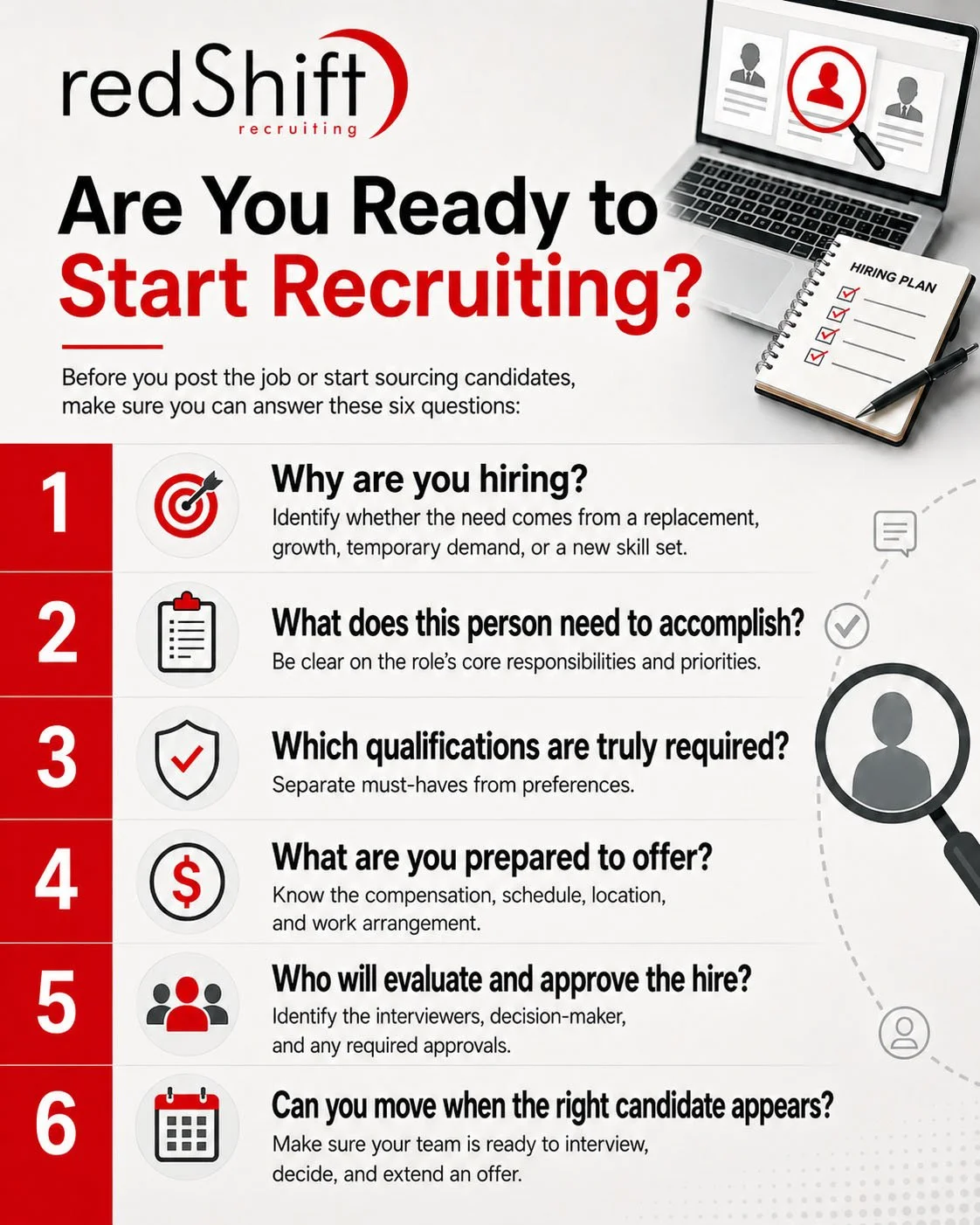
Why Are You Hiring?
Before you start picturing the kind of person you want in the role, make sure you understand why the need exists in the first place. A permanent replacement, a capacity problem, a missing skill set, and a short-term workload spike are not necessarily the same hiring problem.
Common reasons employers increase headcount include:
Replacing someone who left
Growth or a heavier workload than the current team can absorb
A skills gap the team doesn't currently have covered
A project, leave coverage, or seasonal demand
Changes inside the organization that have created a new staffing need
Recognizing the reason behind an open position helps you decide what kind of support you actually need before you start recruiting. A long-term business need may call for a permanent hire, while temporary demand or a defined project may require a different approach. Understanding the gap first helps you decide whether you are filling an ongoing role, adding capacity, or solving a temporary staffing problem.
Have You Clearly Defined the Role?
Once you understand why you need to hire, make sure everyone agrees on what the new role is actually supposed to accomplish. You should be able to explain the position clearly enough that recruiters know what to look for and can accurately describe it to applicants.
That applies to more than just newly created roles. With replacement hires—especially when a critical job needs to be filled fast—it's tempting to repost the same job title with the same qualifications and move on. But don't assume the role is unchanged just because the posting hasn't been touched. Responsibilities, scope, and required skills shift as teams evolve, and the work can look very different now, even if the job description was never formally rewritten.
What Does This Person Need to Accomplish?
Start with the work itself. What will this person be responsible for, and what do you expect them to accomplish?
At a minimum, be clear about:
The role’s core responsibilities
The most important priorities for the first few months
What success should look like
How the role fits into the existing team
Whether the job title accurately reflects the work
Choose a standard job title that accurately reflects the role. Clear job titles help candidates recognize roles immediately and reduce confusion about the type of work involved. You don't need to document every task someone might eventually handle, but you do need a clear picture of the work that matters most and what is expected from the new hire.
Success criteria should be specific and measurable where possible, such as project deadlines, service levels, production goals, revenue targets, accuracy standards, or other relevant outcomes. It also helps to discuss how the role supports broader business goals, especially when the position is new or has changed since it was last filled. If the role has changed substantially, or the responsibilities themselves are still fuzzy, a more detailed job analysis may be worth doing before recruiting begins.
What Are Your Required and Preferred Qualifications?
Once you have a realistic job description, decide what someone genuinely needs to succeed in the role versus what can be learned after they're hired. Separating required and preferred qualifications keeps the search focused without ruling out strong candidates over experience or education that isn't actually essential.
Sort what you're looking for into three categories:
Must-have qualifications: skills, experience, or education that are truly foundational to the work, not just nice to have
Preferred qualifications: helpful, but someone could still succeed without them
Learnable skills: reasonably picked up on the job after being hired
Every requirement becomes part of the screening criteria, so a rigid or bloated list can shrink the applicant pool fast, or make the role difficult to fill at all. Make sure preferred qualifications are actually treated as preferred: interviewers should not reject a candidate solely for lacking one of them. Being honest up front about what's truly needed, what's a bonus, and what can be taught gives you room to widen or narrow the search deliberately, instead of accidentally screening out good candidates over nonessential factors. Having a clear candidate profile improves applicant matching systems and gives recruiters a more accurate target while supporting screening decisions that are tied to the qualifications that actually matter for the job.
What Are You Prepared to Offer?
Defining the role also means defining the offer. Hiring isn't just about finding someone qualified; it's about selling the opportunity to a qualified professional, and recruiters can't do that without knowing what's actually on the table. When you're clear on what you're prepared to offer, recruiters can represent the role accurately, make the case for why it's worth taking, and identify candidates whose expectations match the opportunity.
The factors that matter most to candidates include:
Competitive salary or compensation range
Work schedule, and how much it supports work-life balance
Location, and whether the role is onsite, hybrid, or remote
Health insurance and other significant benefits
Bonus, commission, or other compensation arrangements where relevant
Any flexibility you're willing to offer
Uncertainty around pay, schedules, or work arrangements can send a search in the wrong direction, bringing in candidates who look strong on paper but are unlikely to accept once the actual terms are clear. Before recruiting begins, compare the compensation range and major parts of the offer package with what similar roles are offering in your market. Competitive pay is often important to attract the right candidates, but salary is only one part of the decision. Flexibility, remote or hybrid options, bonus potential, and stronger benefits can also make an opportunity more appealing, depending on the role and candidate priorities.
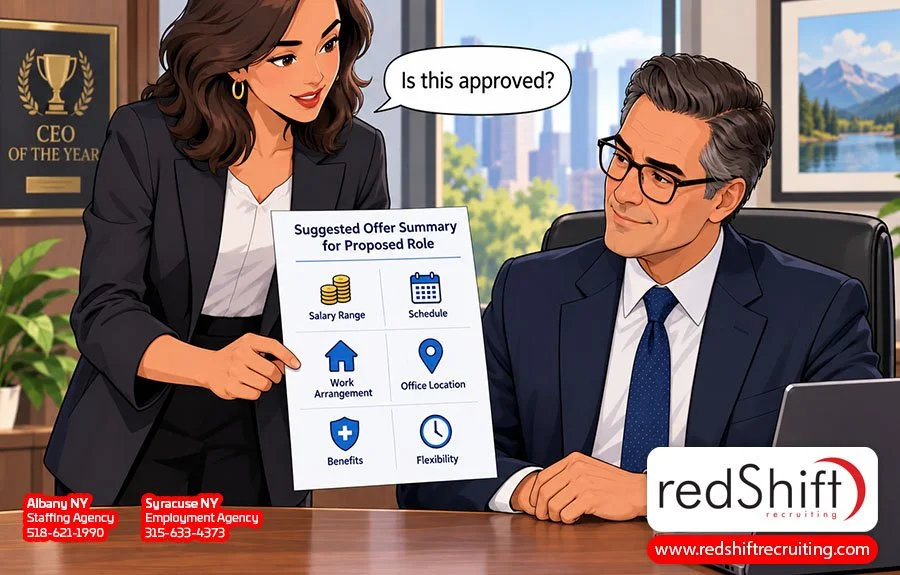
Knowing what you're ready to offer, and getting it approved by decision-makers before the search starts, lets recruiters move forward with confidence instead of pausing mid-search every time a candidate asks a question about pay or flexibility that no one's clarified yet.

Is Your Hiring Team Ready to Act?
Once the role is defined, the next question is whether the people involved can actually evaluate candidates and make a hiring decision.
Who Will Evaluate and Approve the Hire?
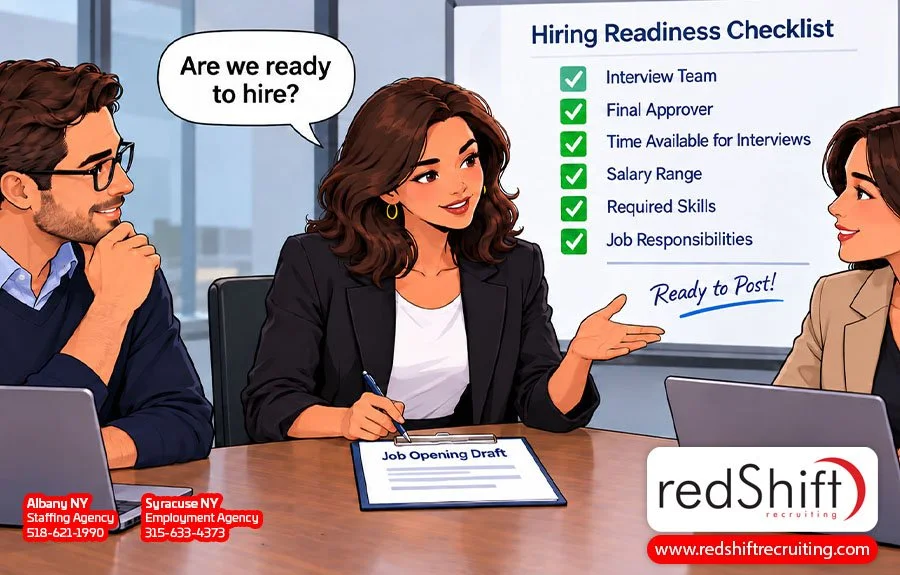
Before candidates start the application process, clarify:
Who will review applicants
Who will participate in the interview process
Who makes the final hiring decision
Who must approve compensation or other offer details
Whether the position and budget have received any required internal approval
Who has the final say if decision-makers disagree
Filling a job opening usually involves more than one person or department, and everyone needs to be working from the same understanding of the role, the requirements, and the offer. Knowing these key points helps ensure the right people are chosen to weigh in during the hiring process. However, without clear ownership of each stage, even a well-defined role can stall. When a strong candidate ends up waiting on an approval, an interviewer is asked a question no one prepared them to answer, or two decision-makers realize mid-search that they don't agree on who has final say, the team risks losing momentum over decisions that should have been settled before the first application was submitted.
Can You Move When the Right Candidate Appears?
If the team doesn't have the time and availability to manage applications, schedule interviews, and be ready to make an offer once a qualified candidate appears, the search isn't ready to start.
Before posting the job, ask whether the team can realistically:
Schedule interviews without unnecessary delays
Review feedback and determine next steps
Get required approvals
Make a final decision
Prepare and extend an offer
This isn't about rushing or skipping due diligence. Taking time to properly evaluate a candidate is different from losing days because interviews were never scheduled, an approver is out of office, or a final decision keeps getting pushed to "next week" while a strong candidate is left waiting.
Job seekers notice when a process drags. The best candidates may be interviewing elsewhere, and preventable delays can cost you someone the team already wants to hire. Repeated delays, inconsistent answers, or long periods of silence can also weaken your employer brand by making the organization look disorganized or even disrespectful of applicants’ time, which can influence how future candidates view the company. Addressing scheduling and approval bottlenecks before the search begins helps protect both the candidate experience and the company’s reputation.
What Can Still Change After You Start Recruiting?
Preparation gives the search direction, but it shouldn't lock the plan in place. Once recruiters start talking with candidates, you may learn that some of your assumptions don't match the actual market.
For example, you may find that:
The compensation range is below what relevant candidates expect
The desired combination of skills is much harder to find than expected
A qualification is unnecessarily narrowing the pool
The job title is attracting people with a different background than intended
Work-location expectations are excluding otherwise strong candidates
Candidates consistently understand the role differently than the employer intended
That feedback can improve both the current search and the next job opening. Candidate conversations may show that the original description was too narrow, the job title was misleading, or the offer didn’t match the market. Those lessons can also improve future searches by showing where expectations, requirements, or offer details may need to change. Make any adjustments deliberately and explain them to everyone involved to ensure recruiters and interviewers keep working from the same expectations.
How Can a Recruiter Help Before You Post the Job?
A recruiter can be useful before the search officially begins. Once you understand the business need, a recruiter can help assess whether the title, compensation, requirements, and desired skill combination align with the candidates available in the market.
That perspective can help hiring managers refine the search before writing job postings or actively sourcing on job boards. The employer still decides what the business needs and what it is prepared to offer; the recruiter can help shape a search that is more likely to attract the right people.
Frequently Asked Questions
Do You Need a Finalized Job Description Before You Start Recruiting?
Not necessarily. Recruiters need enough clarity to understand the work, requirements, compensation, and major expectations, but the final document can still be refined before candidates see it. Just make sure the information is consistent wherever the opportunity appears, whether that is your company's site, job boards, or a staffing partner’s site.
The description should also provide information candidates genuinely need to evaluate the opportunity. That might include a particular location, whether the work is based in an office, hybrid, or remote, what the schedule looks like, or relevant details about the team or company mission.
Who Should Be Involved Before a Job Is Posted?
Usually, the hiring manager, the person with final approval authority, and anyone whose input is necessary to define or evaluate the role. Current employees who work closely with the position can also provide useful insight into day-to-day responsibilities, workload, or where the team is feeling strain.
Keep the group focused. Too many voices can make it harder to reach a clear decision, especially if everyone brings a different set of priorities.
What Happens if the Hiring Team Disagrees After the Search Has Already Started?
Pause long enough to determine what aspects of the search the disagreement affects. Sometimes the answer is as simple as clarifying a preference, while other disagreements materially change who should be considered for the job.
Resolve the issue before continuing to evaluate candidates and tell the recruiter what changed. Maintaining an agreed set of expectations is especially important once candidates are already engaged in the process.
What if You Need to Hire Urgently but the Role Isn’t Fully Defined Yet?
Urgency does not mean you should start recruiting blindly. Clarify the essentials first: why the role is needed, what the person must accomplish, what you can offer, and who can make the final decision.
A staffing partner can be especially useful in this situation. Recruiters can help you quickly assess the market, identify which details need to be settled immediately, and begin shaping the search through other hiring tools while the employer finalizes the remaining pieces.
Can Delaying a Critical Hire Hurt the Current Team?
Yes. Leaving an important role open for too long can increase workloads, create bottlenecks, and put added pressure on the people covering the gap. In some cases, that can affect the well-being of current employees, especially when the extra work continues for an extended period.
That doesn’t mean rushing the process, but rather prioritizing filling the position so the team isn’t carrying an unnecessary burden while the search stalls.
Conclusion: Be Ready Before You Post
Good recruiting starts before the job appears on a career page or job board. Clear decisions upfront give recruiters something concrete to manage, give candidates consistent answers, and give the hiring team a process it can actually follow when the right person appears.
The search may still change once you see who is available and what candidates expect, but that feedback should sharpen the search rather than force the team to define the job from scratch while the hiring process has already begun.

Article Author:
Ashley Meyer
Digital Marketing Strategist
Albany, NY