
How to Start Your Job Search in an AI-Driven Job Market
How automation, competition, and screening tools are reshaping the job search
Why Job Searching Feels Different This Year
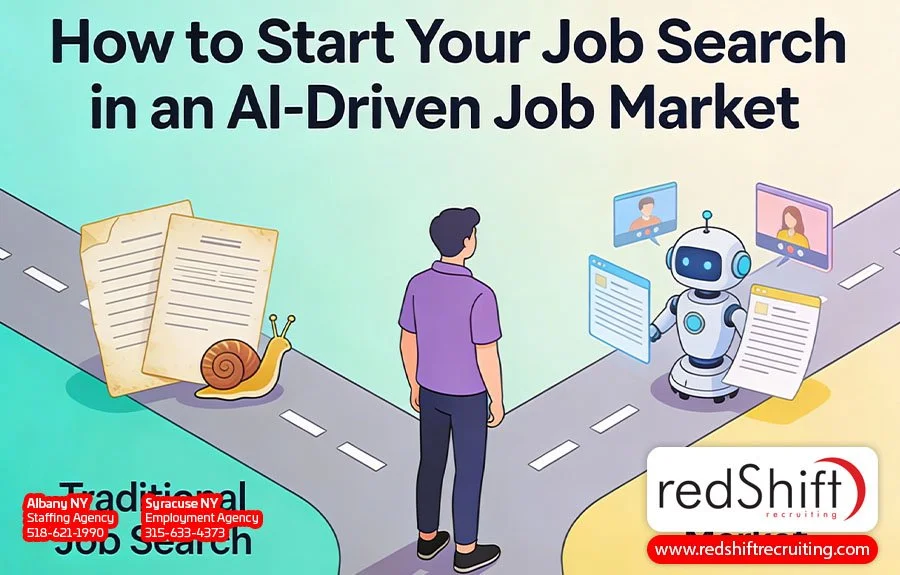
If you’re starting the job search process, it may feel… different. Automation, AI-assisted screening and evaluation tools, generative AI, and mass applications are changing how hiring works across nearly every industry, with positive and negative effects for job seekers and employers alike. A job search in an AI-driven job market requires understanding how these shifts influence each stage of hiring, from how your application materials are screened to the information that shapes final decisions. This article pulls back the curtain on what’s changed, what hasn’t, and how to adjust your approach effectively without overcomplicating the process.
What Has Actually Changed in the Job Search Process
Understanding what has actually changed behind the scenes is the first step to navigating today’s job market with confidence. The biggest shifts in the job search process aren’t new rules or shortcuts, but they are altering how candidates are screened, evaluated, and filtered, often before a human review begins.
Automated Resume Screening Is Now Standard
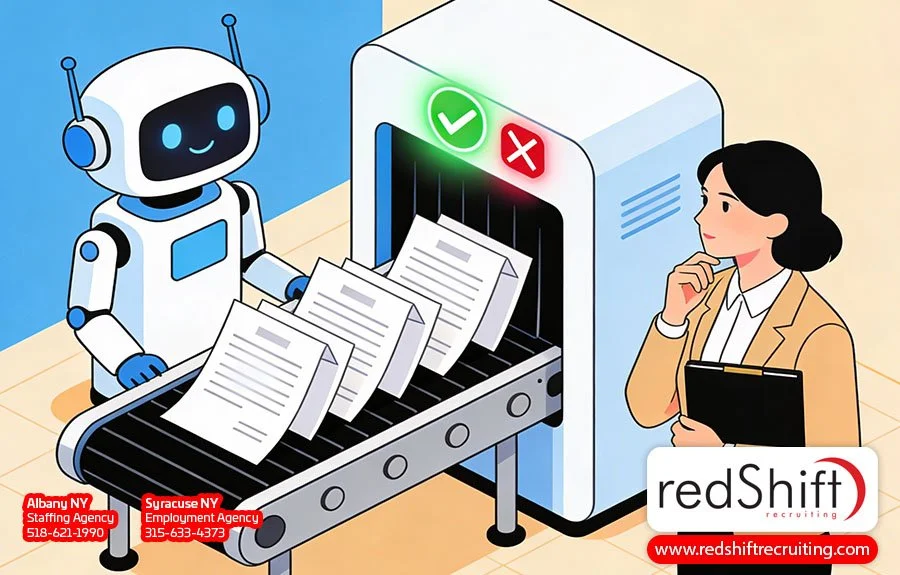
In many companies, the first review of a candidate's application materials isn't done by a human. Applicant tracking systems (ATS) and automated resume parsing tools are standard across industries, used by companies of all sizes to manage volume and improve efficiency. These systems scan resumes, cover letters, and job postings to identify relevant keywords, skills, and experience that align with job descriptions, often prioritizing clearly structured information and measurable outcomes. Applicant tracking systems aren’t designed to eliminate qualified candidates or create unnecessary hurdles. Instead, they play a practical role in high-volume hiring environments, helping employers manage the scale of applications enabled by modern technology while maintaining consistency across the candidate experience.
For job seekers, this means structure and clarity matter more than volume. Submitting hundreds of generic resumes during a job hunt may feel productive, but it’s often less effective than submitting fewer applications tailored to roles you are truly qualified for. In the modern job market, quality and relevance consistently outperform sheer quantity, especially when AI job search tools are used indiscriminately. That increased volume can backfire, overwhelming hiring teams and contributing to the slower responses and limited communication many candidates find frustrating.
AI Is Influencing Early Interviews and Assessments
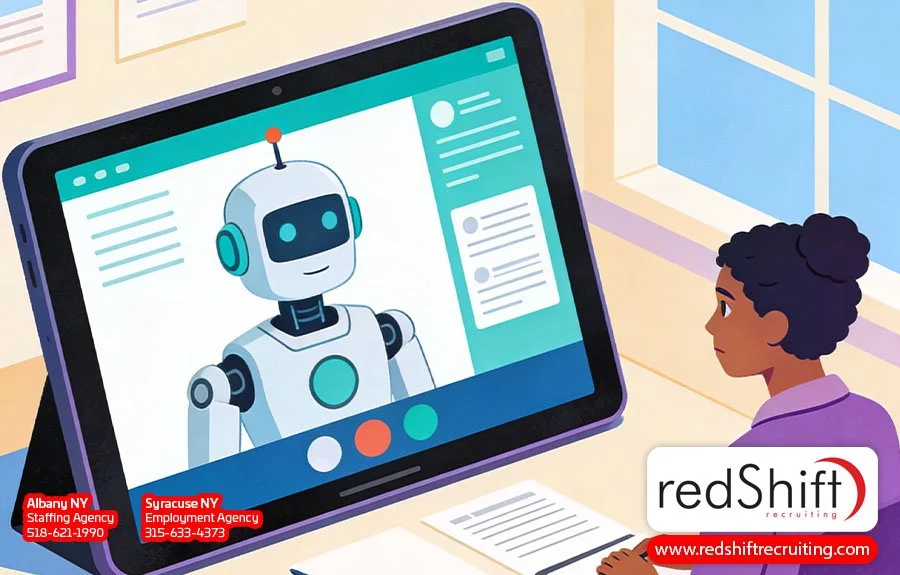
Automation doesn’t stop at resume reviews. Many employers now use AI-powered platforms for early-stage interviews, including video screenings and scenario-based evaluations. These AI-driven tools help filter candidates before they ever speak with recruiters or hiring managers.
At this stage, employers are not just checking for relevant skills or specific experience. They’re assessing communication, consistency, and reasoning—signals that suggest how a person thinks and explains decisions. As artificial intelligence handles more repetitive tasks in the screening process, strong interview skills and thoughtful responses are required to stand out from the crowd.
Hiring Decisions Still Involve Humans—Just Later
While automation has become more common, hiring is not fully automated. AI tools filter earlier, but human judgment still plays a decisive role later in the process. Hiring managers, recruiters, and other decision-makers are indispensable in evaluating candidates who pass initial screenings, assessing decision-making ability, culture fit, and long-term potential.
This shift means that making it past early screens now requires more intentional interview preparation and clearer positioning, because your first impression can be increasingly indirect. Candidates who understand how the job search process works today—and prepare accordingly—are more likely to reach the human conversations where nuance, reasoning, and real experience matter most.
Why This Affects Job Seekers in Every Industry
From application screening to early interviews, AI-driven tools are increasingly used to manage scale, consistency, and efficiency, regardless of whether a role is technical or hands-on. For many job hunters, this can feel overwhelming, especially when the resulting process feels less personal or transparent.
The impact may look different depending on the role, but the underlying shift is consistent across industries, with applicants experiencing more automation in resume screening, early evaluations, and initial decision-making before reaching a human conversation. Understanding this evolving landscape helps job seekers focus less on chasing the latest technology and more on clearly positioning their experience and value, regardless of whether the job itself involves AI day to day. The professionals who adapt most successfully are those who learn how to work alongside new tools rather than compete with them.
What Job Seekers Should Stop Doing
As hiring workflows evolve, some common job search habits are simply less effective than they used to be. Here’s what to stop and why:
Mass-applying with the same resume: High volume may feel efficient, but it often weakens your chances with potential employers offering genuinely relevant opportunities.
Relying on fully AI-written resumes or cover letters: AI can be a powerful tool for support, but fully generated materials dilute your personal brand and remove the human touch employers look for.
Using vague summaries that lack proof or context: Generic claims don’t communicate your unique skill set or real potential, which are critical during early screening.
Treating job descriptions as exhaustive checklists: Most roles allow flexibility. Over-filtering yourself can cause you to miss great opportunities that align with your career goals.
Assuming automation means no human review will happen later: AI systems may filter early, but people still make final decisions and often have higher expectations for clarity and consistency.
Valuing speed over alignment: Moving fast can save time in the short term, but prioritizing speed over fit often leads to lower-quality applications and fewer meaningful responses.
Letting go of these habits makes room for a more intentional, focused approach better suited to how hiring actually works today.
How to Adjust Your Job Search Strategy in an AI-Driven Job Market
As hiring workflows change, success for job seekers depends less on application volume and more on focus, relevance, and intentional decision-making. A strong job hunt strategy today is about showing how you think, what you’ve actually done, and how well your experience fits the role.
Prioritize Proof Over Polish
Employers are looking for evidence, not adjectives. Clear examples of outcomes, decisions, and impact consistently outperform generic summaries, especially in a competitive job market shaped by AI and automation. Proof shows how a person approaches work, solves problems, and adds value to the organization—things no generic template can convincingly fake.
Be Clear, Specific, and Consistent
From resume formatting to how you describe your experience during an interview, clarity helps both automated screening tools and human reviewers. Specific role descriptions, consistent messaging, and a well-defined skill set make it easier for businesses to assess fit early and confidently. That consistency also strengthens your personal brand, helping potential employers quickly understand what you bring to the table and why you're a good match.
Target Fewer Roles More Thoughtfully
Precision beats volume. Focusing your effort on job postings that genuinely match your experience and career goals increases your chances of reaching real conversations with companies you actually want to work for. While the "spray-and-pray" approach can be tempting, it often works against you in the long run. When hiring managers are flooded with loosely matched applications—many submitted indiscriminately by AI-powered tools—the process becomes more automated, more impersonal, and less forgiving. Repeatedly appearing for roles you’re not qualified for can also weaken how your candidacy is perceived over time. In contrast, targeting fewer, better-fit opportunities improves visibility, credibility, and momentum. This strategy ultimately supports long-term career success, even if it requires a bit more patience.
Use AI Tools as Support—Not a Substitute
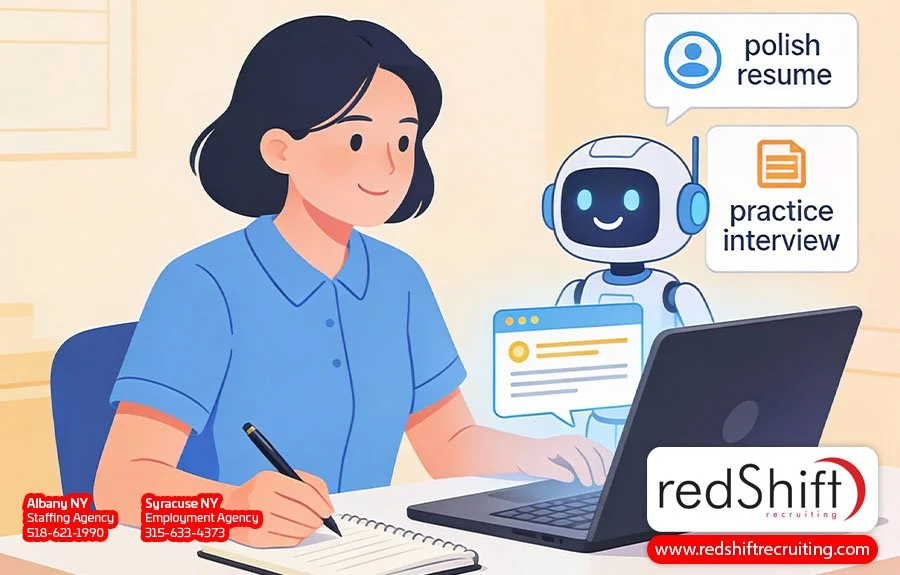
Leverage AI job search tools to support your process, not replace it. AI can help you organize your thoughts, refine wording for clarity, or identify gaps in your experience. You can also employ AI tools to analyze how your background matches a specific role or use interview preparation AI to hone your interview skills and prepare for real-world scenarios more confidently.
AI works best when it supports good judgment and transparency, not when it’s used to generate entire resumes, overly polished language, or exaggerated claims. Avoid leaning so heavily on artificial intelligence that you lose your authentic voice. Generic, fully generated content is easy to spot and rarely reflects a candidate’s real capabilities or judgment. Remember, it’s your experience, reasoning, and personal touch that make your application compelling, and that’s what resonates with people on the other side of the hiring process.
Preparing for Today’s Hiring Process
As hiring becomes more automated early on and more human later, preparation is less about mastering individual steps and more about presenting a clear, consistent picture of who you are and how you work. What matters most now is consistency across your application materials, your conversations, and the way you show up throughout the process.
What Matters More in Resumes and Online Profiles
Resumes and online profiles should work together to tell a single narrative. Clean, ATS-friendly formatting, clear role focus, consistent messaging, and straightforward metrics of successful results help employers quickly understand your abilities and identify relevant opportunities. Rather than using excessive buzzwords or trying to look qualified for everything, strong candidates emphasize their unique skills and how those skills apply to the role they’re pursuing, especially in competitive industries.
Light, intentional engagement on professional platforms (such as selective learning or sharing insights) can also reinforce credibility, demonstrate knowledge of industry trends, and emphasize your commitment to growth. Platforms like LinkedIn Learning and other professional development resources offer courses or certifications that can help demonstrate engagement with your field without requiring constant posting or self-promotion.
How Interviews Have Changed
Interviews increasingly focus on how candidates think, communicate, and handle uncertainty. Scenario-based and behavioral questions are common, and top employers look for insight into your reasoning and decision-making process rather than a rehearsed answer. Interview preparation AI tools can help you practice structure and clarity, but you'll need to take time to reflect on your real experiences and practice explaining them clearly and honestly. Strong interview skills allow you to connect your experience back to your goals, showing how a role fits into your broader career direction and why it makes sense to hire you.
Why Human Skills Carry More Weight Now
As technology takes on more routine tasks, distinctly human abilities are what allow top candidates to stand out. Soft skills such as communication, adaptability, critical thinking, and accountability show up everywhere—in how you explain past work, how you respond to questions, and how you interact with others. They help employers assess not just whether you can do the work, but whether you’ll work well with the team and contribute to the long-term success of the company. These signals matter in every field, from finance and healthcare to technical and operational roles, because they reveal how a candidate will perform beyond the resume. As AI-powered tools change how work gets done across roles, emphasizing the unique human skills that can’t be automated is critical to standing out from the competition and building trust with hiring managers.
What to Expect as You Start Your Search This Year
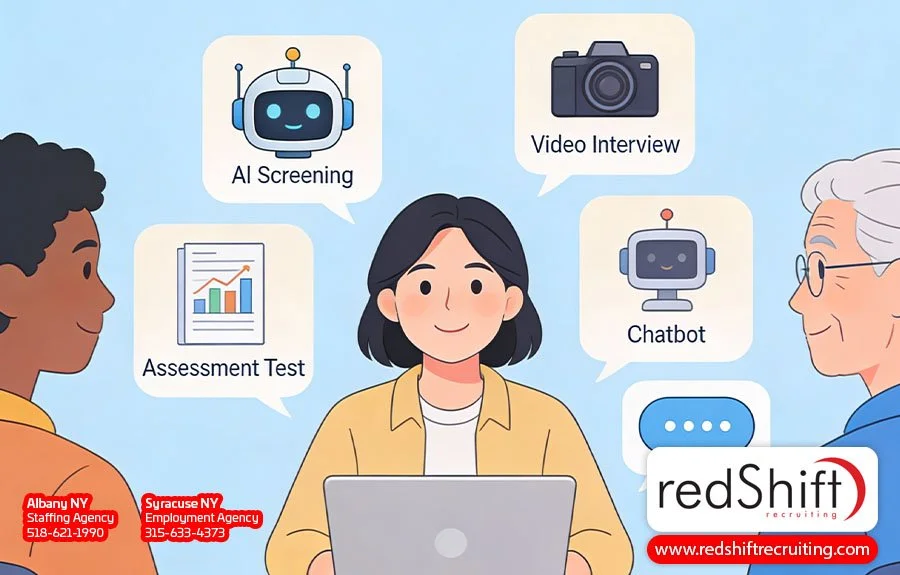
As you begin your search, expect more automation early in the process and more scrutiny later on. Many roles will involve systems that screen applications before a person gets involved, whether through resume parsing, AI-assisted evaluations, adaptive conversational assessments, or AI video interviews. Keep in mind that your competition is changing as well. More candidates are using AI-powered job search tools to optimize resumes, write cover letters, and apply faster and to more roles than ever before. That increased volume raises the bar for clarity, consistency, and honest representation, making it more important to stand out for the right reasons. This doesn’t require perfection, but it does reward consistency and thoughtful preparation.
While automation plays a larger role early on, it doesn’t mean the hiring process is entirely AI-driven or impersonal. Hiring managers want to understand your reasoning, judgment, and ability to contribute in a real working environment, and that is best assessed through direct, real-time interaction. This is also why networking and relationship-building remain so valuable—human conversations can provide context, credibility, and visibility that application materials simply can’t. Candidates who make it through these initial screening processes will encounter more human evaluation, deeper questioning, and closer alignment checks. Notably, evolving legislation is also increasing the legal rights of job seekers to request transparency reports, providing clear insight into how AI tools are used throughout the hiring process and exactly how individual candidates are scored.
Ultimately, in a world shaped by rapid changes in both how we work and how we hire, standing out often comes down to strategic thinking, clear communication, and genuine human connection. Finding the right role may take time, but approaching your search with realistic expectations, openness to learning, and purposeful networking puts you in a stronger position to create momentum toward the future you want.
Job searching doesn’t have to be a solo effort.
If you’re starting (or restarting) your job search, redShift Recruiting is here to help. Our recruiters work closely with employers across a range of industries and can offer insight you won’t get from job boards alone.
Frequently Asked Questions
How Does Increased Use of AI by Other Candidates Change Job Search Competition?
AI has lowered the barrier to applying, which means more candidates can submit applications faster and at higher volume. As a result, competition isn’t just about qualifications anymore—it’s about clarity, relevance, and credibility. Employers are seeing more applications, but not necessarily better ones. Job seekers who stand out are those who use AI thoughtfully while still demonstrating judgment, communication, and real-world impact. In an AI-driven job market, quality and intention matter most.
How Closely Do Employers Compare Resumes, LinkedIn Profiles, and Interview Answers?
Much more closely than many candidates realize. In later stages, employers often verify consistency across application materials, online profiles, and interview responses. Small discrepancies aren’t always disqualifying, but patterns of inconsistency can undermine trust. Clear alignment across your resume, LinkedIn profile, and how you describe your experience in interviews signals credibility and makes it easier for hiring managers to assess fit confidently.
Can Using AI Job Search Tools Actually Hurt Your Chances With Employers?
Yes—if they’re used carelessly. AI-generated resumes or cover letters that sound generic, exaggerated, or inconsistent can raise red flags during later-stage review. Employers increasingly expect candidates to use technology, but they also expect transparency and personalization. AI should support your thinking, not replace it. When tools are used to enhance clarity and alignment, rather than automate the entire process, they can help you move closer to your dream job, not further away.
What Do Hiring Managers Look for When Candidates Explain Their Reasoning in Interviews?
Hiring managers aren’t looking for perfect answers—they’re looking for how you think. Explaining your reasoning shows problem-solving ability, accountability, and adaptability, especially when dealing with uncertainty. This is where human judgment stands out, even as AI plays a larger role in preparation and screening. Candidates who can clearly walk through decisions, tradeoffs, and outcomes tend to perform better than those who rely on rehearsed or overly polished responses.
How Can Networking Complement Online Job Applications?
Networking doesn’t replace applying, but it adds context and human connection that applications alone often lack. Conversations with people in your field can clarify expectations, reveal hidden opportunities, and help you understand how roles are actually evaluated. In a job market shaped by automation, networking remains one of the most effective ways to reinforce credibility and make your application more than just another data point in a system.
Conclusion: Standing Out Is Still Possible
As AI continues to reshape the hiring process, the professionals who stand out aren’t those trying to compete with technology, but those who know how to work alongside it thoughtfully. Clarity, consistency, and real-world judgment matter more than ever, especially as automation increases competition and raises expectations.
Ultimately, success in an AI-influenced job market still comes down to human strengths: how you think, how you communicate, and how you show up. Finding the right role may take time, but approaching your search with focus, honesty, and adaptability puts you in a stronger position to build momentum and move closer to work that aligns with your skills, values, and long-term goals.

Article Author:
Ashley Meyer
Digital Marketing Strategist
Albany, NY