
Hiring Trends Shaping the Job Market (What Employers and Job Seekers Should Know)
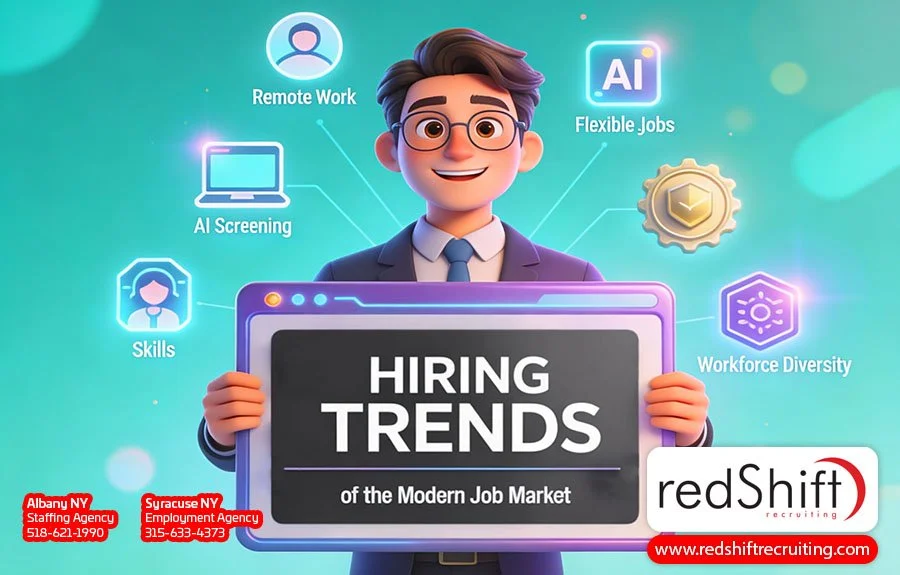
Every year brings a familiar wave of conversation about hiring—new budgets, new goals, new urgency. But the most important hiring trends shaping the job market today aren’t tied to any single year or cycle. They reflect deeper structural changes in how work gets done, how roles are defined, and how employers and candidates find each other in an increasingly automated environment.
This article focuses on those sustained shifts rather than predictions or buzzwords, explaining why hiring is changing before addressing what it means in practice. For employers, these trends influence how teams are built, evaluated, and retained. For job seekers, they shape how experience is assessed and where human judgment still holds final sway. Many of these changes are intertwined with artificial intelligence, automation, and growing expectations around trust and transparency, and here, we zoom out to examine what they mean for the hiring landscape as a whole.
Trend 1: Automation Is Now Embedded in the Hiring Process
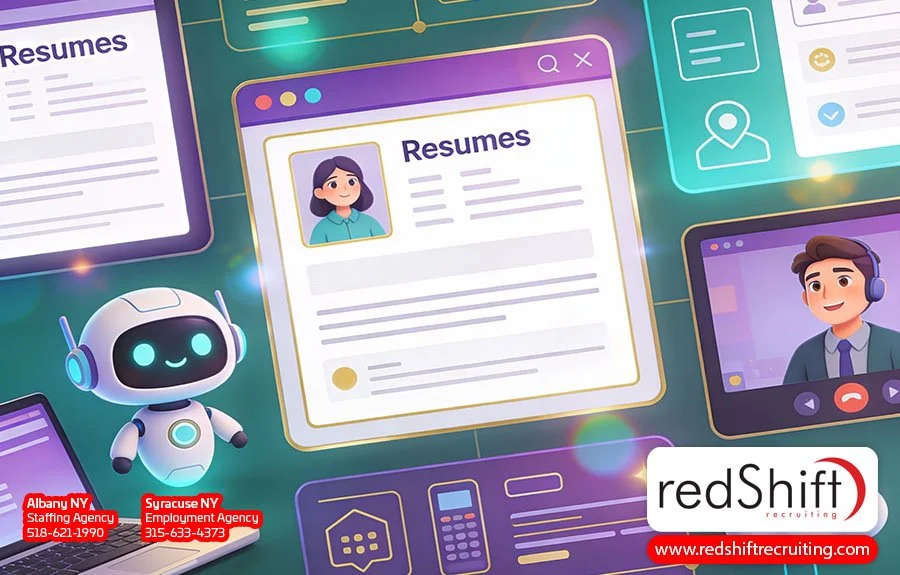
Automation is no longer an optional layer added onto hiring—it’s embedded in the hiring process itself. Across industries, automated systems now support resume screening through applicant tracking systems and semantic matching, early candidate filtering, interview scheduling, and standardized assessments, largely because application volume and process complexity can no longer be managed manually at a large scale. In many cases, early stages of hiring resemble an “AI handshake,” where automated tools interact before a human recruiter ever reviews a profile or schedules a conversation.
What’s important to clarify is what automation changes, and what it doesn’t. These tools alter how candidates move through the process, but they don’t replace the decision-making of who gets hired. As agentic screening becomes faster and more consistent, human judgment becomes more focused later in the funnel, where understanding nuance, context, and intent is key. While more conversational and autonomous screening tools are emerging, their role is still to handle repetitive tasks efficiently—not to make final employment decisions. The result is a hiring system that is more automated early on, but more human where it counts.
Trend 2: Quality Is Replacing Volume in Hiring Decisions
For many employers, the last few years exposed the limits of high-volume hiring. Large applicant pools filled with loosely matched candidates don’t create efficiency. Instead, they slow decision-making, increase noise, and diminish the overall candidate experience. As automation made it easier for candidates to apply to dozens of jobs at the touch of a button, overwhelmed hiring managers and teams have been forced to rethink how they evaluate interest and fit across the talent pool.
This shift reflects an emerging “stability premium," as companies inundated with AI-generated applications increasingly prioritize reliability, follow-through, and long-term fit alongside traditional technical skills. While automation lowered the effort required to apply, it raised the time and attention needed to review underqualified or misaligned candidates—making a more targeted approach essential, not optional. The goal isn’t necessarily fewer applicants, but rather more relevant and credible ones. This improved targeting supports informed hiring decisions and helps reduce long-term risk. As a result, prioritizing quality over volume has become a defining feature of modern hiring trends, reshaping how organizations assess interest and intent early in the process.
Trend 3: Skills-Based Hiring Practices Continue to Expand
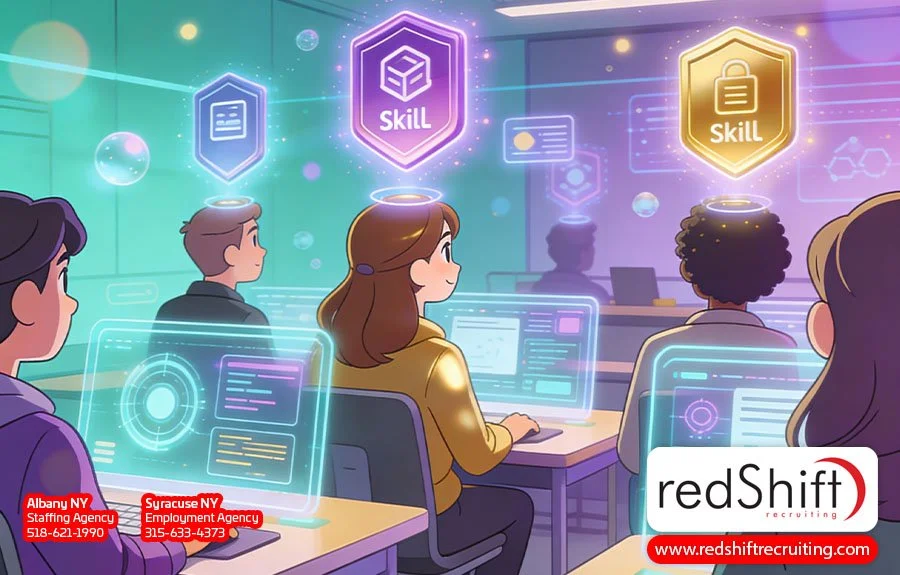
As roles evolve faster than titles, more organizations are adopting skills-based hiring models that view jobs as collections of abilities rather than static positions. Rigid credential requirements are giving way to a closer examination of how a candidate's skills translate into practical, hands-on work, especially as technology reshapes how day-to-day tasks are carried out across teams. This shift has increased the use of skills-based assessments and real-world evaluations, allowing employers to rely more on data-driven recruitment methods that support informed decisions rather than assumptions based solely on degrees or job titles.
This shift places greater weight on transferable and adjacent skills, demonstrated capability, and professional judgment. These qualities often show up in how someone approaches problem-solving, applies critical thinking, or adapts to new challenges, rather than how closely their background matches a predefined title or checklist. Role expectations aren't being eliminated, but emphasis is being shifted toward how work is actually performed instead of how well a resume mirrors job requirements on paper. The resulting model supports increased opportunities for career changers, early-career professionals, and candidates without “perfect” resumes, while also requiring clearer, more accurate job descriptions from employers. At the same time, skills-based approaches still face limitations in regulated or compliance-heavy roles, where credentials remain essential.
Trend 4: Entry-Level and Early-Career Roles Are Being Redefined
As artificial intelligence becomes more embedded in daily work, automated processes and AI-powered tools have taken over many of the “learning-by-repetition” activities that once helped new hires build confidence over time. Modern entry-level roles now involve less repetitive task-based work and more complex, integrated responsibilities that require sound decision-making, collaboration, and accountability—along with a higher expectation that new employees can contribute quickly without extensive training in fundamentals. At the same time, employers increasingly look for hires who can bring baseline AI skills alongside strong technical abilities, clear communication, and workplace-ready professionalism.
As a result, early-career professionals have fewer opportunities to fill skills gaps and gradually develop foundational workplace experience through observation and informal practice. Reduced “learning by osmosis” is pushing responsibility earlier in a career, limiting exposure to how experienced colleagues prioritize work, navigate ambiguity, incorporate feedback, and manage expectations. These critical skills extend beyond task execution to include judgment, adaptability, stakeholder awareness, and professional presence—capabilities that are difficult to teach in isolation. The challenge is especially pronounced in hybrid and remote work arrangements, where informal observation and real-time feedback are less accessible. Organizations that invest in structured onboarding, mentorship, and upskilling initiatives are better positioned to support early-career talent while driving engagement and long-term success.
Trend 5: Soft Skills Have Become a Competitive Differentiator
In many roles, what separates strong candidates isn't technical competence, but how effectively they communicate, adapt, collaborate, and make decisions—qualities often grouped under soft skills, but better understood as essential human skills. As work becomes more distributed and cross-functional, these capabilities play a growing role in how tasks actually get done and how individuals contribute within complex organizations.
For employers, soft skills serve as indicators of stability, reliability, and long-term contribution. They influence not only who gets hired, but who stays, grows, and strengthens team building over time. In a complex hiring environment shaped by automation and economic uncertainty, organizations that evaluate these skills consistently are better positioned to build stronger workforces and maintain a competitive edge, making soft skills a critical factor in both hiring and retention decisions.
Trend 6: Trust, Verification, and Transparency Matter More Than Ever
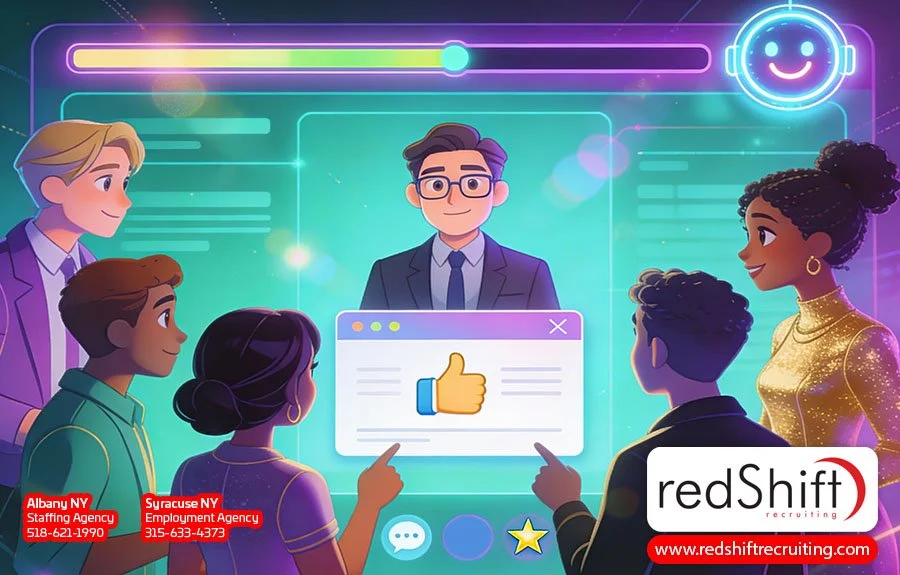
As AI adoption, remote work, and automation become more common for both talent teams and job seekers, the margin for error in hiring has narrowed. Generative AI tools make it easy for candidates at all experience levels to produce highly polished resumes and profiles, pushing employers to place less weight on presentation and more on verification. When nearly every applicant presents well on paper, proof of real skill matters more than polish. In response, hiring processes increasingly emphasize resume accuracy, consistency across interviews and online profiles, live or practical assessments, and reference-heavy identity proofing that supports defensible employment decisions and, ultimately, confidence in final hiring choices. The challenge is balancing efficiency with assurance—verifying real-world skills without slowing the hiring process to a crawl.
At the same time, algorithmic transparency has become a competitive advantage. Candidates want to understand when and how automation is used, as well as how AI agents and other tools influence employment decisions. On the regulatory side, developing compliance requirements have made transparency and independent bias audits a baseline expectation rather than a bonus for companies. Employers who take time to explain their hiring approach tend to attract more qualified candidates, improve employer branding, and build trust throughout the recruitment process.
Trend 7: Flexible, Fractional, and Project-Based Hiring Is Becoming More Common
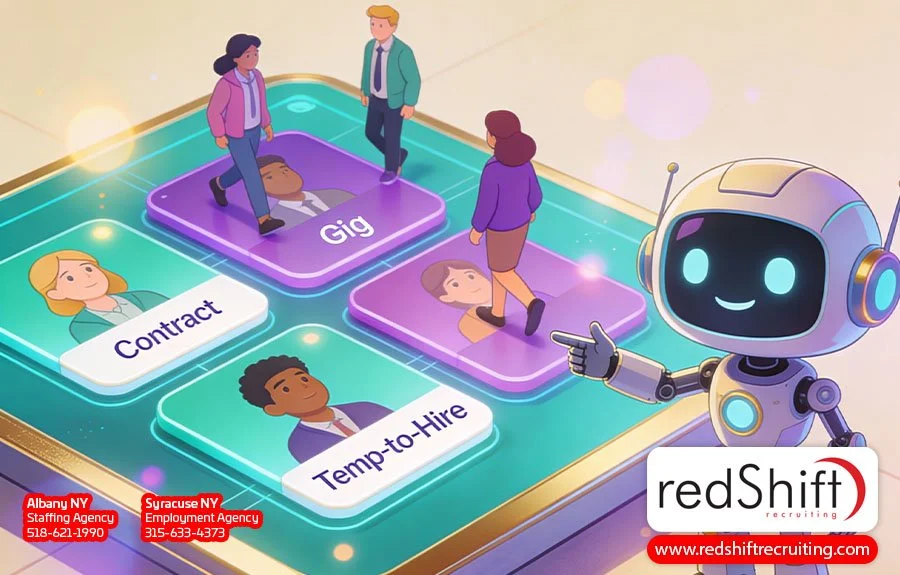
Traditional full-time roles are no longer the only way organizations access critical skills. In response to economic uncertainty and shifting business priorities, many companies are expanding their use of temporary roles, contract and contract-to-hire positions, and project-based staffing. The flexibility of temporary and contract workers allows organizations to respond quickly to change without overextending long-term commitments, while the optionality of temp-to-hire and contract-to-hire arrangements reduces hiring risk for both sides.
Beyond traditional contracts, employers are increasingly unbundling roles to tap into fractional leadership and expert-on-demand models. This hiring approach enables access to senior expertise for limited hours, specialized skills for specific outcomes, and leadership support without adding to the permanent headcount. For many organizations, skills-based sourcing has become a core part of workforce planning rather than a short-term workaround, as flexibility supports adaptability while maintaining access to top talent in an uncertain labor market. For experienced professionals, these models offer strategic, non-linear career paths that focus on meaningful work rather than formal titles, and often support greater flexibility, autonomy, and evolving expectations around work and career progression.
Trend 8: Hiring Is Becoming More Human—Not Less
Automation has improved efficiency across hiring, but it has also increased the need for human context, empathy, and clear communication. As technology takes on more administrative and screening tasks, employers are re-evaluating the candidate experience as a differentiator—recognizing that trust, clarity, and respect influence candidates' decisions just as much as a speedy hiring process. Employers that want to maintain a competitive advantage must be intentional about how candidates experience the process, not just how quickly it moves from start to finish.
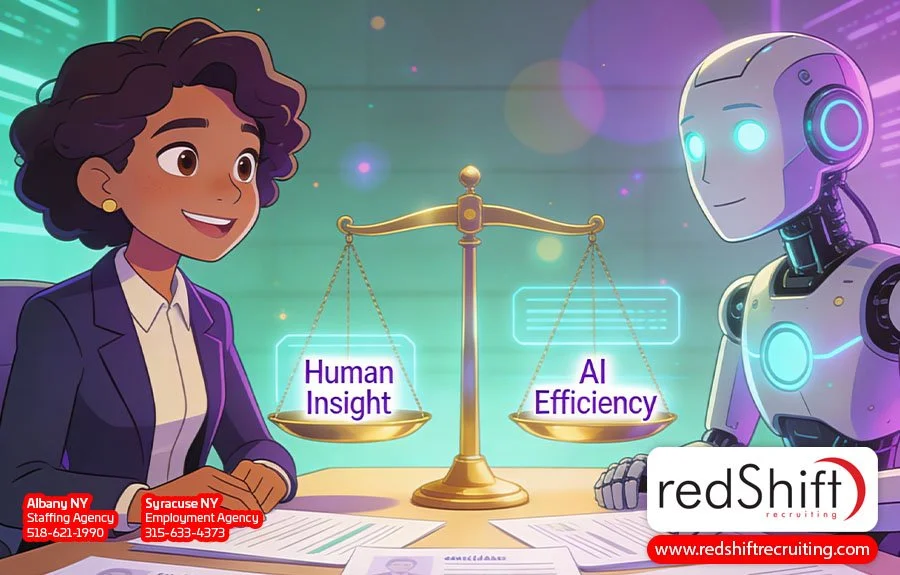
This shift has also elevated the role of recruiters as career advisors and coaches. Rather than simply matching resumes to roles, they provide preparation, perspective, and insider context that AI agents and automated systems cannot infer. They help candidates navigate expectations that aren’t visible in job postings or algorithms and support more informed, confident decisions on both sides of the recruitment process. Successful hiring practices today blend technology with human oversight, combining efficiency with judgment to build relationships, find candidates with the right mix of skills and context, and stay competitive in a changing recruiting landscape.
What These Talent Acquisition Trends Mean for Employers
For employers, today’s hiring environment rewards intention over reaction. As talent acquisition trends continue to evolve, successful organizations are taking a more deliberate approach—clarifying job functions, defining evaluation criteria upfront, and aligning hiring decisions with long-term goals rather than short-term urgency. Clear structure matters more as automation accelerates early screening and increases volume without guaranteeing actual job fit.
At the same time, over-automation without human oversight introduces real risk. Business leaders that want to hire talent effectively must balance efficiency with judgment, using technology to support—not replace—decision-making. Just as important, employers must recognize that hiring outcomes are shaped by what happens after the offer, particularly for early-career employees who need structure, feedback, and support to succeed. Investing in onboarding, mentorship, and development directly influences candidate success rates, building stronger teams over time by improving retention and long-term performance.
Many talent leaders are finding that partnering with experienced recruiters helps hiring teams stay focused, navigate complexity, gain market intelligence, and adapt to recruitment trends without losing sight of candidate quality or the company's values and culture. This combination of structure, judgment, and support is what allows organizations to avoid a talent crisis and remain competitive in a changing hiring landscape.
What These Hiring Trends Mean for Job Seekers
For job seekers, standing out today is less about perfection and more about clarity. Employers are looking for candidates who can explain their experience, demonstrate real skills, and show how they think, not just how well they leverage AI to polish application materials. Proof of skill and reasoning consistently drives better outcomes than surface-level presentation, especially as gen AI tools make highly optimized resumes the standard rather than a signal of top talent. When using these tools, it’s important to review and personalize the output carefully. Generic content produced without oversight is increasingly easy for recruiters to spot—and quickly filtered out.
Understanding how hiring actually works also improves job search results. Knowing where automation plays a role, what employers evaluate later in the process, and how decisions are made helps candidates concentrate their effort where it matters most. This doesn't necessarily require a laser focus on mastering AI tools, but maintaining a competitive edge does mean staying ahead of broader AI-driven changes in how work and hiring systems operate, keeping skills current, and continuing to build new skills as employer expectations evolve.
Building relationships with recruiters can further improve visibility and provide valuable guidance, helping candidates navigate expectations, communicate strengths clearly, and build momentum through informed, human conversations. Allowing recruiters to advocate on your behalf, provide context, and translate experience into employer-relevant terms can make a meaningful difference. In a market shaped by technology and change, clarity, preparation, and relationship-building remain powerful advantages.
Navigating today’s hiring market is more complex than it used to be. Recruiters work at the intersection of employers, candidates, and evolving hiring practices, giving them real-time insight into how these trends are actually playing out. Whether you’re hiring or exploring your next move, working with a recruiter can provide perspective, guidance, and clarity as expectations continue to shift.
Frequently Asked Questions
How Are Hiring Decisions Actually Made After Initial Screening?
After automated screening, hiring decisions typically shift to human review. Hiring teams assess how well a candidate’s experience, reasoning, and communication align with the role’s real demands—not just the job description checklist. At this stage, context matters: how someone explains decisions, adapts to feedback, and fits into existing workflows often carries more weight than perfect credentials. Human judgment still plays a decisive role in identifying the best candidates.
What Does “Verification” Mean in Today’s Hiring Process?
Modern verification processes go beyond traditional employment and education checks to confirm that a candidate’s experience matches how they perform in real-world situations. This can include practical assessments, structured interviews, reference checks, and consistency across resumes and online profiles. As Gen AI tools make it easy for every candidate to look good on paper, verification procedures help employers reduce risk and make confident, data-driven decisions based on substance rather than presentation alone.
How Can Job Seekers Prove Skills Without Formal Credentials?
Candidates can demonstrate skills through work samples, project-based examples, practical assessments, or clear explanations of how they’ve applied their skill set in real situations. The ability to effectively explain your transferable or adjacent skills is especially valuable for those who want to change careers or seek entry-level positions, as their formal job titles and experience may not appear to be an exact match for the job description. Employers increasingly value evidence of capability and commitment to growth over formal credentials alone, particularly as roles evolve.
What Role Do Recruiters Play in an AI-Driven Hiring Process?
Recruiters act as translators between candidates and employers, helping both sides navigate expectations and job market changes driven by AI transformation. For candidates, recruiters provide insight into how roles are evaluated and where to focus effort. For employers and TA leaders, recruiters support better talent management and acquisition by adding context, screening for judgment and fit, and helping hiring teams avoid costly bad hires, especially in complex or fast-moving searches.
How Do Flexible or Fractional Roles Affect Long-Term Career Growth?
Flexible, fractional, and project-based roles can support long-term growth by allowing professionals to build experience across different environments and challenges. For employers, these models help companies plan more strategically by accessing expertise when it’s needed most. For professionals, these roles can lead to broader skill development, stronger networks, and pathways to new opportunities, without relying solely on traditional career ladders.
Conclusion: Hiring Is Evolving—and So Is Opportunity
The hiring trends shaping today’s job market reflect deeper, lasting changes in how work gets done and how people are evaluated. Automation, skills-based assessment, flexibility, and increased scrutiny haven’t removed the human element from hiring—they’ve made it more important. Employers who approach hiring with intention, clarity, and balance are better positioned to build resilient teams, while job seekers who understand how these systems work can navigate them more confidently.
The most successful outcomes won’t come from chasing every new tool or trend, but from staying informed, adaptable, and grounded. Early adopters of new technologies and ways of working often gain an advantage, but only when those tools are paired with sound judgment, continuous skill development, and strong relationships. As hiring continues to evolve, those who remain thoughtful, prepared, and human-focused will be best equipped to move forward—no matter which side of the hiring process they’re on.

Article Author:
Ashley Meyer
Digital Marketing Strategist
Albany, NY