
AI Video Interviews: Helpful Screening Tool or Risky Shortcut for Employers?
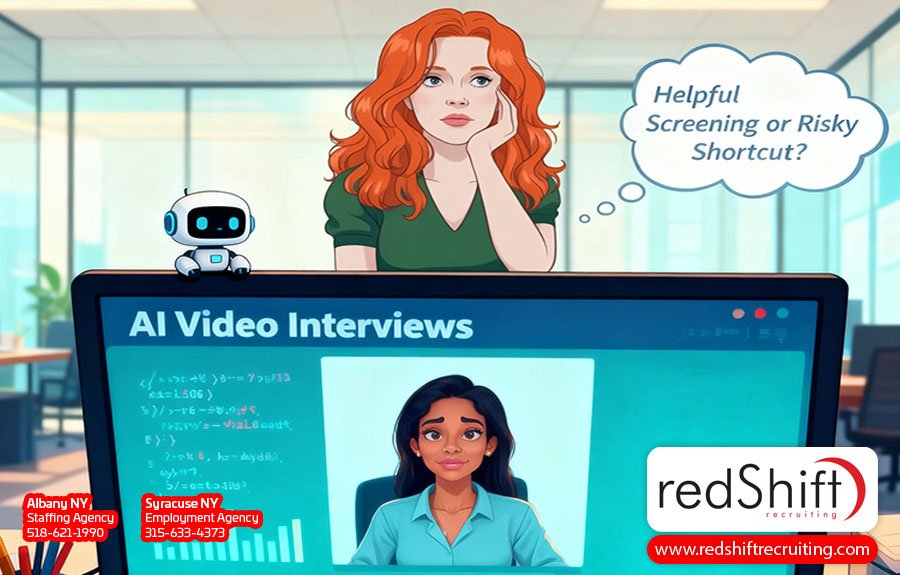
Hiring teams are under pressure to move faster, handle larger applicant pools, and keep the process fair—all without burning out recruiters or overwhelming candidates. AI video interview tools promise speed, consistency, and fewer scheduling headaches, especially for the early screening stages—but does automation actually improve hiring, or does it risk turning a deeply human moment into something rigid or impersonal?
In this article, we take a clear-eyed look at where these tools actually help, where they fall short, and how employers can use them without losing the authenticity and judgment that make hiring decisions effective.
What Are AI Video Interviews, and How Do They Work?
AI video interviews are screening systems that use technology to guide the early stages of a job interview. With these tools, candidates record responses to preset questions, and the system analyzes them using a mix of transcription, natural language processing (NLP), pattern recognition, and scoring logic. Employers typically use AI interviews for high-volume hiring, first-round screening, and quick qualification checks, especially when managing a large number of applicants for the same role.
Unlike traditional live video interviews, where a human interviewer asks questions in real time over platforms like Zoom or Microsoft Teams, AI-driven formats rely on automated questioning through structured prompts delivered by video interview software. These one-way video interviews allow candidates to respond to predetermined questions at their own convenience, avoiding scheduling conflicts and providing more flexibility for both recruiters and job seekers. AI interview platforms often include features such as response transcription, keyword or skills matching, and other automated checks designed to help employers spot essential qualifications faster. Some newer platforms go further by offering fully AI-generated interviewer avatars, creating a more simulation-style experience. Businesses can choose from a wide range of platforms, such as HireVue, VidCruiter, Spark Hire, and Willow, each offering its own mix of automation features and candidate experience tools.
Once the video is complete, a human hiring manager will typically review the candidate responses and decide who moves forward in the process. Alternatively, some systems use AI scoring to evaluate answers before a recruiter ever sees them, especially in early-stage screenings to identify applicants who don't meet basic qualifications. Many modern platforms stick to straightforward analysis of AI interview transcripts, timing, clarity, and content, assessing how well a candidate addresses the question posed, whether their explanation is coherent, and whether their example aligns with required skills or qualifications. Although some older or fringe tools still offer optional facial, voice, or emotion-based scoring, most mainstream hiring platforms have moved away from these features because they are difficult to validate and carry significant regulatory and fairness concerns.
Where AI Video Interviews Improve Hiring Efficiency
For employers juggling a fast-moving hiring process, AI video systems can give hiring managers a clearer path to smarter hiring. The right mix of AI tools makes it easier to screen candidates at scale, improving the speed and efficiency of early assessments, especially for roles that attract a large number of applicants. Because every candidate receives the same prompts and format, the process stays consistent, making it easier for interviewers to compare candidate responses against set criteria.
Most platforms support structured screening through AI-driven assessments, basic skill assessments, and light workflow automation that removes repetitive tasks from a recruiter’s day. Features like AI scoring and transcript-based review help teams make more data-driven decisions while still saving time. These AI-powered systems also allow candidates to complete interviews on their own schedule, reducing back-and-forth emails around scheduling and giving companies more flexibility, especially when teams are spread across multiple time zones or locations.
AI video interviews work particularly well when employers need quick, objective answers to “must-have” questions, such as the candidate's availability, certifications, key skills, technical knowledge, or other dealbreakers. These insights help hiring teams focus on top candidates and accelerate the hiring process. For high-volume roles or frequent hiring needs—like entry-level support, customer service, call center, or seasonal positions—this speed is invaluable, helping employers identify top talent before the best applicants disappear into someone else’s pipeline.
The Risks and Limitations of AI Video Interviews
Despite their efficiency, AI-driven screenings aren’t perfect—and there are several risks hiring teams need to watch for.
Candidate Experience Problems
Even well-designed systems can create a poor candidate experience if the process feels impersonal or overly automated. Human interaction is an indispensable part of the hiring process, and AI tools simply can’t replicate the rapport, reassurance, or context a person-to-person conversation provides. Without real interaction, candidates can’t gauge a company’s values, expectations, or overall culture, and employers lose the chance to see traits like natural leadership, confidence, or genuine engagement.
Overused automation can also create too many hoops for candidates to jump through, leading to drop-off. If the process feels unnecessarily long or disconnected from the job description, even strong applicants may abandon it—meaning employers can lose qualified talent before the process even begins.
Bias and Fairness Concerns
Tools designed to reduce bias can still make incorrect assumptions based on speech patterns, accents, or neurodivergent communication styles. Differences in lighting, camera quality, or internet speed can also influence scoring in ways that aren’t fair, and algorithms may misinterpret technical difficulties as performance issues. These gaps can unintentionally filter out qualified talent before a person ever reviews their application.
Video formats and one-way interviews may also disadvantage candidates without access to strong technology or quiet workspaces. Older devices, slow internet, or shared living environments can all affect scoring, creating accessibility barriers that disproportionately impact certain groups.
Misinterpretation of Soft Skills
AI interviews struggle with warmth, sincerity, nuance, and delivery style, and claims of a comprehensive evaluation often overstate what algorithms can actually do. This mismatch can lead to flawed hiring decisions, especially when the system prioritizes speaking style over substance. Employers who lean heavily on automated scoring without human oversight risk filtering out candidates who have the right skills but simply don’t perform well in an AI-driven format.
Legal and Compliance Risks
Regulations related to AI use in the hiring process are expected to increase, and employers must be prepared for stricter rules around transparency, consent, and documentation. Several states now require candidates to be informed when automated tools are used, and regulators continue to watch technologies like facial, voice, and behavioral analysis closely, as they carry a heavy risk of unintentional discrimination. Companies using these systems must ensure they support talent acquisition efforts without violating EEOC expectations or emerging AI laws.
Deepfake and Identity Fraud Exposure
As fraud technology evolves, so do the tactics bad actors use to exploit it. Deepfakes are becoming increasingly convincing, and identity fraud is on the rise, demanding enhanced vigilance for employers of all sizes. Fraudulent candidates can use AI-altered videos or synthetic personas to slip past automated checks, and without proper verification, hiring teams may not know whether they’re evaluating a real person or only a convincing imitation.
Overreliance on Automation
AI video interviews can support hiring, but they cannot replace a person’s ability to interpret nuance or contextualize what they’re seeing. When teams trust automated scores too much, the system’s blind spots can quickly become the team’s blind spots. AI should support—never override—human judgment in the hiring process.
Worried About Deepfakes and Candidate Fraud?
AI-generated interviews are just the beginning. As hiring teams adopt more automation, attackers are finding new ways to exploit the process, from impersonation attempts to fully synthetic applicants designed to slip past automated screens.
→ Learn How to Protect Your Hiring Process 👇
When AI Video Interviews Help—and When They Don’t
AI video interviews aren’t a universal solution. They work best in structured parts of the recruitment process but tend to fall short when nuance matters.
When AI Video Interviews Help
AI tools can boost hiring speed and reduce repetitive work for recruiters, especially when paired with automated workflows and a detailed plan for early screening. They fit well into existing workflows where consistency and efficiency matter most:
High-volume roles where quick pre-screens keep the process moving
Early-stage screening before a human needs to step in
Jobs with objective, yes/no filters (certifications, shift availability, location)
Entry-level or standardized requirements where responses are easy to compare
Situations where the goal is to complete basic qualification checks before scheduling real conversations
Scenarios where large enterprises need a unified approach across many teams or locations
Used this way, AI interviews help identify great candidates early so humans can focus their time where it counts.
When AI Video Interviews Aren't Enough
But even the best AI tools have limits, and there are parts of hiring where technology simply can’t substitute for real conversation or human insight. AI-driven formats tend to fall short when interpersonal nuance or deeper discussion is required. They are not ideal for:
Leadership or management roles, where communication style and presence matter
Culture-critical positions that require real conversation, back-and-forth, and genuine discussion
Roles requiring collaboration, creativity, or strategic thinking
Highly specialized roles, where expertise must be explored through dialogue
Ambiguous or evolving positions, where success depends on deeper context, judgment, or adaptability
Small-team environments, where personality fit and team chemistry are key
Sensitive industries such as legal, finance, or healthcare, where the stakes and compliance requirements are higher
In these situations, a real conversation with a human will always reveal more than an automated screen can.
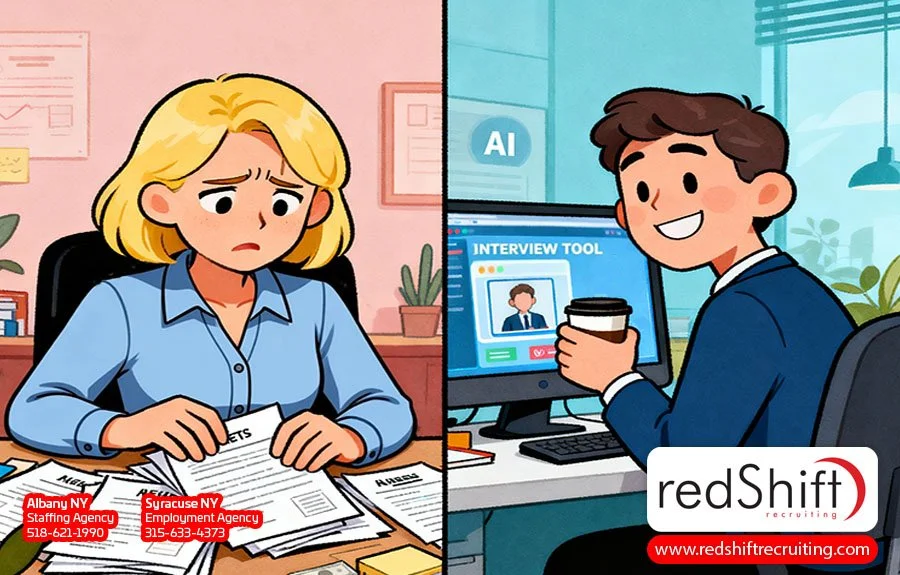
Ethical and Legal Considerations for Employers Using AI Tools
Employers who do use AI video interviews must ensure these tools are fair, transparent, and compliant with emerging regulations. Key considerations include:
Transparency: Clearly state where and how AI is used, as well as why it’s being used, so candidates understand what to expect and how their responses will be evaluated.
Candidate Choice: Offer a non-AI alternative for applicants who prefer a human-led process.
Human Review: Require humans to review all automated recommendations; AI should never make final decisions.
Algorithmic Limits: Avoid “personality,” micro-expression, and audio-based emotion detection—these features are often inaccurate and legally risky.
Accuracy Audits: Regularly check pass/fail patterns to identify scoring issues, demographic discrepancies, or “one bad moment” misunderstandings.
Accessibility: Consider the needs of candidates with disabilities, neurodivergent communication styles, older devices, slow internet, or limited quiet environments.
Data Privacy: Ensure compliance with data retention, storage, and biometric-handling laws.
Regulatory Compliance: Follow state-level notice and consent requirements and monitor EEOC guidance as rules evolve.
Hiring Experience: Prevent workflows that feel overly intrusive or confusing, maintaining a respectful and positive hiring experience.
Used thoughtfully, these safeguards help employers maintain fairness and trust while keeping AI screening aligned with both candidate expectations and the law.
Best Practices for Responsible Use of AI Interviews
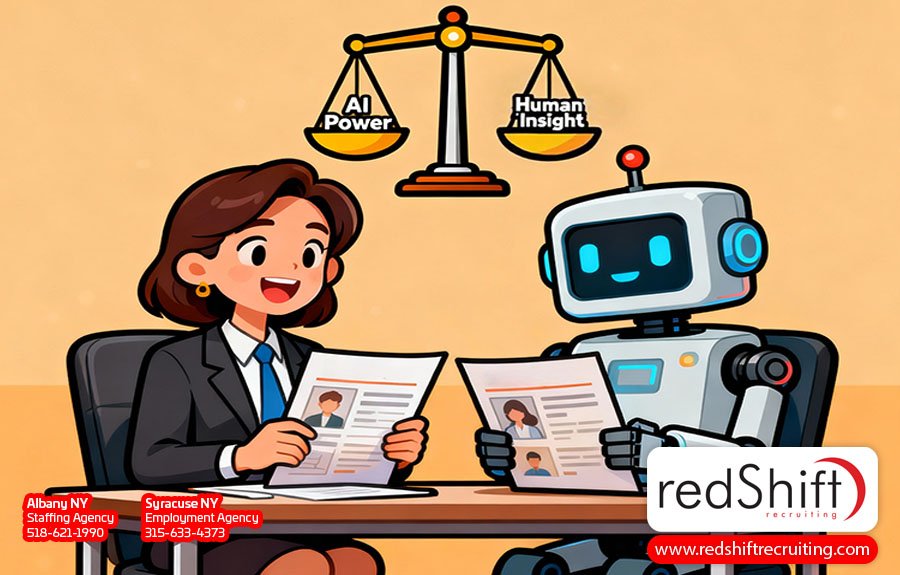
AI should support your team—not replace the human insight essential to good hiring. These best practices help ensure AI tools stay fair, useful, and aligned with real human decision-making:
Use AI for Early Structure, Not Final Decisions
Use AI for first-pass screening and to handle baseline criteria, but ensure humans—not algorithms—define evaluation standards. Automated outputs should inform human hiring decisions, and all AI scoring should be followed by structured face-to-face interviews to validate context and identify nuance. This balance helps teams maintain fairness while improving efficiency.
Keep Questions Simple and Assess What AI Can Actually Measure
Design objective questions that focus on clarity and essential qualifications rather than soft skills that require deeper conversation. AI tools can support consistency, but traits like communication style, cultural fit, or emotional intelligence belong in live conversations. Provide opportunities for follow-up questions so candidates can clarify answers and add context where needed.
Train Recruiters and Build a Strong Human Review Layer
Recruiters should know how AI scoring works, when to override questionable results, and how to interpret transcripts or summaries. Regular review of patterns, transcripts, and any automated red flags supports continuous improvement efforts and helps ensure the system remains fair.
Keep the Experience Candidate-Friendly and Accessible
A streamlined process reduces drop-off and ensures candidates feel their time is respected. Keep workflows short, avoid unnecessary steps, and make sure tools can be used across different devices and environments. Use collaboration tools internally so hiring teams stay aligned and evaluations remain consistent across the organization.
Plan for the Future With Responsible, Scalable Workflows
Build systems that adapt as regulations evolve and as the hiring world shifts. Partnering with staffing experts can help employers integrate AI responsibly into existing workflows and ensure compliance, accessibility, and strong human oversight as technology continues to advance.
Protect the Human Element
Human judgment should remain central, especially for assessing nuance, intent, and real-world fit—areas that no algorithm can replicate. When AI handles structure and humans handle interpretation, employers get the best of both: efficient workflows and thoughtful, high-quality hiring decisions.
Frequently Asked Questions
What Types of Roles Are Best Suited for AI Video Interviews?
AI video interviews work best for positions with clear, standardized requirements, such as entry-level, support, administrative, customer service, or high-volume roles. These jobs typically involve straightforward screening questions that AI can evaluate objectively. They’re less effective for leadership, creative, or strategic positions where face-to-face conversation and deeper dialogue reveal more about a candidate’s suitability and experience.
Are AI Video Interviews Fair for All Candidates?
AI video interviews can be fair when used correctly, but they’re not automatically equitable for every candidate. Differences in technology access, communication styles, and comfort on camera can influence how someone performs and how an algorithm scores them. Employers should offer alternatives, provide clear instructions, and give candidates an easy way to ask questions or request accommodations. Regular audits and structured human review help ensure the process stays consistent and unbiased. Gathering candidate feedback and refining their approach as needed will help employers ensure every candidate has an equal opportunity to shine.
What Red Flags Should Employers Watch for in AI Interview Tools?
Common red flags include emotion or facial-analysis features, unclear scoring criteria, and systems that cannot explain how decisions are made. Employers should also avoid tools that replace human judgment rather than support it, or platforms that don’t allow candidates to easily talk to a real person if needed. Limited accessibility options or poor documentation are additional warning signs. If a tool doesn't allow regular auditing or transparent reporting, it may increase risk rather than reduce it. Choosing vendors that prioritize fairness, clarity, and candidate experience is essential.
How Should Recruiters Validate AI-Generated Interview Scores?
Recruiters should treat AI-generated scores as a starting point, not the final answer. The next step is comparing the AI’s evaluation with human-reviewed transcripts, examples, and job-relevant skills. If the AI flags a candidate for hesitation or delivery style, recruiters should check for context rather than assume it's a performance issue. Discussing results with candidates during follow-up conversations can bring clarity and uncover strengths the algorithm might have missed. Human validation ensures promising applicants aren’t overlooked due to quirks in automated scoring.
What Questions Should Employers Ask Vendors About AI Interview Tools?
Employers should ask vendors how their scoring system works, what data it uses, and how often the model is audited for fairness. It’s also important to understand what human oversight is required and whether candidates can easily reach a real person to ask questions or express concerns. Companies should request documentation on data storage, privacy compliance, and accessibility features. Asking whether the tool can adapt to job-specific skills and how false positives or false negatives are handled helps prevent surprises later. A thoughtful vendor evaluation improves outcomes and ensures the tool supports both hiring teams and candidates, creating a process that is fair as well as efficient.
Conclusion
So, are AI video interviews a helpful screening tool or a risky shortcut for employers? Ultimately, it depends on how they're used. AI tools can streamline early screening, reduce repetitive work, and help hiring teams move faster, but they work best when paired with the judgment, context, and empathy only humans can provide. The strongest hiring strategies use AI for structure and efficiency while reserving real evaluation, context, and connection for human decision-makers. When employers strike that balance, AI becomes an asset—not a shortcut—and hiring becomes both faster and more thoughtful.

Article Author:
Ashley Meyer
Digital Marketing Strategist
Albany, NY