
The Cost of Candidate Fraud: Why Cutting Corners in Hiring Backfires
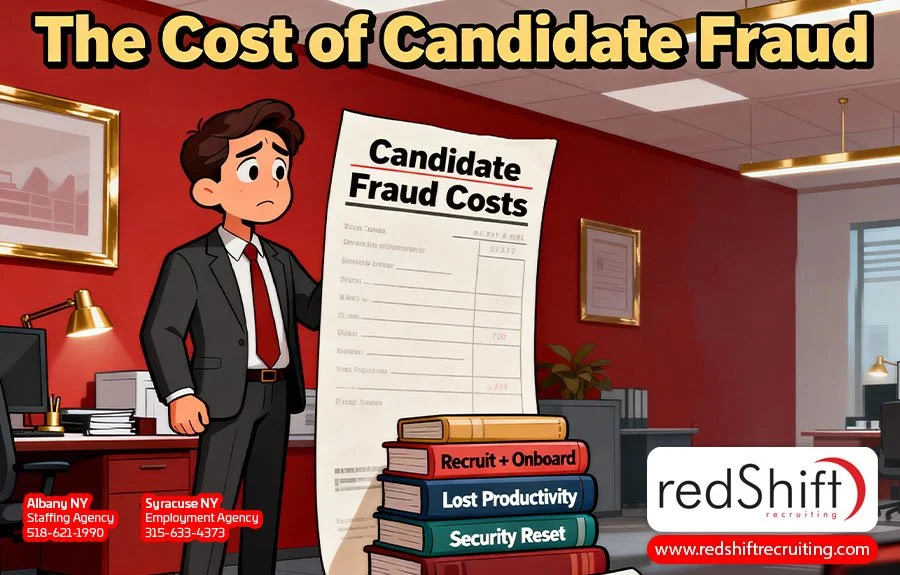
Candidate fraud isn’t a new problem, but the scale, speed, and sophistication of today’s tactics have pushed it into an entirely different category of business risk. Most companies think of candidate fraud as a hiring headache. In reality, it’s a business problem—one that quietly drains budgets, slows down projects, exposes sensitive systems, and erodes trust inside teams. As fraud tactics become more advanced and easier to execute, the cost of candidate fraud is no longer limited to a few wasted recruiting hours. It can ripple through an organization for months, or even years.
This article takes a closer look at what those ripple effects actually look like—in other words, the consequences to your bottom line, from lost productivity and damaged client relationships to cybersecurity concerns and the long-term operational drag caused by a hire who never should have made it past the first round. If you’ve ever felt pressured to “move fast” in hiring, this breakdown will show why slowing down—and tightening your process—is almost always the less expensive option.
New to the topic of candidate fraud?
Start with our overview of today’s most common fraud tactics before diving into the deeper financial and operational impacts.
The Hidden Costs Employers Overlook
While it's clear that fraudulent candidates create problems, leaders often underestimate how far those problems spread. In reality, a single hire who misrepresents their skills, experience, or employment history can trigger financial, operational, and security issues that ripple through the organization long after the person is gone. These are the hidden costs of hiring fraud—the ones that rarely show up on a balance sheet, but always affect it.
The Direct Financial Cost of a Bad Hire
A bad hire is expensive on its own, with estimates ranging from one to three times the person’s salary once you factor in recruiting costs, lost time, and wasted onboarding—but those costs rise sharply when the hire involves credential fraud, identity theft, deepfake technology, or other sophisticated fraud attempts. You’re not just restarting the hiring cycle; you may also be undoing inaccurate work, correcting flawed reports, or repairing operational mistakes. More importantly, fraudulent candidates who rely on stolen identities or falsified credentials can cause direct financial harm through unauthorized access, data theft, or misuse of systems. Even a single incident tied to a deceptive hire can trigger legal fees, regulatory penalties, business interruption, and client loss—far surpassing the cost of merely replacing an underqualified employee.
The Productivity Cost Nobody Measures
Productivity losses are even more expensive, yet far harder to quantify. Underqualified or fraudulent hires often create a chain reaction of delays, rework, and mistakes that slow down entire teams. High performers end up covering gaps, taking on extra tasks, and spending time correcting errors instead of moving strategic initiatives forward. Over time, this drag reduces output, increases burnout, and introduces greater operational instability into already stressed workflows. Teams may also delay decisions or reroute work simply because they can't rely on the output of the fraudulent hire, adding quiet but significant friction to everyday operations.
The Cybersecurity & Compliance Fallout (Even When No Breach Occurs)
If a deceptive candidate entered the organization with malicious intent, rapid security action is essential to protect critical data and infrastructure from data breaches, unauthorized access, and other high-impact threats. But even if the person simply lied to get the job, organizations still have to treat the situation as a potential threat until their intent is known. As a result, every deceptive employee creates a measurable security burden. IT teams must conduct system audits, reset credentials, and review access levels—time-consuming tasks directly tied to the mishire and the accompanying fraud risk.
If the individual mishandled sensitive data, accessed systems they weren’t authorized to view, or failed to follow required security protocols, organizations may also face compliance violations or mandatory reporting requirements. These actions consume resources and expose the business to avoidable legal risks as well as reputational damage. Once an integrity issue is discovered, companies often face heightened scrutiny during future audits or vendor assessments, adding more administrative work and delays—and making prospective clients more hesitant to trust the organization with sensitive projects or data.
The Cultural & Team Impact
The cost of damaged culture is just as real as the financial loss. When teams have to work around someone who shouldn’t have been hired, trust in leadership's decision-making erodes. Morale drops, frustrations rise, and turnover increases—even among your best employees. Repeated hiring missteps also reduce psychological safety, making employees less likely to raise concerns or flag issues early. These issues can filter down into customer interactions, weakening your brand and potentially leading to missed revenue opportunities in the future. Over time, this cultural drag compounds, reducing engagement, trust, and overall team performance.
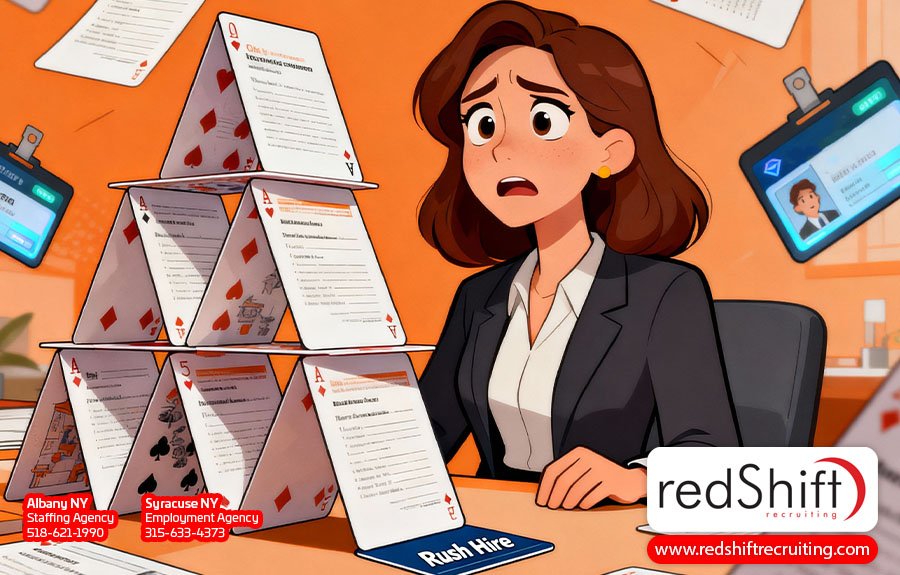
The Ripple Effect: How Candidate Fraud Tactics Damage Business Outcomes
The harm caused by candidate fraud rarely stays contained within one role. When fake candidates slip through the recruitment process, the impact spreads into revenue, client relationships, and long-term operational performance. These ripple effects are often bigger—and far more expensive—than the initial hiring mistake.
Missed Revenue Opportunities
When key hires use AI-generated responses to appear more skilled than they are or submit fake resumes and cover letters to inflate their experience, critical revenue-driving initiatives can stall. In sales, IT, engineering, and project delivery roles, even small mistakes slow down pipelines, derail timelines, or create costly rework. The impact compounds when multiple teams unknowingly rely on the unqualified person’s output, building plans and commitments on data or deliverables that were unreliable from the start. Inaccurate reports or forecasts can also mislead decision-makers, resulting in companywide strategies based on faulty assumptions. And in client-facing environments, one underqualified hire can mismanage accounts, damage credibility, or lose relationships that took years to build.
Damaged Reputation & Client Confidence
Poor work product, inconsistent communication, or missed deadlines from an unqualified hire erodes client confidence quickly. When partners notice unexpected turnover or a lack of quality control, they begin to question whether your organization can maintain standards. For companies delivering services under SLAs or compliance obligations, these lapses can also create contractual risks or jeopardize preferred vendor status. Negative word-of-mouth spreads fast, especially when clients see a disconnect between the professionalism they expect and the performance they receive.
Long-Term Operational Drag
Unqualified employees who consistently deliver subpar work create persistent operational drag that affects efficiency across the entire business. Process optimization efforts stall, documentation becomes unreliable, and teams struggle to maintain consistency when work must be constantly rechecked or rebuilt. This creates a domino effect that slows execution, increases rework, and erodes confidence in core systems and processes.
For companies filling remote positions, the challenge compounds, as misaligned employees can be harder to recognize quickly, and mistakes travel farther before they are caught. Meanwhile, high-performing job seekers may avoid companies known for inconsistent hiring practices, shrinking the pool of truly qualified candidates. Over time, internal stakeholder confidence erodes as well, making cross-functional collaboration slower and less effective. And when leaders delay replacing a problematic hire, the operational damage accumulates and becomes harder to unwind.

Why Cutting Corners in Hiring Backfires
While most companies don't set out to make a poor hiring decision, shortcuts in the hiring process almost always lead to bigger—and more expensive—problems later. Most missteps stem from pressure to move quickly, which creates false confidence in decisions that were never fully vetted. When hiring teams skip critical steps or rely on incomplete information, they create the perfect conditions for weak candidates or even bad actors using stolen identities to slip through unnoticed. That pressure to move quickly creates several predictable patterns that undermine hiring quality.
“We’re in a Hurry” Is the Most Expensive Hiring Strategy
Speed becomes costly when it replaces rigorous screening processes. Rushed interviews and waived reference checks leave hiring managers with an incomplete picture of a candidate’s past performance and capabilities. “Close enough” thinking, combined with the pressure to fill a seat quickly, encourages HR leaders to overlook gaps or ignore skill checks, undermining the accuracy of evaluations and traditional verification methods. Overwhelmed managers may even skip skill validation entirely out of a misplaced sense of urgency. Vague job descriptions and poor communication between interviewers and department heads further widen the door for fraudulent applicants who know how to sound convincing in an in-person interview, but ultimately can’t deliver. These habits weaken the entire hiring process and make it harder for hiring teams to identify red flags that would otherwise be noted through consistent, structured reviews.
Overreliance on Automation Without Human Review
Automation can support hiring, but only when paired with judgment. Some artificial intelligence (AI) tools and ATS systems focus on matching keywords, but lack the ability to evaluate true competency or context, giving inflated visibility to weak applicants who use the right buzzwords. Meanwhile, AI-generated resumes and other materials can create generic content that makes unique individuals read like the same person on paper, flattening valuable distinctions and obscuring red flags. Without a real in-person interview or face-to-face video interview, teams may miss opportunities to interpret key signals, assess cultural fit, and catch fraud before an offer goes out.
Underestimating Higher-Risk Roles
Not every role carries the same level of risk. For example, positions in cloud, infrastructure, security, finance, and engineering have access to sensitive systems and data and therefore require deeper validation and stronger verification methods. Cyber criminals are using increasingly sophisticated tactics to infiltrate sensitive roles, from impersonation techniques to identity manipulation that can bypass surface-level checks. Cutting corners here doesn’t just increase the danger of system misuse or compliance violations—it multiplies downstream costs when strategic systems or critical workflows depend on the hire’s expertise. Without hands-on testing and a strong verification process, surface-level checks can give a false sense of safety in the very roles that demand the most scrutiny.
“Trusting the Resume” Instead of Trusting the Process
Resumes are marketing documents; processes are safeguards. When teams assume that polished credentials reflect real capability, they overlook steps designed for fraud detection, such as structured interviews and thorough background checks. Inconsistent hiring practices across departments also weaken defenses, making it easier for misrepresentation to go unnoticed. Over time, each skipped step reduces the organization’s ability to catch fraud early, allowing issues that should have been identified in the first few hours to instead surface months later—at a much higher cost.
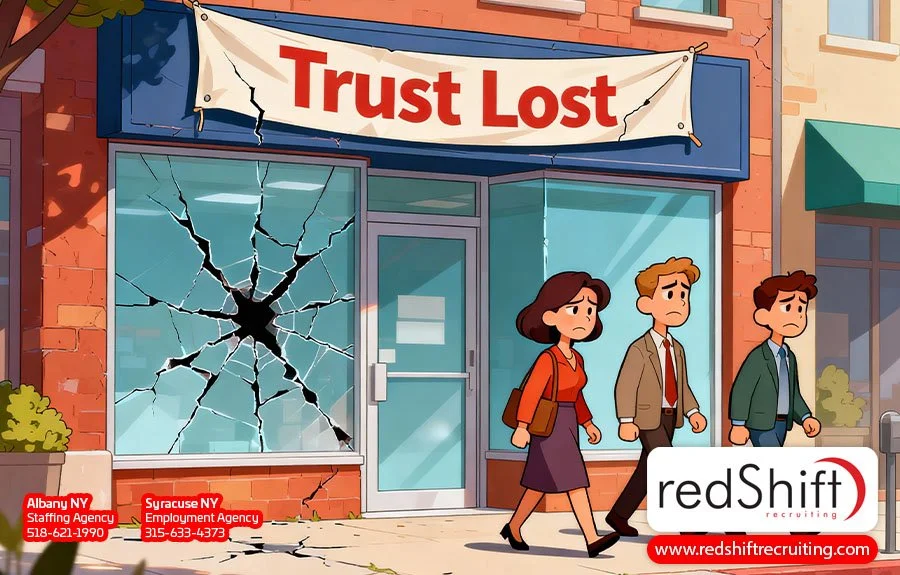
Reducing the Cost of Candidate Fraud: Practical, High-Impact Fixes
Hiring mistakes become most expensive when teams rely on speed or a single verification method rather than a layered, thoughtful process. The goal isn’t to build a burdensome system, but rather to apply proactive measures that make it harder for candidate deception or sophisticated fraud attempts to slip through while still keeping hiring efficient and cost-effective.
Invest in Front-Loaded Screening
A small amount of rigor early in the process prevents far more expensive problems later. Use structured interviews, follow-up questions, and live skills demonstrations to identify inconsistencies that polished resumes or AI-generated answers may hide. Layered reference checks also help verify employment history and uncover behavior patterns that don’t appear on paper. The key is consistency—processes only work when they’re applied the same way across roles and teams. The ROI is simple: the more clarity you gain up front, the less you spend on replacing someone who should never have been hired.
Treat Critical Roles as Critical Risks
Positions tied to identity access, financial authority, sensitive company data, security, or engineering demand deeper review. In these areas, identity fraud or misuse of credentials can escalate quickly. Use stronger detection methods, more rigorous assessments, and cross-team input when the downstream cost of a mis-hire is exponential. Critical roles require proportionally stronger guardrails—not heavier processes, just smarter ones.
Implement Low-Friction Verification Steps That Pay Off
Simple steps dramatically reduce exposure to risk. Use identity verification tools at or before the final interview to validate identity, and incorporate real-time ID verification or government-issued ID checks when needed. Role-specific assessments and consistent criteria make it easier to verify candidates against actual job requirements. Layered checks offer the strongest protection while keeping hiring moving quickly, and cross-team reviews help spot inconsistencies early, reducing the burden of expensive corrective action later.
Build a Culture of Thoughtful Hiring
Processes only work when teams use them. Encourage managers to document decisions, ask clarifying questions, and escalate anything that requires further investigation. When leaders reward diligence instead of speed, they naturally prevent fraud at the point where it’s cheapest to address it and avoid relying on risky shortcuts that weaken hiring outcomes.
When a Staffing Partner Saves You Money
A strong staffing partner doesn’t just fill open roles—they help reduce the financial, operational, and security risks that arise when hiring moves too quickly or relies on inconsistent internal processes. Some of the most impactful ways recruiters can reduce those risks and costs include:
Expertise in spotting red flags early: Recruiters who evaluate high volumes of candidates can quickly identify red flags, such as inconsistent employment dates, unusual patterns, or other signals that point to fraudulent applications or a potential fake identity. This is especially valuable in remote hiring settings where direct interaction is more limited.
Access to pre-verified talent pools: Agencies maintain candidates who have already undergone background screening, identity checks, and evaluations by human reviewers, reducing exposure to fake candidates and constantly evolving threats.
Cost protection through stronger matching: Better alignment on skills, expectations, and risk reduces downstream costs tied to turnover, retraining, or reactive fraud detection. Thorough candidate vetting supports comprehensive fraud prevention plans without slowing hiring velocity.
Support for high-risk or technical roles: Staffing partners understand when certain positions require deeper scrutiny, especially in high-access environments vulnerable to targeted infiltration. Their processes help employers verify identity and confirm qualifications with greater certainty before making a hire.
Alignment with internal risk and compliance standards: Agencies collaborate with HR teams, IT, and security leadership to ensure hiring decisions don’t introduce unnecessary compliance risks and that screening expectations match the organization’s risk profile.
A thoughtful staffing partnership strengthens hiring quality while reducing the long-term costs that come from avoidable mis-hires.

Frequently Asked Questions
What Is the True Cost of Candidate Deception for Employers?
Candidate deception leads to far more than a simple replacement cost. Employers may face stalled projects, lost revenue, compliance exposure, and—if the individual misused systems or installed malware—direct financial or cybersecurity damage. Deceptive hires also cause cultural erosion, team burnout, and long-term operational drag that continues well after the person is gone. And just as fake job listings can harm your employer brand, fraudulent candidates can damage your internal trust and operational reputation in ways that take years to repair.
How Can Employers Calculate the Financial Impact of a Bad Hire?
A baseline estimate includes recruiting spend, onboarding time, training costs, and lost productivity—but the true number must also account for risks like rework, client churn, fraudulent activity, and recovery efforts to mitigate damage or clean up inaccurate work. High-risk incidents can extend costs into legal fees, data-loss mitigation, regulatory reporting, or damaged business relationships. Employers should also factor in the added burden of having to restore data accuracy and rebuild systems or workflows that were compromised.
Why Do Rushed Hiring Processes Increase the Risk of Fraudulent or Fake Candidates?
When hiring teams move too quickly, they skip steps that detect misrepresentation—such as taking time to verify identity, conduct structured interviews, and perform reference checks. This creates blind spots that allow applicants using AI-written materials, impersonation tactics, or even AI-powered deception tools to appear more qualified than they are. In fast-moving environments, scrutiny drops and assumptions rise, making it much easier for fraudulent candidates to bypass safeguards and blend into the hiring pipeline.
What Roles Carry the Highest Financial Risk if a Fraudulent Candidate Is Hired?
Jobs with access to sensitive systems, client data, financial authority, or infrastructure carry the largest exposure. Cloud, cybersecurity, engineering, and finance roles can be exploited for unauthorized access, data manipulation, or operational disruption—risks amplified in remote work environments where oversight and real-time visibility are more limited. A single mishire in these areas can trigger cascading financial, operational, and reputational consequences that far exceed traditional hiring risk.
How Does Candidate Fraud Create Long-Term Operational and Productivity Costs?
Fraudulent or underqualified hires generate rework, delays, and downstream errors that affect multiple teams. Their output often needs correction, documentation becomes unreliable, and strategic initiatives lose momentum. Over time, these compounding inefficiencies weaken performance, reduce agility, and force organizations to divert resources away from growth and toward remediation.
Conclusion: The Real Cost of Candidate Fraud
Candidate fraud isn’t just a hiring problem—it’s a business risk that touches revenue, security, operations, and team health. One deceptive hire can quietly reshape workflows, undermine trust, and create costs that far exceed the price of filling a role correctly the first time. But with structured processes, thoughtful verification, and a willingness to slow down when it matters, employers can dramatically reduce those risks. When hiring becomes intentional rather than rushed, organizations protect their teams, strengthen their culture, and build a more stable foundation for long-term growth.

Article Author:
Ashley Meyer
Digital Marketing Strategist
Albany, NY