
Why Is Your Job Hard to Fill?
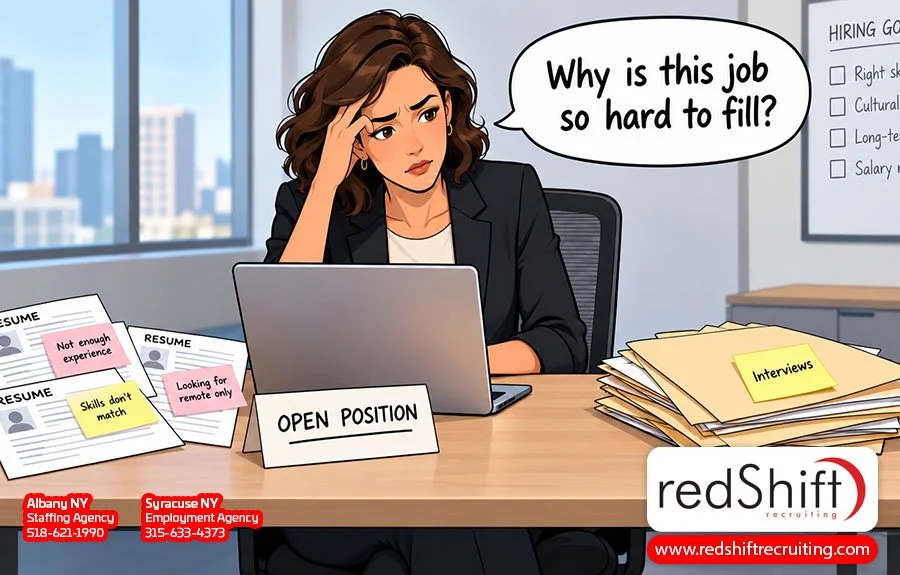
The job has been posted for weeks on job boards, your company's career portal, and social media. Applicants have trickled (or even flooded) in, but very few meet the hard requirements the hiring manager set. You've interviewed the candidates who looked good on paper, but so far no one has checked all the right boxes. The job description has been rewritten, the salary raised, and thousands spent on sponsored job postings, but the right person remains elusive. And yet you keep hearing that there are plenty of people looking for work.
So why is your job hard to fill? It isn't because hiring has stopped. The U.S. Bureau of Labor Statistics reported 5.2 million hires in August 2026, while employers had 7.1 million job openings at the end of the month (August 2026 Job Openings and Labor Turnover data). These national totals provide context, but they offer little insight into whether anyone with the right skills, in the right place, at the right price, wants your particular role.
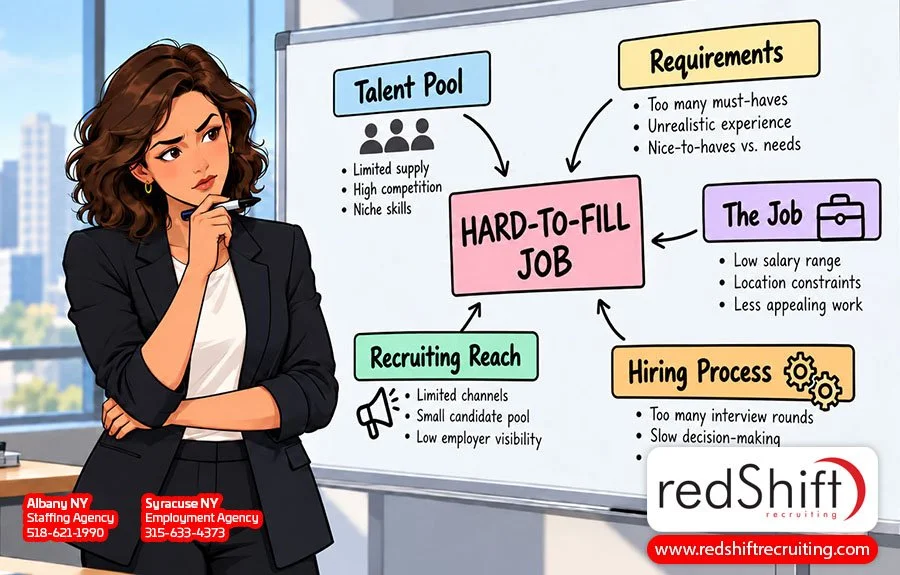
If your company is struggling to make a new hire, the cause usually falls into one of a few categories, and sometimes it's more than one. There may be a talent shortage in your industry, or your requirements may be shrinking the field. Perhaps the job isn't competitive, or the right candidates just aren't seeing it. Or the hiring process itself may be driving good people away.
Before you sponsor another ad or give up on the search, take a moment to diagnose the real problem. This article walks through the questions that will help pinpoint where your search is breaking down, so you can match the solution to the problem and avoid spending more time and money until you know what's actually wrong.
Is the Talent You Need Actually Available?
Overall unemployment rates and hiring trends can help employers understand the larger economy, but they don't necessarily explain why one specific job is difficult to fill. Assessing your own situation starts with taking another look at what the role requires and asking how many available candidates are realistically likely to meet that bar.
The more specialized the combination of requirements, the smaller the candidate pool is likely to become. Geography alone can shrink the available workforce considerably. Add a specialized skill set, a minimum level of experience, required credentials, or less desirable working hours, and the number of people who meet all of those criteria may be much smaller than expected.
Of course, some positions are hard to fill for good reason. Certain occupations legally require a license, degree, or certification. In others, specific expertise may be nonnegotiable because the work demands fluency in particular regulations, systems, or technical processes. In those cases, simply casting a wider net may not help because the candidate pool is truly more restricted.
To judge whether the talent you need is actually limited, look at more than application volume. A job posting may attract hundreds of applications but only a handful of people who meet the requirements. At the same time, qualified candidates may never even see the ad because they aren't actively job searching.
Start by identifying the qualifications that are nonnegotiable, then look at similar local openings to see how often employers are competing for that same combination of skills, experience, and credentials. Check occupation-specific labor data for your area, and compare that with what your own search is producing: Are qualified candidates consistently hard to find, even through direct sourcing and recruiter outreach? If several sources point to a small pool, the talent shortage is probably real. If the market appears to contain more viable candidates than your search is reaching, the next step is to look at your own criteria.

Are Your Requirements Making the Candidate Pool Too Small?
Sometimes what looks like a talent shortage is really an overly narrow definition of the "right" candidate. Before assuming there's a talent shortage, take a closer look at the criteria you are using to screen people in or out.
What experience does the new hire truly need to be successful from day one? Separate essential skills from those a capable candidate could reasonably learn within a few months.
Do they really need experience in your exact industry? Closely related experience may provide enough of a foundation, especially when the core responsibilities or technical skills transfer well.
Is a degree or certification necessary for a clear reason? Some credentials are legally required or genuinely important to the work. Others remain in job postings simply because they were included the last time the position was filled. If you can't explain how a requirement directly affects someone's ability to succeed, ask whether it should still be screening out strong candidates or discouraging them from applying.
Have the requirements accumulated over time? Responsibilities can shift between employees and teams, leaving one person with an unusual mix of technical, operational, administrative, sales, and customer knowledge. When that employee leaves, the company may unintentionally start searching for a combination of experience that is extremely hard to find, making the search feel nearly impossible. Consider whether some responsibilities should be split, reassigned, or supported differently so the role reflects a realistic combination of skills and expectations.
Are you trying to recreate the last employee? It is natural for managers to picture the person who previously thrived in the role, but the focus should be on defining what the business needs now, not finding Former Employee Version 2.0. Someone with a different background or career path may still bring the judgment and skills the job requires, along with new ideas or experience that could strengthen the team.
Revisiting requirements doesn't automatically mean lowering your standards. It means deciding which standards are truly necessary and which could be met by upskilling employees to mitigate a talent shortage or challenging role. If you are still sorting that out, defining the role's must-have, preferred, and learnable qualifications and adjusting your search criteria accordingly can help you tell the difference between a genuinely scarce candidate profile and one that has been defined far too narrowly.
Are the Right Candidates Seeing the Job Opening?
If your job ad isn't bringing in qualified applicants, ask whether the right people are even seeing it.
A job title built around internal jargon or creative phrasing can make the opening harder for candidates to find, especially when it doesn't include the terms they actually search for. If corporate policy requires an official or specialized internal title, ensure the job posting's headline, summary, and bullet points prominently feature the standard industry terms candidates actually search for.
A vague posting can create additional problems, as potential employees may not be able to tell whether the role fits them, and unqualified candidates may apply because they misunderstand what the job involves.
Not all sourcing channels are equal, either. Different job boards tend to work better for different types of roles, so relying on one channel can limit your reach to active job seekers who happen to use it. At the same time, ignoring passive candidates means missing qualified people who aren't regularly scanning job listings. In high-demand fields, some of the strongest candidates may need to be reached through direct sourcing, referrals, recruiter outreach, or other channels.
As you consider your sourcing strategy, don't focus only on putting the opening in front of more people. More applicants won't help if they come from the wrong audience. Focus instead on getting the job in front of the right talent.
Is the Job Competitive?
If qualified candidates exist and your requirements aren't unnecessarily narrow, the next question is whether your opening is competitive enough to win them.
Look at the whole opportunity rather than focusing on any one aspect:
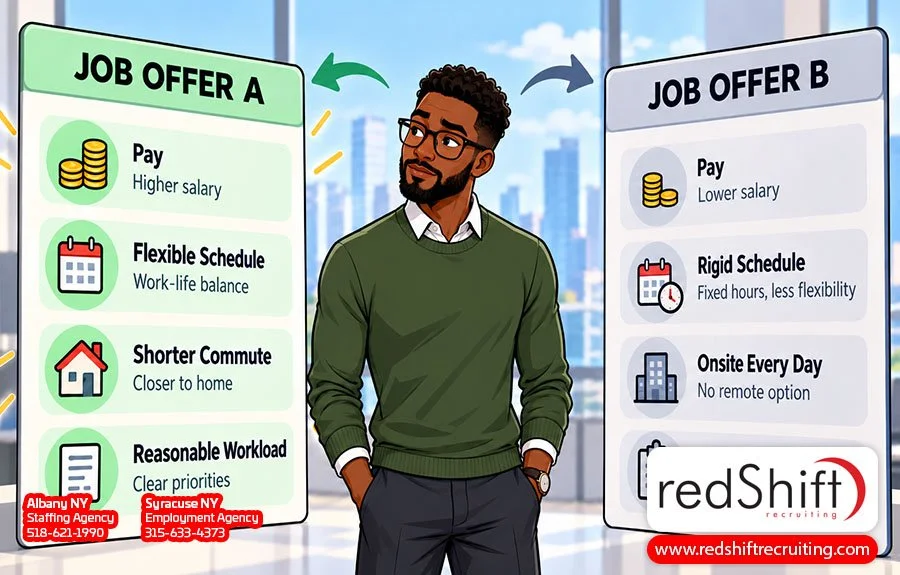
Are the compensation and benefits competitive for what you're asking someone to do? Salary should reflect the experience, responsibilities, and demands of the role. Strong benefits can offset a somewhat lower salary for some candidates, so compare the full compensation package with similar employers. Look at salary data for your area, broader market benchmarks, and the level of experience you expect from the employee to judge what is likely to be competitive.
What does the schedule and type of work ask of employees? Consider working hours, overtime, weekends, shift length, schedule predictability, travel, and other demands on a candidate's time. In the healthcare industry, for example, a nurse may weigh shift length, weekend rotation, and overtime expectations alongside the hourly rate. Jobs that are physically demanding, repetitive, hazardous, highly stressful, or otherwise difficult to sustain may also need stronger pay, benefits, or other advantages to attract and retain workers, and inflexible work arrangements may reduce the candidate pool.
How does the job fit into someone's life? Commute, onsite requirements, flexibility, benefits, and time away from home can all influence whether an opportunity works for a particular person. Candidates comparing similar roles may choose the one that fits their circumstances better, even if another offers similar or slightly higher compensation.
Does the scope match the position? Even if you can find someone with the necessary skills, the role still has to offer a reasonable exchange for the workload and responsibility involved. Consider whether the title, pay, level, and support accurately reflect what the employee will actually be expected to handle.
Does the title accurately represent the job? If a title suggests a junior role while the responsibilities require substantial experience, or candidates can't tell where the position fits within their career field, qualified candidates may overlook it or decide not to apply.
What will candidates find when they research your company? Job seekers may look at employee reviews, your website and social presence, or ask people in their network what it is like to work there. A weak or inconsistent reputation can make an otherwise competitive opening harder to fill, while a strong employer brand can give candidates another reason to choose you.
Is high turnover telling you something? If employees repeatedly leave because of the schedule, workload, travel, location, pay, or another condition built into the role, replacing them without addressing that issue may lead to the same hiring problem again.
A more demanding job may need higher compensation, stronger benefits, greater flexibility, or another clear advantage to be competitive. But a job doesn't have to be undesirable to be hard to fill. Strong candidates may simply have alternatives that offer more, ask less, or fit their lives better. The question for employers is whether the people they want to hire have enough reason to choose their opening over another.
Where Is Your Hiring Search Breaking Down?
A difficult-to-fill role can point to different problems depending on what you're seeing in the search. Before changing your entire approach, match the symptoms you're seeing with the most likely causes.
Very few applicants. Review visibility, job title, sourcing channels, location, requirements, and whether the opportunity is competitive enough to attract interest.
Many applicants, few qualified. Revisit whether the required experience and skills reflect what the job truly needs, and whether enough people with that background exist in your market.
Qualified candidates are available, but interest is low. Compare the job with realistic alternatives. Salary, schedule, flexibility, workload, location, benefits, and employer reputation may all influence whether candidates want to pursue it.
Nobody seems good enough. Make sure the hiring team is focused on the qualifications that matter most. If every candidate falls short, expectations may be unclear, too narrow, or disconnected from what the job actually requires.
The role keeps changing. Pause and clarify what the business needs. When responsibilities, level, or requirements keep shifting, recruiters and managers may be working from different expectations, while candidates are responding to a role that isn't what the company actually wants to hire.
The work can't wait. Separate the immediate workload problem from the permanent hiring problem. Temporary or contract support can cover urgent work, while broader sourcing or outside recruiting helps expand the search for the long-term hire.
The hiring process itself can also become part of the problem after qualified candidates enter the pipeline. Long delays, unclear communication, unnecessary interview rounds, too many approvals, or changing expectations can cause strong candidates to lose interest before a decision is made. A poor candidate experience can also affect future searches if candidates share negative feedback publicly or through their networks. If good candidates are entering the process but not making it to hire, it may be time to review how your hiring process is working.
You don't always need complicated research or a sophisticated recruiting dashboard to spot the pattern. Look at what your search is producing: whether people are seeing the job, whether the right people are applying, whether qualified candidates are interested, and whether they continue through the process. Where the results start falling short tells you where to investigate first.
Don't change everything at once. Identify the most likely source of the problem, address it, and watch what happens next. If the results improve, you have learned something useful about the search. If they don't, move to the next likely cause.

Frequently Asked Questions
Are Some Jobs Naturally Harder to Fill Than Others?
Yes. Hiring difficulty can vary significantly by role, location, experience level, required credentials, and available worker population. For example, a specialized tech worker such as a data scientist who needs advanced analytical skills, experience with specific tools, and a strong technical background may be harder to find than an entry-level cashier role that requires little to no previous experience. The truth is that a job's specific requirements and local talent pool usually tell you more than the industry label alone. Before you assume a role will be hard to fill, look at the market for that specific position and find out whether the challenge is real or being created by the search requirements.
Can I Teach the Skills Required to Fill a High-Demand Job Opening Instead of Waiting for a Perfect Candidate?
Often, yes, depending on the role. The idea is to separate the abilities someone must already have from tools, systems, or processes you can reasonably teach after hire. Compare the time and costs of training with the cost of leaving the role open. This approach will not work for every licensed, regulated, or highly specialized position, but it can open the door to career changers, candidates from adjacent fields, and parents or other caregivers returning to the workforce. A clear professional development plan can also make the opportunity more attractive.
How Long Should I Wait Before Changing My Job Posting?
There is no universal deadline. Rather than waiting and hoping the next round of applicants will be better, watch the early results. If the posting is getting little visibility or few applications, review the title, sourcing channels, location, employment type, and competitiveness of the job. If plenty of people apply but few qualify, look at the requirements and how clearly the role is described. In a fast-moving sector or an urgent search, you may need to adjust sooner. Change one meaningful variable at a time when possible so you can tell what actually improved the results.
Does High Turnover Always Mean the Job Is the Problem?
No. High turnover can also reflect poor hiring matches, weak onboarding, management issues, limited advancement, or other factors. Look for patterns in when people leave and what they say in exit interviews, employee feedback, or other conversations. One departure is not necessarily cause for worry, but repeated turnover in the same role or for similar reasons deserves a closer look.
When Is It Worth Bringing in Outside Recruiting Help?
Outside recruiting help can be valuable when the search requires more reach, specialized sourcing, market knowledge, or time than your internal team can easily provide. Recruiters can also help identify whether compensation, requirements, job title, or candidate availability may be contributing to the difficulty.
They are especially useful for specialized roles, searches that need passive-candidate outreach, or vacancies that are consuming significant internal time. Consider the recruiting fee alongside the real cost of the vacancy through delayed work, overtime, lost productivity, or missed opportunities.
Conclusion: Solve the Right Hiring Problem
A hard-to-fill role is a signal that something between the available talent, the job itself, your recruiting approach, and the hiring process needs a closer look.
Waiting longer or spending more money doesn’t necessarily fix the right problem. An open position can hurt productivity, add work for the rest of the team, increase costs, and contribute to missed sales or deadlines. Before you spend more or wait longer, identify which part of the search is preventing the right candidate from becoming your next hire. Once you know where the problem is, you can make a more targeted change instead of guessing.


Article Author:
Ashley Meyer
Digital Marketing Strategist
Albany, NY