
What Happens After You Apply for a Job?
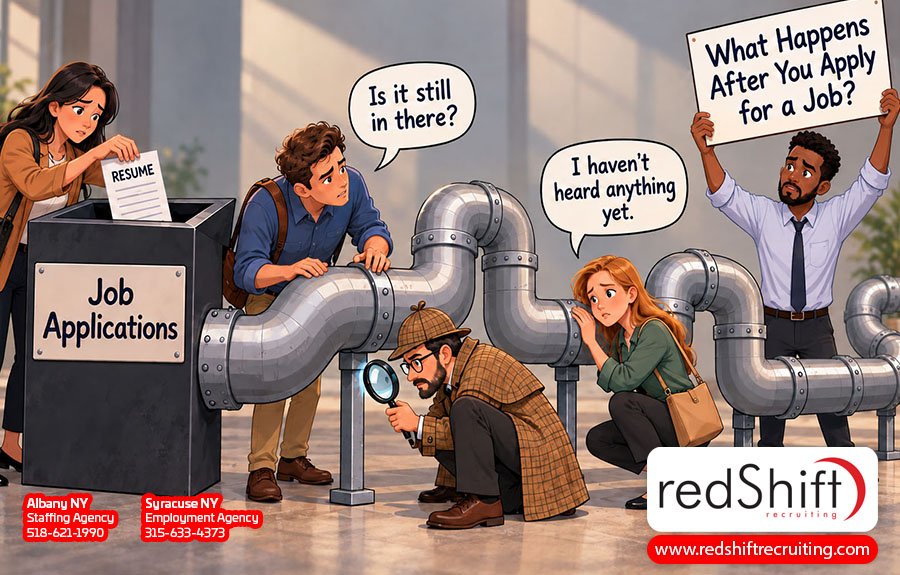
Submitting a job application can feel like sending your resume into the abyss. You click submit, receive an automated confirmation, and then…wait. Without a clear window into what happens next, it's easy to wonder if a hiring manager ever saw your resume, whether you were screened out by an automated system, or why you never heard back even though you were sure you were qualified.
So, what happens after you apply for a job? The answer often varies by employer, position, and hiring process. Each company may work a little differently, but applications often move through some combination of recruiting software, screening questions, and review by a recruiter or hiring manager before decisions are made about which candidates move forward. While most job seekers can't know the exact path their resume takes, understanding what commonly happens behind the scenes can make the wait a little less mysterious and help you stay focused on the parts of your job search you can actually control.
How Your Application Moves Through the Hiring Process
The exact process varies by employer, but applications commonly move through some version of these stages:
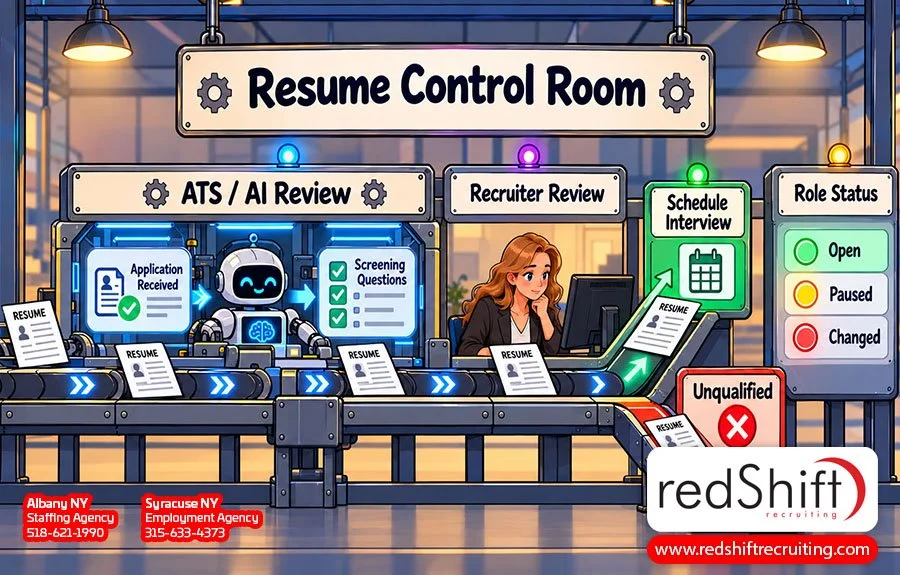
Your application is received. Your resume, application answers, and any other information you submit usually enter an applicant tracking system (ATS), recruiting platform, job-board dashboard, or another hiring system. These tools help employers organize candidates, maintain records, communicate with applicants, and track progress. You may receive an on-screen or emailed confirmation, and some employers ask you to register for a candidate portal account. Depending on the employer's system and retention practices, your application may also remain on file after the original search ends, allowing recruiters to find previous candidates when another relevant position opens.
Initial screening. Screening questions, sometimes called knockout questions or hard qualifiers, may ask about work authorization, location, schedule, or required credentials. If an employer has configured one of those answers as disqualifying, selecting the wrong response may automatically remove you from consideration. Employers may also search or filter applications by keywords, skills, experience, and location, while some systems use AI tools or other features to rank, match, or summarize candidates. Exactly how much of this is automated depends on the employer and the system they use—there is no universal ATS formula that reads every resume, counts keywords, and rejects anyone who falls below a certain score. Initial screening often takes one to two weeks, but it varies by employer.
Recruiter or HR review. A recruiter, HR employee, or another reviewer may evaluate the remaining applications and narrow the pool. If a job post draws hundreds of candidates, every resume may not receive the same amount of time or a line-by-line read, which is why clear formatting and easy-to-find qualifications are so important. A recruiter or other staffing professional should be able to quickly identify the experience and skills that make you relevant to the role.
Hiring manager review. The hiring manager, department leader, or another decision-maker may review a smaller group selected during the initial screening and recruiter or HR review, then decide which candidates move forward.
Interviews and assessments. Candidates who move forward may go through multiple interview rounds, including recruiter screens, hiring manager interviews, or panel interviews, along with skills tests, work samples, or other assessments. The exact format depends on the position, the company, and the hiring team. An initial phone screen may last around 15 to 30 minutes and is often used to confirm a candidate's qualifications, interest, availability, and general fit for the job before their resume moves on to a hiring manager or other decision-maker.
Final checks and an offer. Later stages may include reference checks, and employers may verify employment history, education, or certifications during the hiring process, along with any other required pre-employment checks. If selected, candidates may receive a verbal or written offer, followed by onboarding steps, paperwork, and other next steps.
Not every employer reviews applications on the same schedule. Some read applications as they arrive, while others wait until a certain date or until they have built a larger candidate pool. That timing can affect whether your application is reviewed early, compared against a fuller pool later, or still sitting in the system when the job has been closed.
What Can Application Updates Actually Tell You?
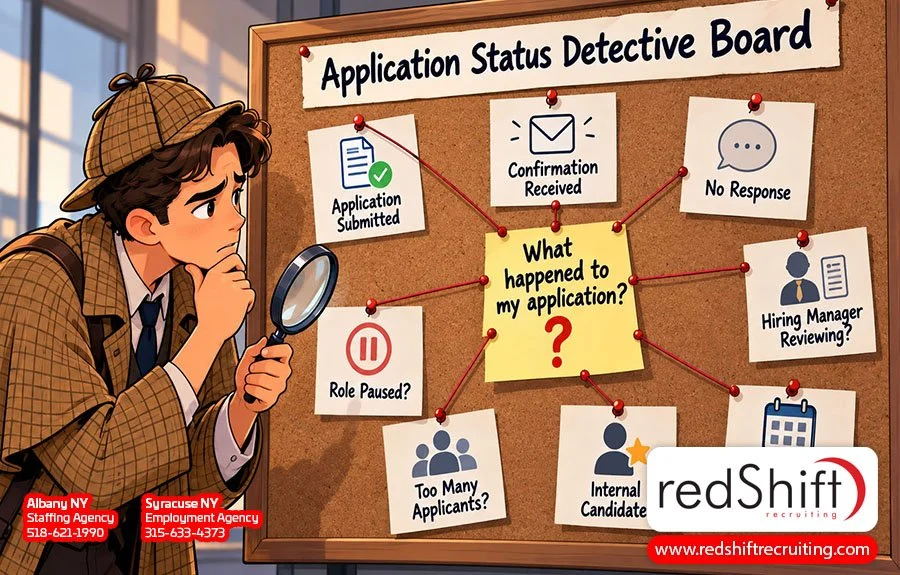
But what about the application that gets rejected almost instantly, or the email that lands in your inbox at 1 a.m.? Is that proof that an automated system rejected you without a human ever seeing your resume?
In some situations, automation may indeed be the reason. An employer may have configured screening questions or other rules to automatically remove applicants who don't meet key requirements, and a system may also send rejection notices at odd hours or in batches. However, a quick rejection or strange timestamp is not definitive proof that no person reviewed your application. A recruiter could have made the decision earlier, and the system sent the email later. The hiring team may be working across time zones, or someone may simply be working outside normal business hours. Agency recruiters, in particular, often work in fast-paced, placement-driven, or commission-based environments and may keep less traditional hours than an in-house recruiter.
The same caveats can apply to application statuses. Seeing “Under Review” or “In Process” for two weeks may mean your application has stalled, but it could also mean the employer reviewed it without updating the status. Some systems use broad labels that do not reflect every step in real time.
Other unknown factors can also affect your application. A company may pause hiring, revise the job requirements, fill the position internally, change the budget, or decide it no longer needs to hire at all. Employers don't always explain these internal changes to candidates, so don't assume a rejection is a direct reflection of your qualifications.
And sometimes, the explanation is simply poor communication. Employers may be slow to update candidates, fail to close out applications, or send generic rejection messages that offer little useful context.
When that happens, candidates are often left trying to interpret a process they can only partially see. A rejection, delayed status update, or unusual email timing may offer a clue, but rarely enough to tell you exactly why the decision was made, whether a human reviewed your application, or how much your qualifications actually factored into the outcome.
How Do Employers Decide Which Candidates Move Forward?
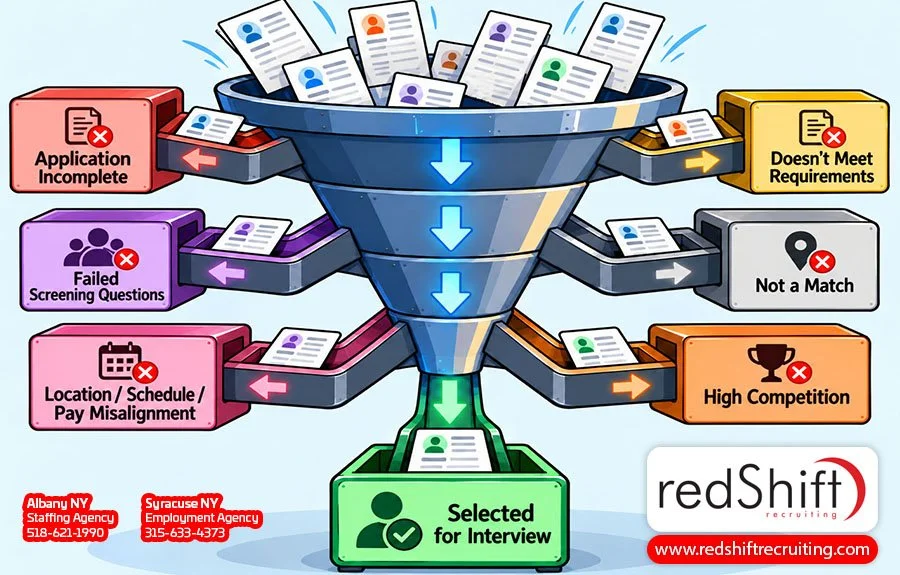
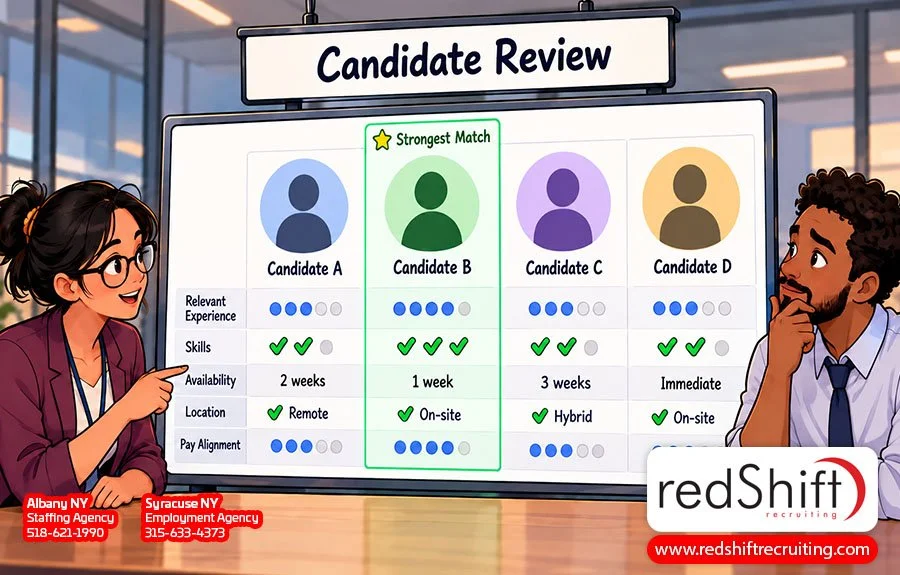
Meeting the qualifications for a job doesn't guarantee an interview. Employers often need to narrow a large applicant pool to a much smaller group, prioritizing candidates whose applications most clearly demonstrate the experience and skills they need. Meanwhile, some high-volume, hourly, or credential-based roles may use simpler screening thresholds or begin interviewing qualified applicants as they are identified rather than comparing the entire applicant pool at once.
Depending on the job description, company, and industry, employers may consider:
relevant work experience;
required skills, education, licenses, or credentials;
answers to screening questions;
location and whether the job is on-site, hybrid, or remote;
schedule and availability;
pay or compensation expectations compared to the determined salary range;
how clearly the resume shows relevant qualifications and strengths;
when the application was submitted;
other priorities specific to the role or department.
None of this is perfectly consistent. Job posts don't always reflect what the manager cares about most, priorities shift mid-search, screening questions can be too rigid, and technology may malfunction or be poorly configured. And sometimes, human reviewers can overlook great candidates. Not getting an interview doesn't always mean you weren’t qualified. Several candidates may meet the listed requirements, while the hiring manager only has time to interview a small number. You might not move forward because of heavy competition, timing, a qualification that was more important than the posting made clear, or simply the way that particular employer chose to run the search.
Why Don't You Always Hear Back After Applying?
Few parts of searching for a new job are more frustrating than submitting an application and hearing nothing. Silence after applying can happen for several reasons:
The search changed or stalled. The company may have paused hiring, changed the role, filled the position, or canceled the search.
There are too many applicants to update individually. When hundreds of people apply, some employers only contact the candidates they plan to move forward. Automation and applicant tracking systems can actually improve this issue, but only if they're set up effectively.
The hiring team is still deciding. Reviews, interviews, approvals, or changing priorities can stretch the process out much longer than candidates expect, particularly when several people need to interview candidates, provide feedback, or approve the final decision.
The posting stayed up after the search changed. A job might still be posted even after the employer's plans have changed or the opening is no longer active. The listing may not have been taken down yet, or it may be automatically refreshed, syndicated, or reposted through another job board.
The posting may be evergreen. Some employers keep certain openings posted continuously to build a pipeline of candidates for recurring or future needs rather than one immediate vacancy. In those cases, there may not be a hiring decision happening on the same timeline you would expect from a typical open position.
Communication is poor. Some employers simply do not close the loop, and rejection notices may arrive late or never arrive at all. Sometimes candidate communication is not prioritized; other times, a busy hiring team loses track of updates or someone simply fails to follow through.
From the job seeker's perspective, all of these situations can look exactly the same: no response. That is understandably frustrating, and employers have room to improve how consistently they communicate with applicants. While knowing some of the reasons silence happens doesn’t make it less disappointing, it can help you avoid treating one unanswered application as a definitive judgment of your qualifications.
What Can You Do After You Apply?
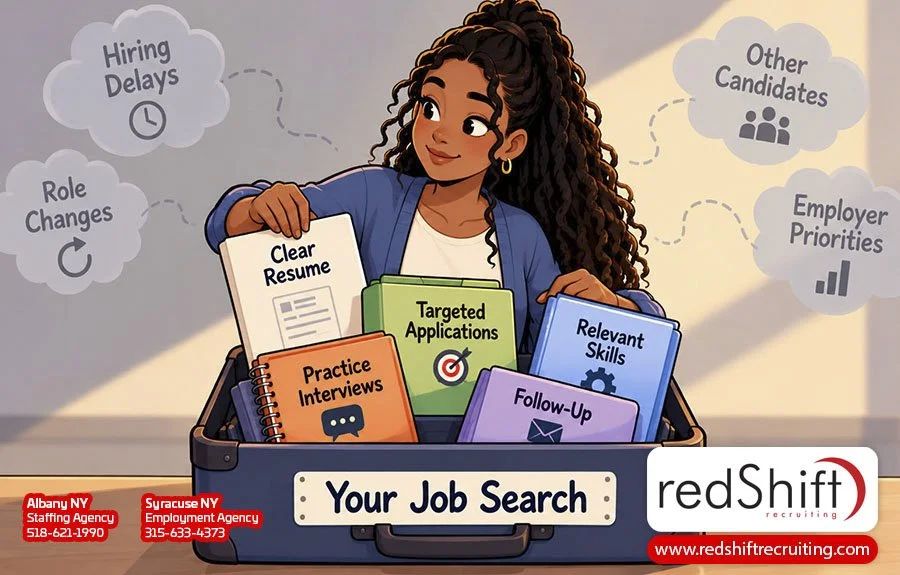
Unfortunately, you can’t control how an employer runs its hiring process, how many other people apply, or whether its priorities change. What you can do is make your background as easy as possible to understand and avoid putting too much weight on any one application.
Save the job description. Postings can disappear once a role is filled, closed, or taken down. Keeping a copy gives you something to reference if an employer or recruiter contacts you later.
Track every application. Record the company, role, date, contact, and any response in one place so you can follow up appropriately and spot patterns over time.
Check your email, spam folder, and voicemail. Recruiters and employers may contact you from unfamiliar numbers or email addresses, so it helps to monitor all three and respond promptly when appropriate. Make sure your voicemail is set up and has room for new messages—a full or unconfigured voicemail is one of the easiest ways to miss an attempt to reach you.
Start preparing. Research the company, review the job description, and think through concise examples of your achievements, experience, and strengths. It also helps to decide how you want to answer questions about pay or salary, as recruiters often want to confirm that your expectations and the employer's range are reasonably aligned before both sides invest more time in the process.
Follow up once, when it makes sense. If you have a direct contact, such as a recruiter, hiring manager, or someone who referred you, one brief follow-up can be appropriate after the employer's stated timeline or a reasonable wait period. Keep the message short and professional; demonstrating a professional attitude during follow-up matters more than trying to pressure the employer for an answer.
Keep applying and use more than one route. Don't wait on one employer to respond. Landing a new job usually takes time and multiple applications, but that doesn't mean sending the same resume everywhere. Keep targeting roles that fit your background while using a mix of networking, direct applications, LinkedIn, referrals, and conversations with recruiters.
Review your results periodically. If you regularly apply to roles that fit your background but rarely reach the interview stage, revisit how you target job prospects or how clearly your resume or CV expresses your qualifications. On the other hand, if you interview often without receiving offers, there may be another issue later in the process that needs review, such as your interview answers, the roles you’re targeting, or how expectations around salary and job fit are aligning.
What's Different When a Staffing Agency Submits You for a Job?
Staffing agencies and other external recruiters work outside the employer's internal hiring team to help fill open positions. If a recruiter decides to submit you for a specific role, they can speak for you in ways an online application can't. They can ask follow-up questions, explain your experience directly to the hiring manager, clarify transferable skills or an unusual career path, point out strengths that may be easy to miss on paper, and explain why they believe you are worth interviewing. They may also know which requirements are firm, which are flexible, and what the employer is prioritizing beyond the public job posting.
Working with a staffing professional doesn't guarantee your resume will be submitted or that the employer will invite you to interview. Recruiters don’t make the final hiring decision, and they may not always receive detailed feedback either. But they can provide more context, share updates when they have them, consider you for other opportunities based on your skills and interests, and present your qualifications more directly than a standalone application can.
Frequently Asked Questions
How Long Should You Wait to Hear Back From the Hiring Manager After Applying for a Job?
If the posting lists a closing date or expected timeline, use that as your guide. Some employers begin contacting candidates very quickly, while others may take weeks depending on the position, application volume, interview schedule, approvals, and other business priorities. In some cases, applicants never receive a response at all. Avoid stopping to wait on any one application. Keep searching, applying, networking, and pursuing other opportunities while the employer makes its decision.
When Should You Follow Up After Applying for a New Job?
First, check the posting for follow-up instructions. If candidates are specifically asked not to contact the employer, respect that request. If you have a direct contact and the employer gave a timeline, wait until that period has passed. If no timeline was provided, candidates can generally wait around two weeks to follow up after applying, although earlier may be appropriate in some situations. However, following up too often or too soon may actually hurt your application in some cases.
When following up, send one short, professional message. Confirm your interest, name the role, and ask whether there are any updates. If you do not have a recruiter, hiring manager, referral contact, or another appropriate point of contact, there may not be a convenient way to follow up. Keep your broader search moving rather than repeatedly trying to reach the employer.
Should You Apply Again if the Same Job Is Reposted?
Sometimes, but not automatically. Check whether the requirements, location, posting date, or requisition number—the employer's internal job ID, often listed in the posting—have changed on the employer's careers home page. Reapply if significant time has passed, your qualifications have improved, or the posting has been changed.
If you recently submitted a complete application to what appears to be the same opening, applying again may not improve your chances, and some systems may flag or prevent duplicate applications. In that case, keep pursuing other opportunities rather than repeatedly resubmitting the same application.
Can You Improve Your Chances Before You Submit an Application?
Yes, but focus on making your qualifications easier to understand rather than trying to outsmart the hiring system. Apply to roles that reasonably match your background, use relevant terminology from the job posting when it accurately describes your experience, make your strongest skills, experience, and achievements easy to find, and submit a careful, complete application that shows what you bring to the table. Applying early may also help when employers review candidates as applications arrive.
Avoid tactics that misrepresent your experience or try to manipulate automated hiring tools. For example, hiding instructions in a resume to influence an AI system or including inaccurate keywords can create credibility and security concerns without guaranteeing that your application will move forward.
Conclusion: Focus on the Bigger Picture
What happens after you apply for a job depends on a wide range of factors, many of which are outside your control. Technology can help employers organize, screen, and assess applications, but timing, competition, changing business needs, and human decisions all influence who ultimately moves forward. In many cases, you will never know exactly what happened after you hit submit.
Instead of trying to decode every status update, rejection, or unanswered application, focus on submitting clear, well-targeted applications, improving your materials when patterns suggest something isn’t working, building connections, and continuing your search. One application can disappear into the hiring process for dozens of reasons; your broader results will tell you far more about your job search than any single outcome ever can.

Article Author:
Ashley Meyer
Digital Marketing Strategist
Albany, NY