
How Automation Affects Manufacturing Hiring: Changing Job Roles and Skills
Few topics come up more often in discussions of the future of manufacturing jobs than automation. Supporters point to the potential for greater productivity, economic growth, and automated systems taking over dull, dirty, or dangerous work. Skeptics worry about job security, including the potential for significant job displacement as machines replace human workers in certain tasks.
Both perspectives reflect real possibilities, but the number of jobs gained or lost is only part of how automation affects manufacturing hiring. When automation changes how work gets done, the effects can reach well beyond the positions that previously performed those functions.
For employers in the manufacturing industry, automating one process can change the skills needed in an existing position, create a skills gap in another department, or shift which roles are most difficult to fill. Understanding how those changes affect production, maintenance, quality, and supervision can help manufacturers recognize where their staffing needs are changing, which capabilities are becoming more important, and whether their current recruiting requirements still reflect the work that needs to be done.
How Can Automating One Manufacturing Process Affect Other Parts of the Operation?
Say a manufacturer decides to automate repetitive packaging tasks. The immediate effect is a reduced need for manual packaging labor. But the new equipment still has to be monitored, restarted after jams, and repaired when something goes wrong. If the existing maintenance team lacks the training or experience to troubleshoot the automated equipment, the company has reduced its need for manual labor but created a technical skills gap that still needs to be addressed.
The effects can extend across the operation. Say the new line also increases output, enhancing productivity in packaging. Material handling now has to supply it faster, quality control has more product to verify, and shipping has more to move. Departments that weren't directly involved in the packaging process now have to keep up with the higher production volume. Automation doesn't simply eliminate tasks; it can also shift or even add work and responsibilities elsewhere.
That’s why the positions most directly affected by automation technology aren't always where the biggest staffing challenges emerge. A facility can have enough employees overall and still lack the expertise its changing operation needs. Automating to increase efficiency or production capacity can reduce the number of people required for a particular task while increasing the need for different capabilities elsewhere. Some changes create new job roles, while others add responsibility to existing positions. This poses a challenge for workforce planning, which must consider the full range of skills required across the company, including which can be developed internally and which need to be recruited.
These changes can also affect a manufacturer's position in the job market. An employer that previously recruited mainly for manual production experience may now be competing for skilled workers with specialized diagnostic, maintenance, or quality expertise. Those candidates come from different talent pools, and reaching them may require a different recruiting approach.
Additionally, some skills gaps don't become apparent until the automated systems are up and running, when addressing them can be more disruptive and costly. Bringing operations, maintenance, and hiring teams into the conversation before installation gives manufacturers time to identify changing responsibilities and new skill requirements, rather than discovering those needs after production has already been affected.
How Does Automation Change Manufacturing Job Roles?
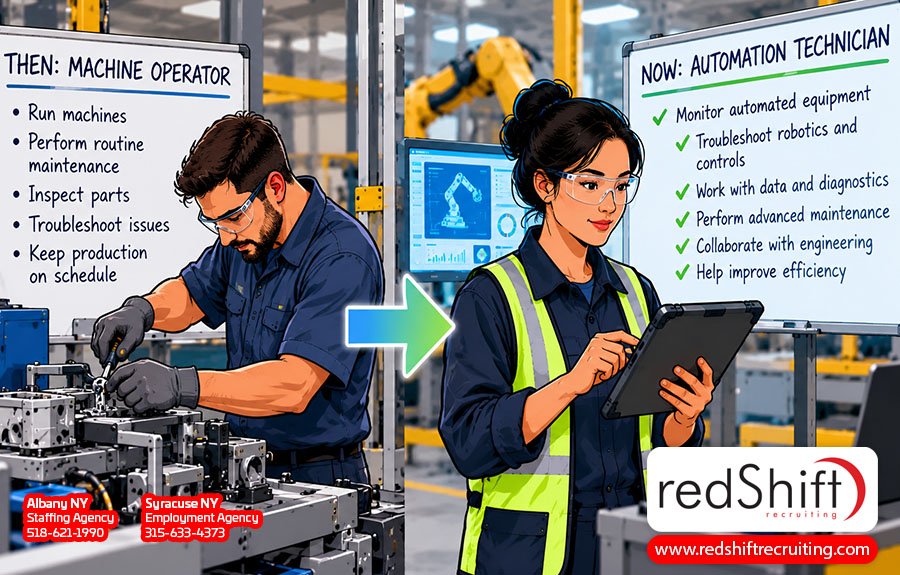
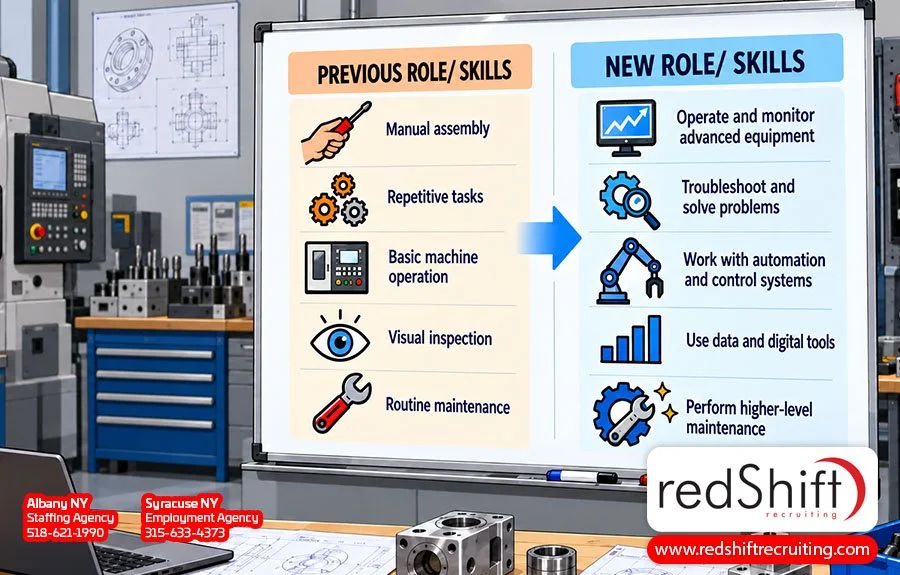
Automating certain tasks or processes doesn't necessarily mean introducing entirely new positions. Many traditional jobs, including production operators and maintenance technicians, remain part of the operation, although their responsibilities may change. As routine work becomes increasingly automated, familiar manufacturing jobs can involve different equipment, responsibilities, and technical requirements. For hiring managers, that means reconsidering what experience and capabilities candidates need, even when the job titles stay the same. The following four examples show how those changes can affect job responsibilities and the skills employers look for when hiring.
Production Operators
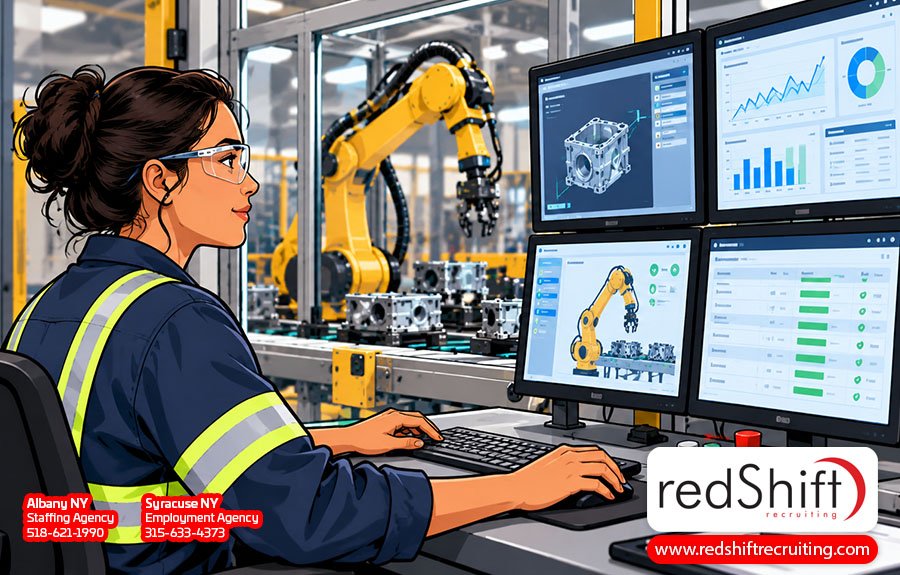
As automated equipment takes over repetitive tasks, production operators can spend less time manually handling products and more time monitoring equipment, making routine adjustments, and responding to interruptions.
That changes what employers should look for when hiring. Depending on the equipment, mechanical aptitude, troubleshooting ability, comfort with digital interfaces, and the judgment to recognize when to call for technical support may all become important qualifications. Employers may need to look beyond traditional production experience to find candidates who can work confidently with automated equipment.
Maintenance Technicians
Automated equipment still breaks down, and someone has to be able to diagnose and repair it. More sophisticated systems can change the blend of mechanical, electrical, and controls knowledge needed to keep production running smoothly.
For manufacturers, the question isn't just whether they have enough maintenance employees, but whether those employees have the expertise to support the equipment the company now depends on. A maintenance department can be fully staffed and still have a significant skills gap.
A September 2026 Deloitte Insights report, produced with The Manufacturing Institute, highlights the growing demand for technicians with expertise across mechanical, electrical, and controls systems. According to its analysis, employment of industrial machinery mechanics in manufacturing increased 47% between 2010 and 2025, substantially outpacing production occupations. The research also identifies workers from adjacent fields, including automotive service and HVAC, as potential manufacturing technician candidates because of their transferable skills.
Quality Control and Inspection
Automation changes how manufacturers inspect products and identify defects. Automated inspection equipment can perform checks that previously required manual examination, and some AI systems use machine learning algorithms and data analysis to spot patterns or flag potential problems.
But automated inspections still require oversight. A system can miss defects, flag acceptable products, or produce unreliable results if its settings or operating conditions aren't correct. Depending on the process, quality control personnel may spend less time conducting individual inspections and more time verifying results, investigating unusual findings, and determining when problems need to be escalated or corrective action is required.
For hiring managers, manufacturing quality experience is still important, but familiarity with automated inspection equipment, data interpretation, and technical troubleshooting may become more valuable in specific sectors. Employees who can use data analytics to interpret inspection data may also help manufacturers gain insights into recurring defects or production problems. Critical thinking, digital literacy, and problem-solving skills become increasingly important when employees need to assess whether inspection results are reliable and determine what to do when something appears wrong.
Production Supervisors and Team Leads
As production becomes more dependent on interconnected equipment, supervisors may need to coordinate more closely with maintenance technicians, quality personnel, and other technical specialists when problems interrupt the line.
Manufacturers still need supervisors with strong leadership experience, but overseeing automated production also requires an understanding of how the equipment affects daily operations. Supervisors don't necessarily need to troubleshoot or repair the equipment themselves, but they do need to recognize when specialized support is required and coordinate the people responsible for resolving problems. Communication, decision-making, and other soft skills remain essential, even as the situations supervisors face become more technically complex.
Should Manufacturers Train Current Employees or Hire for New Skills?
When automation changes the skills a manufacturer needs, the company has to decide which capabilities it can develop within its current workforce and which require outside hiring.
Finding a new employee who already knows a manufacturer's specific products, processes, and safety requirements can be extremely challenging. Current employees have an advantage here: they know how the operation works. Developing skills in-house often makes sense when employees can build on that experience, whether they're learning new equipment, taking on different production responsibilities, or moving into more technical roles. Operators can train in equipment monitoring and basic troubleshooting, while maintenance technicians with relevant experience can cross-train in controls. A culture of continuous learning helps employees keep up as manufacturers introduce new tools and equipment, while giving them more opportunities to grow and advance within the company.
On the other hand, outside hiring may be necessary when the skills needed require extensive technical training or years of experience to develop, such as advanced electrical diagnostics or controls programming. If that expertise is needed immediately and no one on staff has it, training alone may not be a practical solution. Looking for candidates with transferable skills from other sectors, including automotive service, HVAC, and technical positions across various industries, can widen the talent pool. These candidates may already have relevant diagnostic or mechanical experience and can learn the manufacturer's particular equipment and processes. For short-term needs, manufacturers may also consider qualified contract technicians to support installation, startup, or other temporary technical requirements.
Beyond filling immediate staffing needs, manufacturers also need to consider how automation affects two groups of employees:
Workers whose routine tasks are reduced. Packers, assemblers, and inspectors are among the employees whose work can change significantly when automation takes over repetitive tasks. Where their skills and interests align with other positions, retraining or redeployment can open up new job opportunities in equipment monitoring, quality verification, or related work. This gives experienced employees opportunities to develop additional capabilities and continue contributing in different roles while helping manufacturers retain their knowledge and experience.
Entry-level workers. As automation changes the routine work through which new employees traditionally gain experience, manufacturers may need to create more deliberate paths into skilled positions. Continuing to offer entry-level opportunities and support workers through apprenticeships, structured cross-training, or supervised experience alongside maintenance and quality personnel can help build the next generation of technical talent and avoid leaving gaps in the company's future workforce.
Ultimately, manufacturers implementing AI tools and automation technology need to consider both the skills their current employees can develop and the expertise they must bring in from outside. The right combination will depend on their existing manufacturing workforce, the work that's changing, and the capabilities they'll need going forward.
How Should Manufacturers Adapt Their Recruiting to Changing Job Roles?
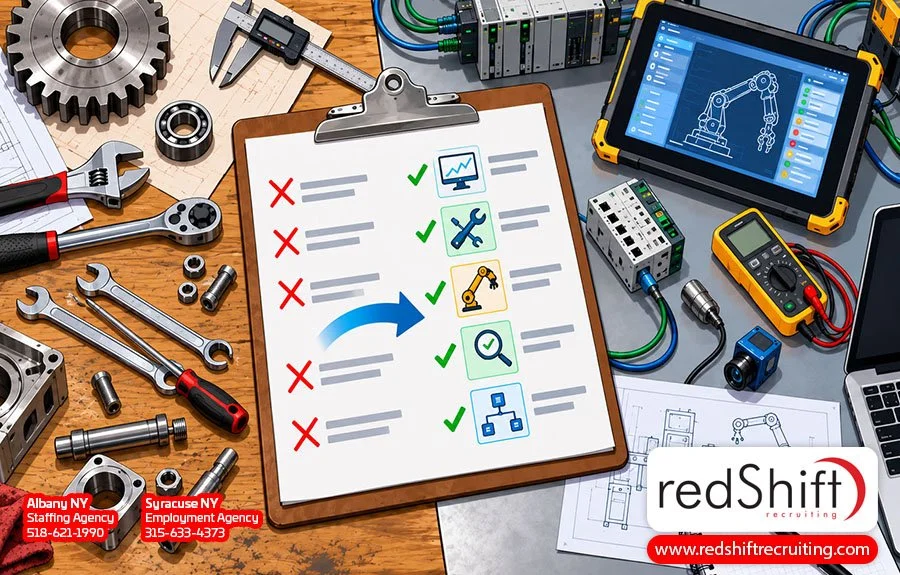
As automation changes responsibilities across a facility, manufacturers need to reconsider which positions they're recruiting for and what those positions require. A familiar job title may no longer describe the same work it did several years ago, while a role that once depended primarily on manual production experience might now call for technical knowledge, troubleshooting ability, and familiarity with automated equipment. As automation continues to change the manufacturing sector, employers need to make sure their hiring requirements keep pace.
That doesn't mean every automated operation needs robotics experts or employees with programming and engineering degrees. Many positions don't require advanced technical skills, and experienced manufacturing employees still bring valuable knowledge of production processes, equipment, safety, and quality standards. Soft skills such as communication, adaptability, and teamwork are also important alongside technical ability, especially when employees need to coordinate with maintenance, quality, and other departments.
Manufacturers also need to consider how their openings compare with opportunities in other industries. Experienced technicians can have career options beyond manufacturing, so compensation, schedules, and the responsibilities attached to a position can influence whether qualified candidates are interested.
Before posting an opening, employers should review the job description and required qualifications. Which skills are essential? Which can be taught? And which could a candidate bring from a related industry, even without experience on the company's specific equipment? For example, requiring experience with one particular automated production system could exclude a capable technician with strong mechanical and electrical troubleshooting skills. As technological change reshapes manufacturing positions, employers who distinguish essential qualifications from trainable skills can reach a wider pool of candidates without compromising on what the job actually requires.
Frequently Asked Questions
How Is Artificial Intelligence (AI) Different From Traditional Manufacturing Automation?
Traditional manufacturing automation uses programmed instructions, sensors, and control systems to perform defined tasks. Artificial intelligence (AI) systems, including those using machine learning, can analyze data, recognize patterns, and make predictions based on what they've learned from that data. This can change how AI-powered systems perform tasks, allowing them to handle certain variations or make predictions that would be difficult to address through conventional programmed rules alone. As AI adoption expands, manufacturers need to understand the differences between these AI technologies and conventional automation when determining what technical support and employee training their equipment requires.
Can Automation Give Manufacturers a Competitive Advantage Without Eliminating Jobs?
Yes. Automation can help manufacturers enhance efficiency, increase production capacity, and improve consistency without reducing headcount. Employees whose manual tasks are reduced may take on equipment monitoring, quality verification, or other responsibilities that support higher output. This can give manufacturers a competitive advantage by allowing them to produce more or improve operations while retaining experienced workers. Whether automation ultimately leads to fewer or more jobs in specific industries, however, depends on the changes to production, the business's needs, and how employees are reassigned.
How Can Manufacturers Prepare for Staffing Changes Before Installing Automation?
Before installing automated equipment, manufacturers should review which responsibilities will change, what technical support the new systems will require, and whether their current employees have the necessary skills to make the transition. They should also prepare affected employees for what to expect, identify opportunities for training or reassignment to prevent job loss, and anticipate any additional hiring needs. Planning ahead gives manufacturers time to prepare employees for technological advancements and address potential skills gaps before they disrupt production, supporting workers as their responsibilities change rather than waiting until the equipment is already in operation.
Do Automated Manufacturing Jobs Always Require More Advanced Technical Skills?
No. Some automated systems simplify routine tasks or reduce the specialized knowledge needed to perform them, while others introduce more complex monitoring, data processing, troubleshooting, or maintenance responsibilities. Advanced technical expertise is often more important in specialized maintenance and controls positions, while many production operators need only enough technical knowledge to monitor equipment, make permitted adjustments, and recognize problems. The qualifications should reflect the actual responsibilities of the position, not merely the presence of automation.
Conclusion: Hiring for an Increasingly Automated Manufacturing Workforce
Automation is changing manufacturing jobs globally, far beyond the number of people assigned to a particular task. It can bring significant shifts in responsibilities across production, maintenance, quality, and supervision while changing the mix of skills and experience an operation needs.
For manufacturers and industry leaders, the hiring implications aren't always about adding or eliminating positions. They may involve developing new capabilities within the existing workforce, recruiting for expertise the company doesn't have, or reconsidering what familiar positions require. By looking beyond the positions directly affected by automation, manufacturers can identify where their staffing needs are changing and prepare their workforce for the work ahead.

Article Author:
Ashley Meyer
Digital Marketing Strategist
Albany, NY