
How AI Is Changing Career Advice: Perspectives From Parents, Students, Educators, and Recruiters
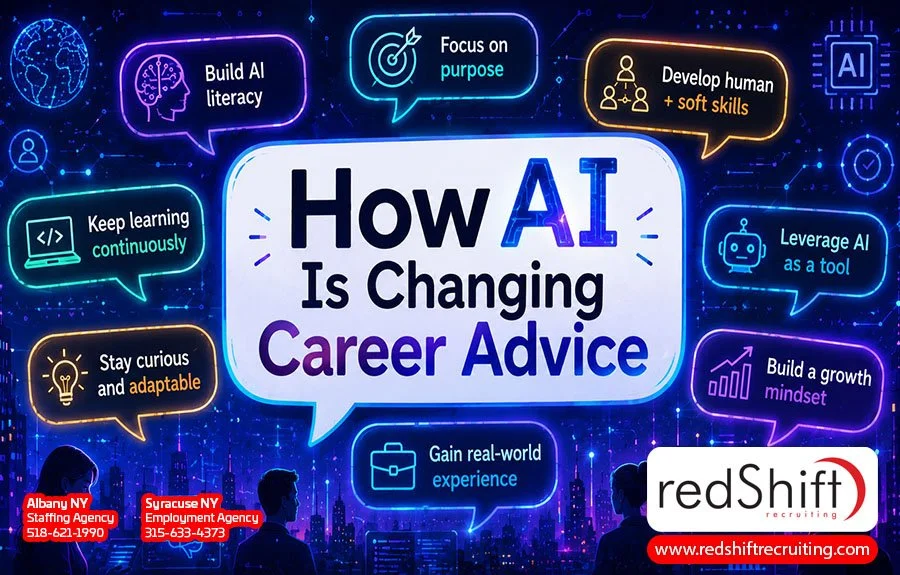
Artificial intelligence isn’t just changing the way people work. It’s also changing the way they think about preparing for work.
When we asked people how career advice is changing, we expected to hear a lot about skilled trades, hands-on careers, and the importance of learning to use AI. Those ideas came up often, but we were also intrigued by the variety of perspectives we received.
The responses came from recruiters, parents, educators, professionals, and students at different stages of their education and careers. Some people were confident about the paths they would recommend, while others were more hesitant, acknowledging how quickly the job market is changing and how difficult it is to know whether the advice we give today will still be relevant tomorrow.
Together, their responses offer a candid look at how AI is changing career advice and what people are telling students and job seekers as they prepare for the future. Here is what they shared.
Career Advice Feels Less Certain
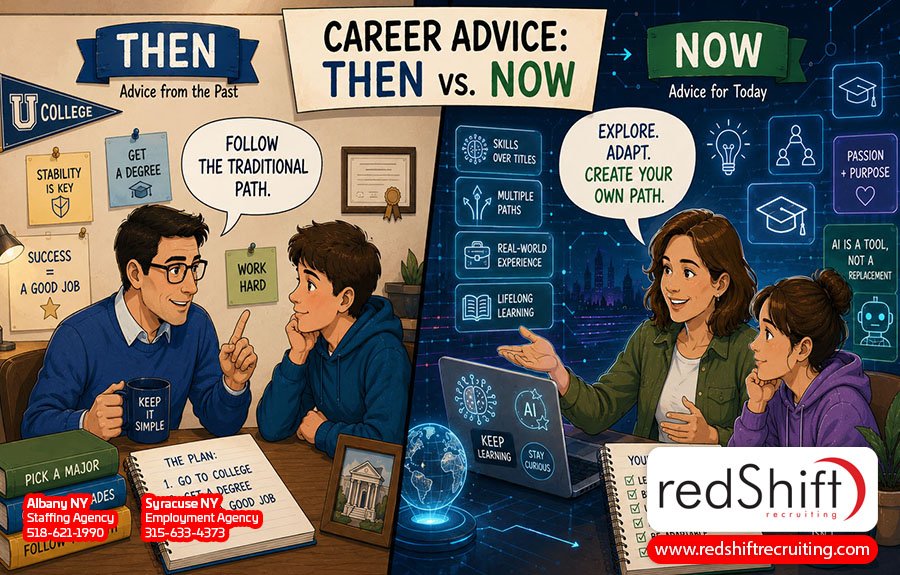
Several contributors said the advice they give today is different from what they would have offered only a few years ago. Instead of assuming one degree or career will always be secure, they are encouraging students and job seekers to expect change and keep their options open.
“It’s crazy how much has changed since my oldest graduated six years ago. We didn’t really think about AI too much. I encouraged her to go for something she was going to be happy doing.
“Now, with my younger two in their last few years of high school, we talk about roles that AI won’t completely take over and where humans are still needed. You could steer them toward trade-type positions, but what if they aren’t interested in that? It’s a very uneasy feeling and time.”
—Kirsten Van Apeldoorn, redShift Recruiting
“AI isn't going away, and pretending otherwise doesn't help anyone starting out. Hot positions will always shift—they have every year of my 30 years in this business—so I tell people not to chase whatever's trending right now. Instead, pick something that's genuinely in demand and has some staying power against automation.
“My own kids started college two and three years ago, and even in that short window I've watched the advice change. What I'd have said three years ago is different from what I'm saying now, and I expect it'll keep shifting over the next six to twelve months as AI tools mature.”
—Ryan Thomas, Executive Vice President of Business Development, redShift Recruiting
“Our generation was promised that if you went to college, you would get a good job, and that the way to make a lot of money was to invest in real estate. And we witnessed not just the emptiness of those promises, but several major economic, political, technological, and societal changes.
“Things change. I know the advice I give my kids could be wrong. So I will tell them to make choices based on the best analysis they have, choices that give them more options, and to invest in humans. No matter what comes, we will always need a community around us.”
—Johanna H.
“When it comes to the question of AI affecting your job in the future, I tell candidates that the best mindset is to stay open to many possibilities rather than trying to find the one AI-proof career. History suggests that technology changes jobs more often than it eliminates entire professions.
“The people who do well usually adapt, become a jack of all trades, and keep all opportunities in mind.”
—Chris O’Keeffe, redShift Recruiting
Which Careers Feel More Secure?
Many people discussed paying more attention to careers that may be harder to automate, particularly skilled trades, healthcare, and other work that requires someone to be physically present. At the same time, several acknowledged that job security is only one part of choosing a career.
“In the classes I teach, I always have my students think about what they are passionate about. At the same time, it’s useful to think about whether a job requires AI and whether a computer could easily replace it.
“For example, one student wants to be a mechanic. I asked whether AI could replace that job, and they laughed and said no because a computer cannot change a tire. Another student is interested in becoming a doctor. While AI can help with diagnosis, it’s not the same as having human verification to double-check it. Nursing is another example because AI cannot perform all of the hands-on tasks involved in patient care.
“In the past, I would push more college education, but now I’ve also been encouraging vocational options because those are the jobs AI cannot replace as easily.”
—Laurel M.
“As an educator, I would honestly steer kids toward the trade school fields. I know several local kids who have started their own businesses or are currently working for companies in plumbing and electrical with good salaries and benefits.”
—Christine M.
“As a parent, I have told my kids to go for a career in a hands-on trade. AI cannot replace nurses, doctors, electricians, plumbers, HVAC, construction, law enforcement, etc. They’ll always be needed.”
—Kathy B.
“From a recruiting perspective, I used to recommend pursuing a college degree and starting your career in an office environment. With the emergence of AI, the work environment has been changing, with many processes becoming automated. While that automation is helpful in many instances, it cannot completely replace the human element.
“I would now also recommend looking at career paths in the trades, such as becoming an electrician, carpenter, HVAC specialist, welder, manufacturing professional, etc. AI is less likely to affect more hands-on career paths because there will always be a need for skilled labor in our society.”
—Martha Grignon, redShift Recruiting
“I always advise candidates to be open-minded about any opportunity that will help them gain experience and get their foot in the door. Personally, I will be advising my daughter to keep her options open to the trades as well as office positions. Fewer people are getting into the trades, so there will be more opportunity.”
—Sarah Royer, redShift Recruiting
“I’ve had several conversations with candidates recently that have stuck with me when thinking about AI and the future of work. I spoke with one candidate who had eight years of experience in customer service and billing but decided to pivot into construction and more physical work because he felt it would offer a more ‘future-proof’ and stable career.
“I’ve also worked with an experienced accounting professional and CPA who moved into construction project management, partly because of burnout and partly because the opportunity made sense when thinking about the future of the economy. On the other hand, a senior-level IT professional told me he had been taking AI courses and experimenting with the technology on his own time, but when he approached his employer about using it in the workplace, the idea was quickly shut down.”
—Katelyn Berger, redShift Recruiting
Human Skills Still Matter
Some contributors focused less on finding work that AI cannot touch and more on the skills people will need as AI becomes part of more jobs. Communication, judgment, leadership, trust, and the ability to work with new technology were among the qualities they emphasized.
“The common thread I keep coming back to: focus on roles where communication, judgment, and human connection matter most—those are the hardest things for AI to replace. Healthcare is a good example of a field that stays solid; it needs technical skill, but also trust, empathy, and hands-on care that technology can't fully substitute.
“I'd steer people away from roles that are purely repetitive or rules-based, and toward ones where they're the one making the call, building the relationship, or solving the messy, ambiguous problem.”
—Ryan Thomas, Executive Vice President of Business Development, redShift Recruiting
“The technical, rules-based components of many jobs will increasingly be delegated to AI. The judgment, perception, and leadership components are where people will continue to add value. That means understanding the business, understanding the customer, and using AI as a tool rather than relying on it to make every decision.
“I also believe communication will become more important. I’ve said for years that English and communication majors may become the future developers because the ability to communicate with AI and guide it toward the result you need will be critical. AI is good at following rules, but many jobs require a person to assess the situation and make a judgment call.”
—Dan Sterantino, President, redShift Recruiting
“If someone asked me about choosing a career today, I’d tell them to pursue the field that fits their strengths, but also learn how machines interpret information, expertise, and value. The people who can communicate effectively with both humans and machines will have an unfair advantage.
“Too many people think AI is simply a new career path when, in reality, it is becoming a new layer across nearly every existing career.”
—Ed Baker, redShift Recruiting
“No matter how unknown, scary, or exciting AI is for employers and job seekers, there are always going to be positions that require actual people and human relationships. I think about our careers and jobs as recruiters—those personal relationships with both clients and candidates are so crucial to finding the perfect matches.
“We listen, and we build relationships and trust that can’t compete with AI. We as human beings ask the questions AI doesn’t.”
—Katelyn Berger, redShift Recruiting
AI Skills Matter Too
Learning how to use AI was another major part of the advice people shared. But several contributors also warned that using AI effectively still requires independent thinking and the ability to check its work.
“I recently spoke with students at RPI about the future of AI. Those studying accounting and computer science were concerned that the degree programs they chose four years ago might no longer lead to the same entry-level opportunities they expected when they began college.
“My advice was to learn as much as possible about AI, use the tools, and embrace them because the definition of an entry-level employee is changing. An entry-level computer science professional may increasingly be expected to code with Claude or a similar tool, while entry-level accountants may be expected to use AI to work more efficiently and productively.
“Rather than avoiding AI, students should learn how to use it as a competitive advantage.”
—Dan Sterantino, President, redShift Recruiting
“AI has completely changed how I’m preparing for the workforce. I have seen through my job searches that experience and efficiency are now the two most important parts of a job search. AI has made people so efficient that you don’t need 100 people to do a job; you need 50 who have experience and know how to use AI as a tool.
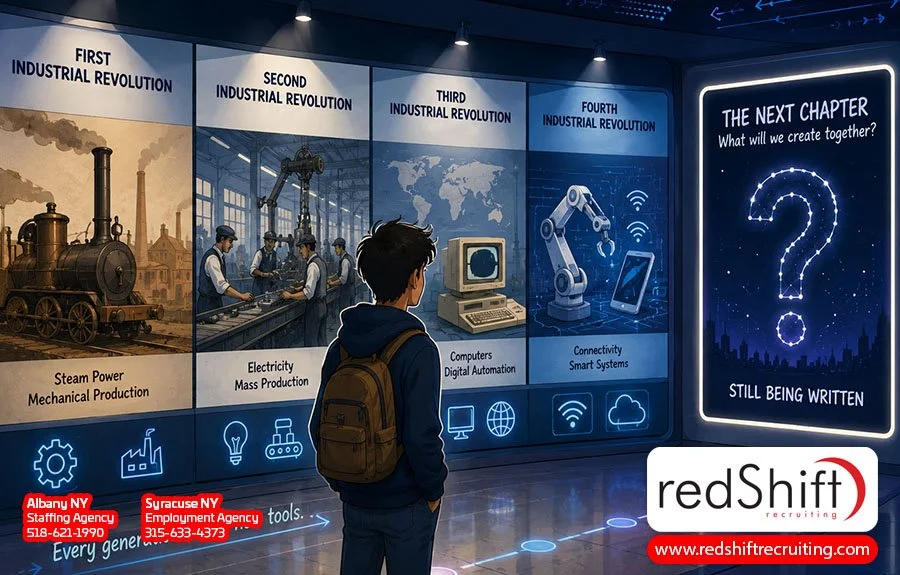
“Because of this, it is very important for college graduates to learn how to use AI better than anyone else, giving them a tool that is valuable to companies. I think AI and robotics will be the next Industrial Revolution, and if you want to keep up with the times, it is crucial that you understand these new technologies.”
—Sam Sterantino
“I don’t think AI is going to eliminate careers in the near future, but you must have the ability to utilize AI in your position. I think some positions may become more focused on reviewing while AI does the initial or preliminary work, but we will still need people to check and think through whether what AI is giving us is accurate or whether there is another solution. I think that no matter the career, we all need to learn to use AI to assist us in our jobs.”
—Amy Siewert, redShift Recruiting
“As a parent, I see the pros and cons of AI. On the positive side, I see that AI can be an excellent educational resource for tutorials, language learning, research, and creative activities. My daughter is learning French in one of those learning apps that I believe is supported by AI. I see where it can be very helpful for students to gain knowledge and develop new skills. On the flip side, children can become too dependent on AI and not improve or develop their thinking skills.
“My advice as a parent and father regarding career choices is to love what you do and make sure you can make a living doing what you love. Some see AI as a threat in the workforce, but AI is controlled by people, and technology can be used for good or bad.”
—R. Hamid
“I tell my students they really are not learning anything if they just take a picture of their worksheet and ask ChatGPT for the answers. I have gone back to paper-and-pencil essays—at least for the first draft—because I want my students to think authentically first.
“Then they can use their computers to type their work and add research, so I know they are using their brains first and research tools second.”
—Laurel M.
Experience, Interests, and Staying Flexible
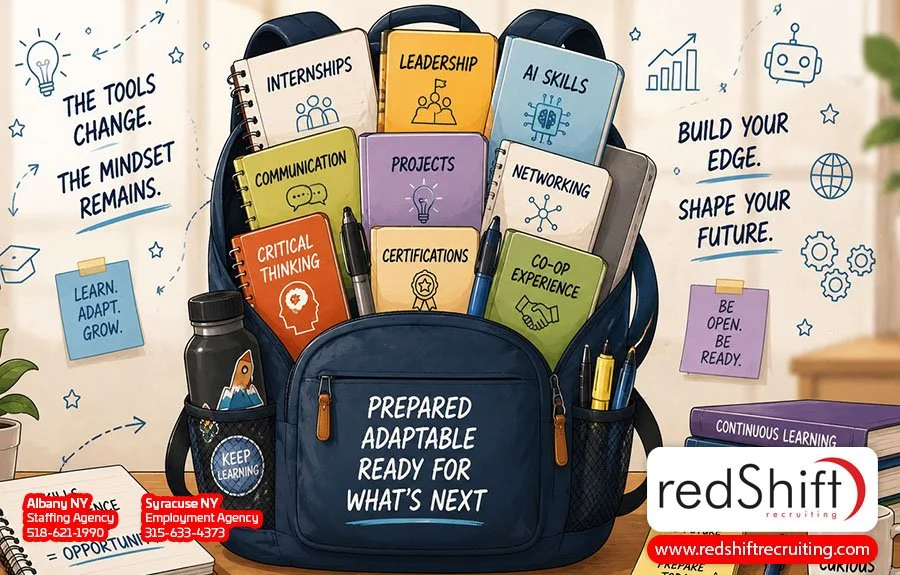
Even as technology changes the job market, some traditional career advice still holds up: gain experience, understand your strengths, research your options, and don’t assume that one decision has to determine your entire career.
“My advice to students is simple: explore well-defined career paths that align with your personality and skills, and have a viable path forward amid changing landscapes. AI is the newest hurdle, and a big one, but if students choose the right major and career path, they can still be wildly successful.
“A college student’s career search should start as soon as they step on campus. Work with the career center, alumni, and your academic advisors to shape your future. Don’t settle for a part-time job or a few hours in a lab. Our most successful students have multiple internships or co-ops before they graduate.
“Extracurriculars are also very important. Getting involved in clubs and project teams, especially those that have leadership opportunities, will dramatically improve your career outlook. It’s not just about your GPA; it’s about what real-world skills you learned along the way that will make you stand out.”
—Bill Jeffers, Director of Alumni Relations, Clarkson University
“Do your research in regard to what the demands are, but at the same time, pursue something that you will really love because you should be excited to go to work each day. Think about your interests and natural strengths, but also consider whether there are opportunities in that field. The goal is to find a career that fits you while still being practical about the job market.”
—Amy Alvarez, redShift Recruiting
“For me, AI wasn't a major concern in choosing the path I wanted to pursue. AI can help in medicine by improving diagnostics and supporting certain treatments, but it can't fully take over the medical field because medicine also needs human judgment. Doctors understand patients' feelings, make complex decisions, and handle unexpected situations.
“AI can help provide information, but it can't replace the critical thinking doctors bring to patient care. Overall, I feel confident about the future because AI can help expand our knowledge without replacing the human side of medicine.”
—M. Hamid, incoming college student
“I'm currently unsure of exactly which career I want to pursue in the future, but I believe the degree I chose has many paths I can take. I'm studying biochemistry, which is challenging but opens up many opportunities down the road.
“One thing I wish someone had told me is not to be afraid of making mistakes along the way, and not to worry about not knowing exactly what major or career you want to pursue. Your childhood aspirations don't always carry over into the choices you make in college.
“It's okay not to know what you want to do, but choose a degree in something you're interested in, or something you know will give you options. As you grow as a person, you'll ultimately find what you want to do. And it's never too late to change course. You determine your own path. Always remember that.”
—Bella Thomas, college student
What Career Advice Looks Like Now
There is no one right answer to the question of how people should prepare for an AI-driven job market. Some contributors recommended taking a closer look at skilled trades and hands-on work. Others focused on AI skills, communication, judgment, real-world experience, or choosing a path that leaves room to change direction later.
What stood out most was not one particular career recommendation, but how many different factors people are now weighing. Is the field in demand? Which parts of the work could be automated? Will the person enjoy it? What skills will they be able to carry into other roles? How can they gain experience before graduation?
Across the responses, one practical message came through: students and job seekers do not need to predict the future perfectly. They can learn about their options, build useful skills, gain experience, stay open to change, and make the best decision they can with the information they have today.

Article Author:
Ashley Meyer
Digital Marketing Strategist
Albany, NY