
Why Staffing vs Headcount Is No Longer the Same Thing
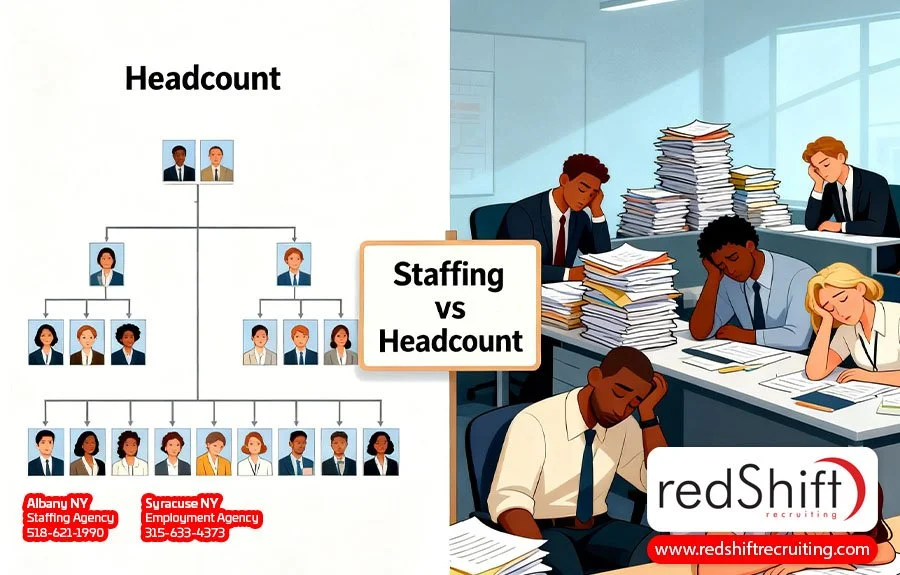
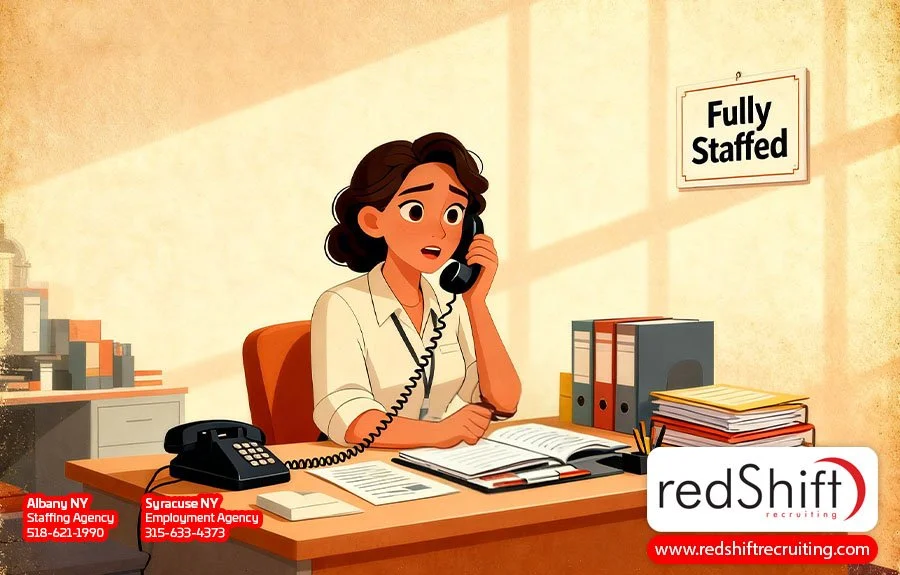
Staffing is often treated as a simple equation: open role equals problem, filled role equals problem solved. But in practice, many organizations find themselves fully staffed on paper and yet still falling behind. Instead, they're repeatedly relying on temporary workers to cover chronic gaps, asking managers to absorb work that shouldn't require their involvement, adding to the workload of existing team members, or watching the same critical roles cycle back onto the job board a few months later. The number looks right; the operations don't.
For many HR leaders and operations managers, this familiar tension is easy to attribute to individual performance issues or volatile market conditions, but the bigger problem may lie in how business leaders think about staffing vs. headcount. Headcount tells you exactly what you'd expect: how many people are in seats at a given time. Staffing describes a broader operational picture—measuring whether the organization has the productive capacity to do the work those seats are supposed to support. Headcount may be where it needs to be, but if your team is still strained, work is still piling up, and the same gaps keep reappearing, your business may still be understaffed.
What “Fully Staffed” Really Means Today
For most of workforce history, the definition of "staffed" was straightforward: you had a plan, you had a target headcount, and the goal was to match one to the other. What that measurement alone can't tell you is whether the work was actually getting done.
Headcount focuses on the total number of people in roles at a given time. It's useful for reporting and budget tracking, but it says nothing about whether those people have the right skills for the roles they're filling, how long they've been there, whether they're full-time employees or part-timecontributors, and whether they have the bandwidth to take on new work or are already operating at their limits.
Full-time equivalent stats—or FTE—try to add nuance to this picture. Rather than simply countingheads, FTE tells you something closer to total available labor by converting part-time employee hours and variable schedules into a standardized unit. Calculate FTE across your workforce, and you get a more accurate read on available hours than raw headcount provides. But FTE also has limits: it measures hours worked or scheduled, not output, not quality, and not whether the people behind those hours are working effectively or are overloaded with tasks that regularly pull them away from their core responsibilities.
The real gap shows up in operational outcomes. A team can have every role filled and still struggle to meet deadlines and keep up with day-to-day demand. Productivity drops in ways that don't appear cleanly in HR data until the damage is already visible, as response times slip, errors increase, and customer-facing work suffers. These aren't necessarily signs that hiring strategies have failed; they're signs that the organization confused filling positions with having functional capacity. And when that confusion persists, turnover ratesclimb—not because of any one dramatic event, but because teams operating quietly beyond sustainable limits eventually burn out, and people start to leave.
This is the distinction that matters: "fully staffed" used to mean the positions were filled. In today's environment, it has to mean the work is reliably covered by people with the experience to do it, the bandwidth to sustain it, and enough stability around them to perform consistently. Headcount tells you the first thing. It doesn't tell you the second one.
Staffing Is About Coverage, Continuity, and Risk
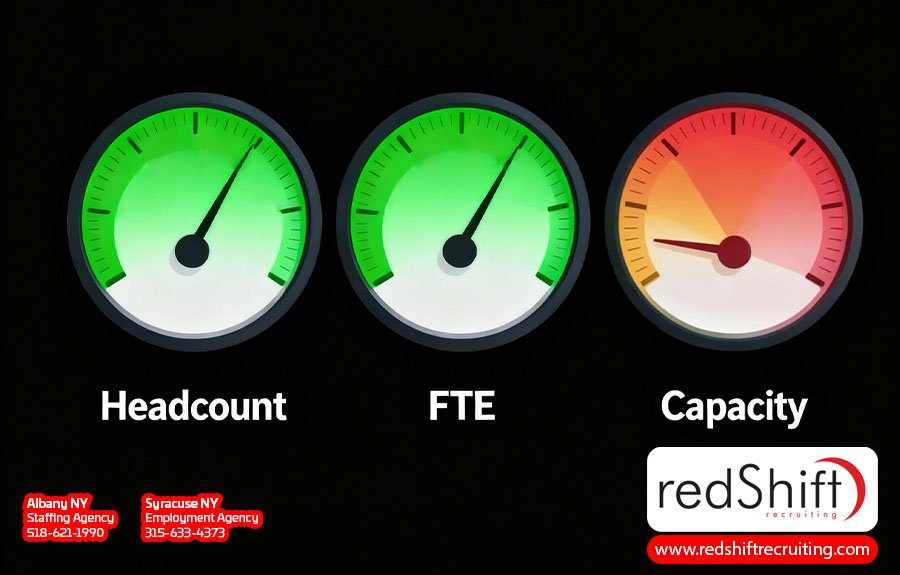
Filling roles addresses supply, but it doesn’t answer a more important question: what can that workforce actually sustain? Three factors that headcount planning rarely captures tell you more than the numbers alone—coverage, continuity, and risk.
Coverage asks whether essential tasks are being completed consistently—not occasionally, not when conditions are ideal, but reliably across shifts, within specific departments, and considering the normal variations that exist in any given week. This is where staffing gaps tend to become visible first. A coverage gap doesn't always mean a role is empty; it can also mean a role is filled by someone still ramping up or that responsibilities have expanded beyond what one person can reasonably carry. Key metrics and HR data can point to where coverage is failing by looking at missed outputs, delayed workflows, or escalating error rates, but this analysis is only possible if organizations are tracking outcomes rather than just occupancy.
Continuity asks whether operations can hold together under ordinary disruption. This isn't an assessment of how a team handles crisis situations; it's how smoothly they can deal with any normal variation a business encounters week to week: a planned absence, an unexpected resignation, or a temporary spike in demand. A well-staffed organization should be able to absorb these without significant operational impact. When it can't, it's often a sign that workforce planning has focused on filling the org chart rather than on the cross-training, information sharing, and effective resource allocation that serve as a buffer in these situations. Retention rates also play a key role in continuity: a team that turns over frequently never builds the institutional knowledge that allows operations to stay stable when individual circumstances change.
Finally, risk asks where the fragile points are. Every organization has them: specific roles where one departure cascades into a broader disruption, individual employees carrying institutional knowledge that exists nowhere else, or skills gaps and capability gaps sitting quietly inside teams that look fully staffed on paper. These represent real operational exposure that doesn't appear in headcount reports but becomes impossible to ignore when the wrong person gives notice. Addressing this is a strategic planning question as much as a staffing one: organizations that identify their fragile points proactively have options that those who only reactively discover them don't.
Taken together, coverage, continuity, and risk reframe staffing as what it actually is: not a static number to achieve, but a dynamic condition to maintain. Headcount is a useful data point, but it describes the system at rest. These three factors describe how operations actually perform under pressure—and that performance is ultimately what organizational goals, business objectives, and sustainable business outcomes depend on. The question isn't just whether headcount matches the plan. It's whether the needs are still being met when conditions inevitably change.
Why Headcount Fails as a Measure and What Capacity Means Instead
There's a simple reason why headcount remains a default staffing measure: it's easy for human resources and finance teams to calculate headcount, straightforward to report, and directly tied to budget. The problem is what it assumes: stable attendance, fully ramped employees, and the onboarding time needed to bring new hires up to full productivity fast. In practice, those conditions are rarely all present at once.
The reality is that not all headcount is equal. A team of five is not five equal units of output. A new hire is not interchangeable with a tenured employee—the difference in productivity between someone two weeks in and someone two years in can be significant, and experienced staff frequently carry a disproportionate share of the load while newer employees find their footing. A strained team produces less than its size suggests, and talent management strategies that focus purely on keeping seats filled miss this nuance entirely.
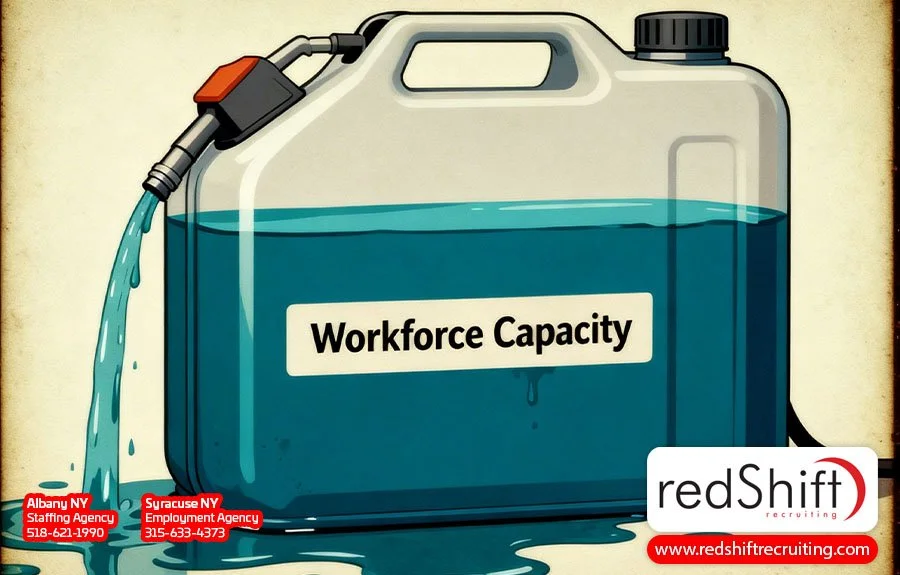
This is where workforce capacity offers a more accurate frame. Capacity isn't just about the number of employees present; it reflects how much work can actually be delivered under real conditions, including normal variations, disruptions, and uneven experience levels across a team. Organizations that use headcount as their primary planning metric are often, without realizing it, working from a number that overstates what their workforce can actually deliver—and that gap typically stays invisible until something goes wrong. The question shifts from "Do we have enough people?" to "Do we have the right capacity, where and when it's actually needed?"
The difference becomes concrete when you consider two teams of the same size carrying the same operational load—one stable and experienced, one constantly onboarding and backfilling. Same headcount on paper, meaningfully different results in practice. This isn't just a large-company problem; a five-person team at a small business and a fifty-person department at a large organization can run into the same problems when the people in those seats are newer, less experienced, or constantly changing. Who's on the team and how long they've been there matters for strategic workforce planning as much as how many of them there are, and that's something headcount simply doesn't tell you.
Ultimately, headcount is a number. Capacity is a condition.
Why This Shift Matters and What It Changes for Workforce Planning
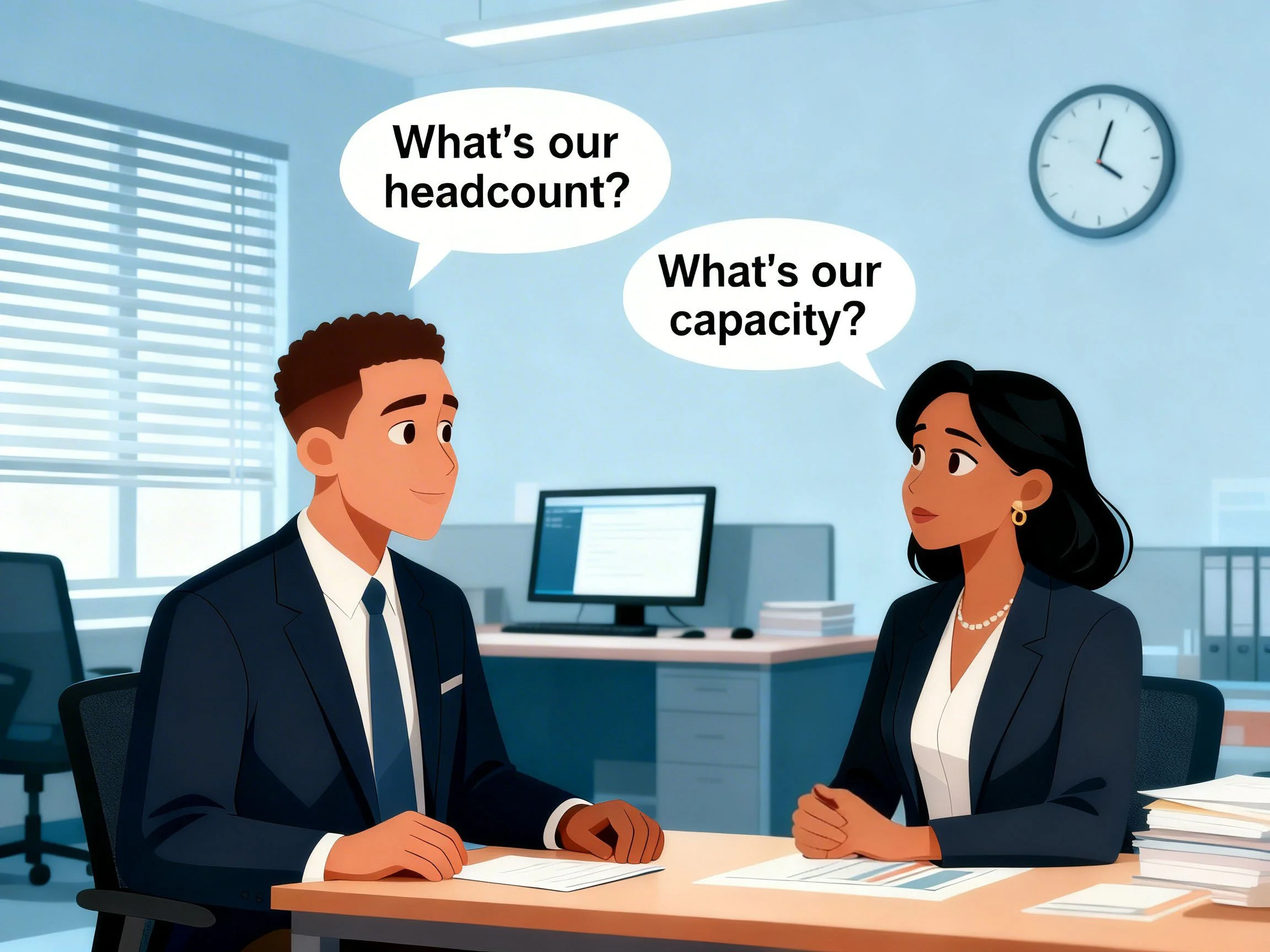
The practical implication of all this is a shift in the question organizations need to be asking. Not, "Are the roles filled?," but, "Can the work actually get done consistently, without constant escalation, manager intervention, or heroic effort from a handful of overburdened people?" That's a harder question to answer than "What's our headcount?"—but it's the one that actually reflects reality.
This gap between headcount and operational reality isn't new, but in leaner, more constrained environments, there's less slack to absorb it quietly. The stakes get clearer when you consider how hidden dependencies work. When one experienced employee is quietly covering for several newer ones—absorbing questions, catching errors, smoothing workflows—their departure doesn't remove one unit of capacity. It removes the stabilizing force that was making the whole team functional. This is why talent acquisition strategies that focus only on filling and backfilling seats often underestimate what's actually been lost when a key employee leaves, and why labor costs associated with turnover tend to be higher than they appear on paper. The total cost of a departure includes everything that person was holding together, and that rarely shows up in standard reporting.
Over time, misreading staffing as headcount creates a specific kind of organizational risk: false stability. Everything looks fine on paper until it doesn't, and by the time the gap between headcount and actual performance becomes visible, the strain has usually been compounding for a while. Teams that could have benefited from earlier intervention through better company culture, proactive investment in employee engagement and retention, or structural changes to how work is distributed, instead absorb the damage quietly until it surfaces as turnover, missed targets, or breakdown.
There's also a harder point to acknowledge. Shifting from headcount to capacity as the primary measure of staffing health raises an obvious next question: how do you actually measure capacity? There's no single formula, and any honest answer will vary by industry, role type, and organizational needs. But asking the question at all—moving from counting heads to assessing whether the work is sustainably covered—is itself a meaningful shift. Organizations that make it are better positioned to catch problems earlier, plan more honestly, and build the kind of operational resilience that becomes a genuine competitive advantage in a constrained labor environment. And once that shift is made, a harder question follows: within the capacity organizations do have, are they directing their most experienced people's judgment, expertise, and problem-solving toward the work that actually requires it—or is that being consumed by work that doesn't?
Is Your Team Actually Staffed—Or Just Fully Headcounted?
A full org chart doesn’t always mean the work is under control. When teams are stretched, deadlines slip, and experienced employees carry more than their share, the gap between headcount and actual capacity becomes clear. Looking beyond the numbers to how work is really getting done can help identify issues before they turn into bigger problems.
Frequently Asked Questions
What Is the Difference Between Headcount Planning and Workforce Planning in Practice?
Headcount planning focuses on how many people are needed in specific roles—essentially aligning the number of employees to a budget or org chart. It answers the question, “Do we have enough people in place?” Workforce planning, on the other hand, looks at whether the organization has the capacity, skills, and structure to meet its business objectives. It considers factors like experience levels, ramp time, workload distribution, and potential skills gaps. In practice, the difference shows up when a team is fully staffed on paper but still struggling because headcount is met, but workforce capacity isn’t.
How Do You Calculate Headcount Vs. Full-Time Equivalent (FTE), and Why Does It Matter?
To calculate headcount, you simply count the total number of people in roles at a given time, regardless of hours worked or employment type. To calculate FTE, you convert total hours worked into a standardized full-time unit (for example, two half-time employees equal one FTE).
The distinction matters because headcount shows how many people you have, while FTE shows how much labor time is available. Both are useful, but neither fully reflects workforce capacity. A team may have sufficient headcount and FTE on paper, yet still struggle operationally if experience levels are low, workloads are uneven, or key roles lack coverage.
It's also worth noting that FTE calculations carry compliance implications—under the Affordable Care Act, employer mandate thresholds are based on FTE counts, which gives the headcount vs. FTE distinction practical legal weight beyond workforce planning alone.
What Metrics Should Be Used Alongside Headcount to Understand Staffing Health?
Headcount is a useful starting point, but on its own it doesn’t reflect how well a team is actually functioning. To understand staffing health, organizations should pair headcount with operational and workforce indicators such as workload distribution, missed deadlines, error rates, and backlog volume. These metrics help reveal whether teams have enough productive capacity to meet demand, not just enough people in seats.
Additional context from HR data—including turnover rates, retention rates, tenure mix, and training timelines—can highlight where stability or experience gaps are affecting performance. Together, these metrics provide a more complete picture of staffing health by showing not just how many people are employed, but whether the work is being completed consistently and sustainably.
How Do HR Leaders Identify Staffing Gaps Before They Impact Operations?
Staffing gaps often appear in outcomes before they show up in headcount reports. For HR leaders, early signs include longer turnaround times, rising error rates, uneven workload distribution, and teams struggling to keep up with normal demand—patterns that often indicate a capacity problem rather than a headcount one.
Catching these issues early means monitoring key metrics like turnover rates, training timelines, and workload distribution to identify where teams are becoming unstable. It also helps to identify critical roles or individuals carrying disproportionate responsibility. Focusing on how work actually flows through the organization rather than just whether seats are filled makes it easier to spot problems before they affect operations or become expensive to fix.
How Do You Measure Workforce Capacity Beyond Headcount for Strategic Planning?
Measuring workforce capacity starts by looking beyond how many people are in roles and focusing on what the team can actually deliver under real conditions. Headcount reflects the number of employees, but capacity reflects productive capacity—how much work can realistically be completed given experience levels, workload, and day-to-day variation. For strategic planning, that means paying attention to operational signals like missed deadlines, backlog volume, error rates, and how often managers step in to keep work moving.
There’s no single formula, but combining HR data with performance indicators helps build a clearer picture. Factors like tenure mix, ramp time, and reliance on temporary workers can show whether capacity is stable or constantly resetting. The goal isn’t precision—it’s visibility into whether teams can meet demand consistently without strain.
Conclusion: Rethinking Staffing vs Headcount
Most organizations already sense this gap between reaching headcount and being fully staffed—they feel it in the teams that stay strained despite active hiring, the departures that cost more than expected, and the problems that never quite get resolved. That gap has a name: the difference between headcount and actual staffing capacity.
Shifting toward capacity as the primary measure of staffing health won't improve efficiency overnight, and it doesn't come with a simple formula. But it does change what leaders pay attention to, and that's important. When the real questions become "Is the work reliably covered?" and "Where are we vulnerable?" rather than "Are all the roles filled?," organizations are better positioned to catch strain early, make smarter workforce planning decisions, and build the kind of operational resilience that holds up over time. In a labor environment where every gap costs more than it used to, that shift in perspective is itself a strategic advantage.

Article Author:
Ashley Meyer
Digital Marketing Strategist
Albany, NY