
Built for Constraint: Developing a Staffing Strategy in a Challenging Labor Market
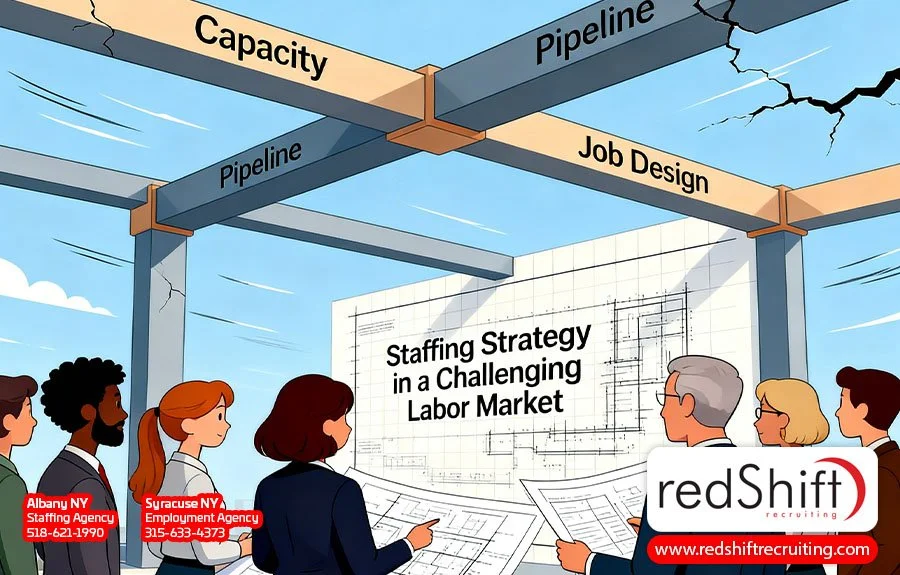
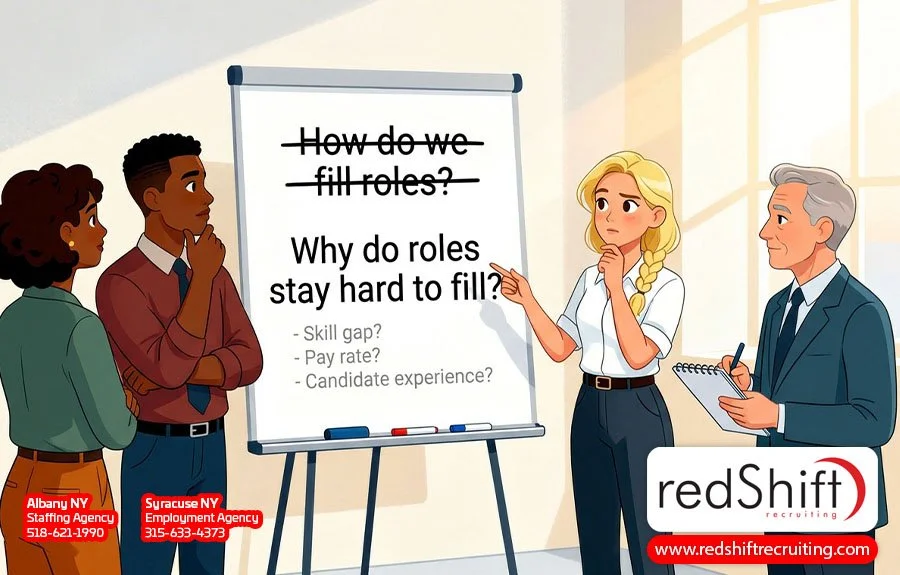
For many years, the dominant question in workforce planning was operational: how do we fill our open roles? Hiring managers refined their recruitment processes, shortened time-to-hire, and expanded sourcing channels. Staffing agencies scaled up, and job seekers were courted more aggressively. The underlying assumption in most of this activity was that the pipeline was operating as it had in the past: that skilled workers were available, that entry-level roles would continue feeding mid-level ones, and that the right combination of speed and incentive could close most staffing gaps.
But what if those assumptions no longer hold? What if the staffing challenges affecting key industries, such as healthcare, logistics, manufacturing, and skilled trades, aren’t a phase to get through, but a new reality to operate in?
The conditions that once made difficult roles sustainably fillable have become less reliable across many industries. Functioning talent pipelines, manageable workloads, adequate support infrastructure, and entry-level roles that genuinely develop workers over time are no longer things organizations can take for granted. Businesses still planning around the expectation that labor market conditions will normalize or pipelines will refill on their own are building strategy on a foundation that may not hold. The more resilient path is also the more practical one: rather than waiting for workforce constraints to disappear, the employers best positioned to navigate what comes next are the ones designing their staffing strategies around the reality they're actually in—not the one they're hoping returns.
When the Pressures Compound
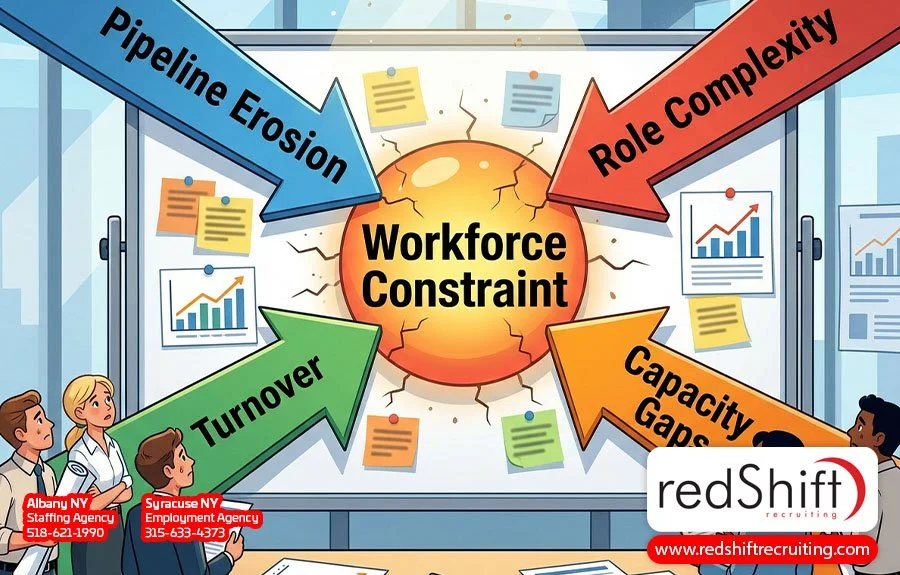
Workforce challenges rarely show up one at a time. A thinning pipeline makes it harder to fill roles, and unfilled roles push more work onto the people who remain. Meanwhile, overloaded teams burn out and leave, creating skills gaps and lost institutional knowledge. Struggles to retain talent lead to lost operational continuity and higher overhead costs, as organizations find themselves in a perpetual cycle of recruiting, onboarding, and training new hires and temporary staff that pulls existing employees away from their core work. Each problem feeds the next, and companies that have struggled to gain traction are often the ones treating these problems as separate when they're really interconnected. Building a sustainable staffing strategy in a challenging labor market starts with recognizing that these pressures don't just add up—they multiply.
The first pattern worth naming is the gap between real talent pools and role design. Skills gaps are widening in many sectors, and the instinct to redesign roles toward higher-judgment work is often good. But that redesign only works if the structure of the role actually reflects the workforce available to support it, not just the workforce organizations wish they had. In reality, many entry-level roles no longer develop workers the way they once did, and the structured path from early-career to experienced contributor has compressed or even disappeared. Businesses are trying to build a more sophisticated staffing model on a foundation that was quietly removed. The role design conversation and the pipeline conversation have to happen together, but many leaders are having neither, which means HR teams and hiring managers are solving for symptoms while the underlying condition continues.
The second pattern is what happens when capacity gaps go unaddressed for too long. When roles stay open, workload doesn't distribute evenly. Too often, it lands on the people least able to absorb it sustainably: the experienced employees, leaders, and specialized staff carrying the most institutional knowledge. The strain accelerates the very turnover it results from, which opens more gaps, which further concentrates the workload on the most reliable workers. Companies that respond primarily with employee satisfaction initiatives like engagement programs, perks, or recognition ceremonies, while failing to address the underlying strain, tend to find the loop continues regardless of their efforts to reduce turnover.
The third issue can be the most challenging to confront honestly: the most common responses to labor shortages often make the underlying condition worse. The instinct is to fill the role quickly, load more onto existing employees in the interim, and optimize the current structure rather than question it. Each of those moves is defensible in the moment, but together they delay real adaptation and crowd out long-term planning for future demands. The deeper issue is that job design, pipeline health, and how organizations allocate top talent are rarely treated as connected—even though they are. It's easy to let them live in separate parts of the organization with separate owners, timelines, and metrics. But the structural problem doesn't respect those boundaries. You cannot meaningfully redirect skilled workers toward higher-judgment work if the pipeline feeding those roles has thinned and if the roles themselves are still built around assumptions that no longer reflect reality. Addressing workforce constraints effectively means bringing these conversations into the same room.
Where the Stakes Are Highest
Not every organization faces the same workforce challenges, but the sectors that are under the deepest structural strain show most clearly what happens when compounding pressures go unaddressed. In these industries, the consequences aren't theoretical; they're already visible in service delivery, operational efficiency, and the long-term sustainability of the labor force itself. In some cases the constraint is primarily a pipeline problem—not enough workers trained for the role. In others, it's structural: roles that the available workforce has reason to avoid, whether because of working conditions, compensation, or how the work itself is designed. Both require attention, and organizations that treat them as the same problem tend to reach for responses that address the wrong one.
Healthcare, manufacturing, and skilled trades are among the clearest cases. In healthcare, demand is structurally increasing as an aging workforce of patients generates more need for care at the same time as an aging workforce of clinicians is leaving it. Pipeline length is a genuine constraint: clinical training takes years, licensing requirements are rigorous, and turnover driven by strain has been accelerating for years. The result is a widening gap between need and capacity that compensation adjustments and increased hiring efforts alone can't close.
In manufacturing and logistics, shifting policy and investment priorities are pushing more companies to increase domestic production, but the skilled workforce those ambitions depend on is the same one facing some of the deepest structural shortages—a gap that, if unaddressed, risks undermining business growth. Infrastructure investment and reshoring initiatives require sustained pipelines of qualified candidates in roles that have been underdeveloped for years. In skilled trades specifically, including electricians, machinists, welders, and pipefitters, vocational pathways have been culturally and institutionally undervalued for decades, experienced practitioners are aging out, and entry-level structures no longer reliably produce the next generation of skilled workers. The ambition and the reality are not yet in the same conversation at the scale required.
What these cases illustrate is something worth considering in every industry: structural constraint tends to be invisible until it isn't. Thinning pipelines, aging specialized workers, and eroding development pathways didn't just appear suddenly—they developed over many years while organizations focused on what was most urgent or what offered the quickest return, rather than investing in the underlying systems and development pathways their future operations would depend on. A trade-off that often looked like savings until the bill came due. By the time the pattern became unmistakable, options had narrowed considerably. That dynamic isn't unique to healthcare, manufacturing, or skilled trades; it's a preview of what plays out, at varying speeds, wherever the underlying conditions are present and long-term workforce planning has been repeatedly deferred.
What Genuine Adaptation Requires
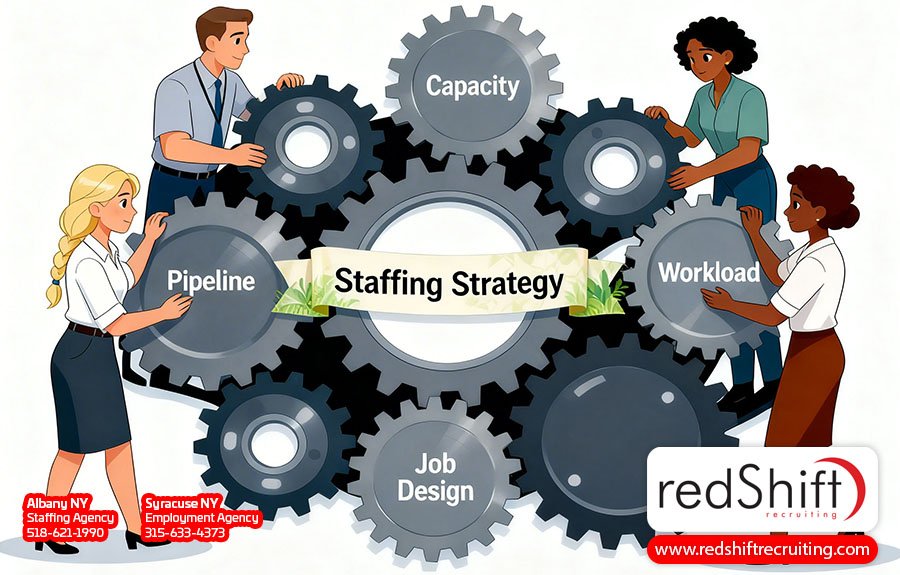
Genuine adaptation to a tight labor market goes deeper than sourcing plans or compensation adjustments; it requires a shift in how organizations understand the problem at every level. At the organizational level, the most controllable adjustment is moving from managing workforce size to managing actual capacity: how much work can realistically be delivered by the existing workforce under sustainable conditions. An organization that tracks capacity alongside headcount starts to see constraints differently, not as a list of open jobs to fill, but as a system with load distribution, sustainability thresholds, and critical roles that carry disproportionate risk if specialized skills are lost.
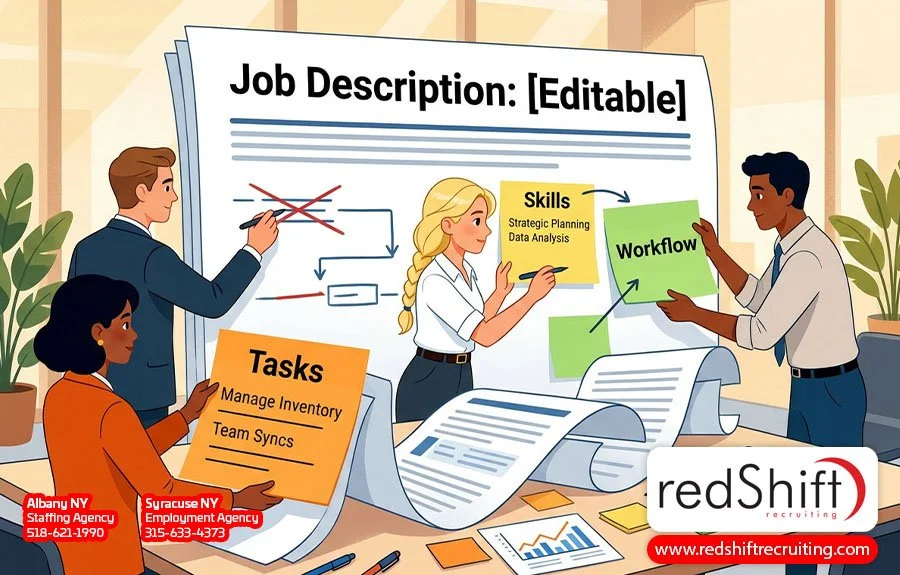
Job design belongs in this category too, as roles that bundle high-judgment and low-judgment work unnecessarily, or that have quietly accumulated responsibilities over time, create perceived talent shortages that are really design problems, restricting the pool of qualified candidates because the list of job requirements has become unrealistic. Flexible staffing models that include contingent staffing, contract workers, and project-based workers alongside full-time employees can also help businesses remain stable in conditions of economic uncertainty where labor costs and financial risks shift quickly. Underpinning all of this is a more deliberate approach to deployment—ensuring that workers carrying the most institutional knowledge are concentrated on work that genuinely requires it, rather than absorbed by tasks that don't.
At the pipeline level, the temptation to wait is strongest, but it's often the most costly mistake an organization can make. Investing in upskilling programs and professional development pathways that treat the current workforce as a genuine source of future talent is among the highest-return moves available, as is building mentorship structures that support deliberate knowledge transfer from experienced workers before they exit. Expanding sourcing approaches and removing structural barriers that have historically excluded underrepresented groups from skills development opportunities can also meaningfully widen the available talent base. These investments are easy to defer because the returns aren't immediate and they appear to increase labor costs in the short term, but companies that protect them build a depth of institutional capability and internal continuity that reactive hiring simply can't replicate. When experienced workers retire and the pipeline hasn't been developed to replace them, no amount of recruitment effort closes that gap quickly.
At the structural level, broader demographic and labor market shifts are often conditions to navigate, not problems to solve. Workforce planning built around the expectation that those conditions will return to what they once were is a wager—and in some sectors, increasingly not a good one. What adaptation actually requires is a practical, forward-looking stance: directing human judgment toward work that genuinely requires it; designing roles and workflows accordingly; making honest decisions about where to build redundancy and coverage in high-impact roles; and recognizing where current constraints require adjusted expectations rather than wishful planning. Strategic staffing solutions in a complex labor market need to go beyond job boards and reactive hiring to build organizations that remain competitive by planning for the labor market that actually exists—not the one that used to exist.
Planning for Constraint
The organizations building for constraint don't share a single tactic. What they share is a set of decisions that compound over time into a fundamentally different position. They measure capacity, not just headcount, so problems are identified before they become crises. They treat job design as a living question, helping to ensure skills gaps don't automatically become unsolvable hiring problems. They protect pipeline investment—skills development, internal progression, deliberate knowledge transfer—even when the returns are slow, because they understand what chronic dependence on reactive external hiring actually costs. And they think carefully about staff composition: a deliberate mix of contingent labor, temporary workers, and full-time staff isn't a workaround, but rather a structural choice that builds real flexibility into operations and helps address labor shortages in roles where traditional hiring pipelines have thinned. Leveraging technology and data analytics to track capacity, monitor load distribution, and identify where specific skills are most concentrated gives companies that implement them an operational visibility that headcount-focused approaches miss.
What ties all of it together is honesty about planning conditions. These organizations align staffing decisions with business objectives rather than treating workforce management as a reactive function that kicks in when something breaks. They extend sourcing beyond default assumptions about the hiring process to reach qualified candidates through traditional role structures, hybrid work models, and flexible scheduling arrangements. Most importantly, they've stopped building strategy around the assumption that current constraints are temporary. None of these moves produce results in a single quarter. But organizations that have been making them consistently aren't just better staffed; they're operating with a stability and competitive advantage that those still waiting for conditions to change are finding harder to replicate with every passing cycle.
Are You Planning for the Labor Market You Have—Or the One You Expect?
The challenge isn’t just filling roles—it’s building an organization that can operate effectively under the conditions you’re actually in. When staffing strategies are based on expectations that no longer reflect reality, even strong teams can struggle to keep up.
Taking a step back to evaluate how your workforce is structured, not just staffed, can help uncover where those assumptions no longer hold and where a more strategic approach is needed to support both current demands and to stay effective as the labor market continues to change.
Frequently Asked Questions
What Are Flexible Staffing Models and How Do They Help in a Tight Labor Market?
Flexible staffing models are staffing approaches that deliberately combine contract workers, permanent, and temporary staff to match workforce composition to actual operational needs rather than defaulting to full-time headcount for every role. Instead of treating every open position as a full-time hire, organizations working with staffing partners can build arrangements that include project-based, seasonal, temp-to-hire, and contingent staffing engagements alongside their core skilled workforce. In a tight labor market, this flexibility isn't just cost efficient; it's a structural hedge against uncertainty, allowing organizations to scale capacity up or down without the financial risks that come with over-hiring or the operational risks of chronic understaffing.
How Can Leveraging Technology and Data Analytics Improve Workforce Planning?
Leveraging technology and data analytics gives HR teams visibility into workforce patterns that headcount spreadsheets don't capture, including where load is concentrating, which critical roles are most exposed, and where time to productivity for new hires is longest and most costly. That operational intelligence allows employers to get ahead of capacity problems rather than just react to them. For businesses managing distributed teams that include in-office, hybrid, and remote workers, technology also becomes the connective tissue that makes flexible scheduling and non-traditional arrangements actually function at scale, turning what could be a coordination burden into a genuine competitive edge.
How Do You Protect Critical Roles When Skilled Workers Are Hard to Find?
Protecting critical roles in a constrained market requires treating them differently from the rest of the org chart—identifying them explicitly, building redundancy and knowledge transfer plans, and investing in internal development pathways that create backup depth over time. Organizations that wait until a critical role is vacant to think about succession are already behind. The ones that navigate this well tend to work closely with staffing partners to maintain access to qualified candidates with specific skills even outside of active hiring cycles, so that when a critical role does open, the hiring process isn't starting from scratch.
What Is the Competitive Advantage of Investing in Workforce Development?
The competitive advantage of consistent investment in skills development is compounding and difficult to replicate quickly. Companies that build and protect their own talent pipelines through upskilling programs, mentorship, and deliberate knowledge transfer reduce dependence on an increasingly competitive external hiring market, lower long-term labor costs, and improve time to productivity by advancing employees who already understand the organization. The cost-efficiency argument for workforce development isn't always visible in a single budget cycle, but business leaders that defer it tend to find that reactive hiring in a constrained market is consistently more expensive than the investment they avoided.
How Should HR Teams Approach Workforce Planning Differently in a Structural Labor Shortage?
HR teams operating in a structural labor shortage need to reframe workforce planning as a core function of business growth aligned with the company's strategic objectives—not a reactive process that activates when a role opens. That means tracking capacity and pipeline health as ongoing metrics, building relationships with staffing partners before vacancies become urgent, expanding sourcing approaches to reach skilled workers across remote and hybrid work arrangements, and making the case internally for pipeline investments whose returns are real but not immediate. Successful implementation of a more adaptive workforce strategy doesn't happen through a single initiative—it's built through consistent decisions, made at every level of the organization, that treat the labor market as a condition to plan around rather than a problem to wait out.
Conclusion: From Waiting to Building
Workforce constraint rarely announces itself as a crisis. It arrives as an accumulation: roles that take a little longer to fill each cycle, teams that stay a little more stretched than they used to, pipelines that thin gradually enough that the change is easy to attribute to temporary factors. By the time the pattern is unmistakable, the options available are materially narrower than they were when it began. The organizations that recognize this early don't necessarily have advantages that others lack; they've simply stopped waiting for conditions to improve before making decisions that needed to be made regardless.
The shift from recovery planning to constraint planning isn't a concession—it's a competitive edge. It doesn't mean abandoning business ambitions or accepting degraded outcomes as permanent. It means being honest about what the labor market actually requires and building staffing strategies that match it. Organizations that remain competitive in structurally constrained environments are the ones that align their business objectives with reality early enough to build something durable: workforce capacity, pipeline depth, and role structures that hold up under pressure rather than depending on conditions that may not return. These leaders aren't waiting for the labor market to change; they're building for the one they're in.

Article Author:
Ashley Meyer
Digital Marketing Strategist
Albany, NY