
Should AI Change What Career You Choose?
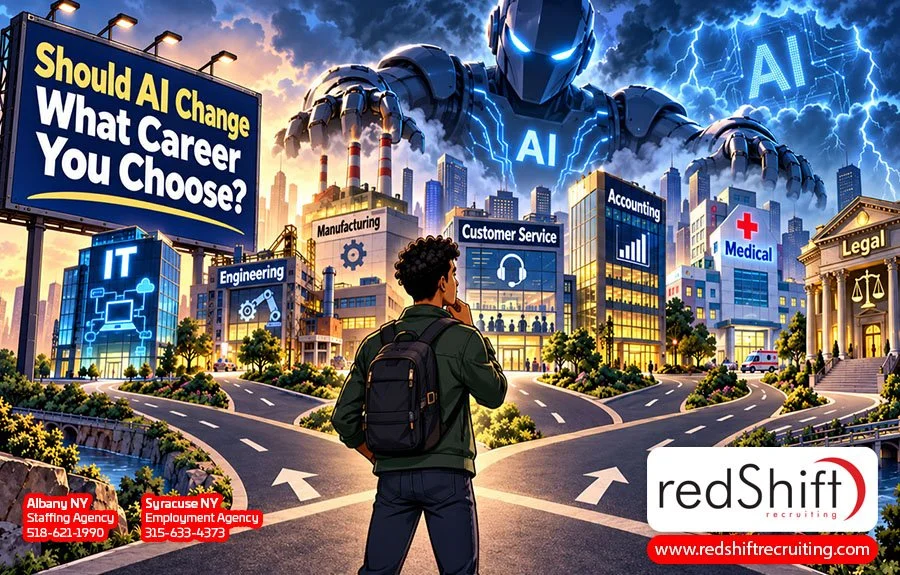
Choosing a career is hard. Whether you’re a high school student preparing to enter the working world or an experienced professional considering a change, there’s a lot to weigh, from salary and job security to work-life balance, growth opportunities, and whether you’ll even enjoy the day-to-day work.
With artificial intelligence (AI) becoming part of so many aspects of our lives, there’s another question to consider: What if the career you’re interested in looks completely different in five or ten years, or no longer exists at all? Whether you're investing years in a degree or training, or considering a job you could start tomorrow, how might those changes affect your long-term career prospects?
If you want predictions about the future with AI, you won't have to look far. Some headlines warn about AI taking jobs, while others promise exciting new opportunities in fields that barely existed a few years ago. Most of the chatter is loud, some of it is poorly informed, and little of it helps when you're the one making a decision that could shape the rest of your life.
So, should AI change what career you choose? Sometimes, yes. Other times, no.
Not exactly the clear-cut answer you were hoping for, is it?
The reality is, no one can predict exactly how AI will change the future of work. But that doesn't mean you have to make your decision blindly. Before you abandon a career you're excited about, or dismiss AI as something that won't affect you, take a closer look at what’s actually changing. You may find good reasons to reconsider your plans, or decide that the career you wanted is still a good choice after all.
Is AI Changing the Career or Just Some of the Tasks?
It’s tempting to treat every task AI can perform as proof that an entire occupation is on its way out. But the idea that AI will replace whole professions rarely matches how work is structured. Most jobs are a bundle of responsibilities. Some are repetitive tasks that software can automate or speed up. Others call for specialized knowledge, critical thinking, complex problem solving, clear communication, and accountability for the results. Work involving unpredictable situations and creative problem-solving can be more difficult to automate completely, although AI may still change how those responsibilities are performed.
Consider an accounting career. AI tools can already categorize transactions, flag discrepancies, and draft financial reports. But while AI can help analyze financial data, accountants remain responsible for evaluating the results, understanding the broader financial context, handling unusual situations, advising clients, and applying professional standards. As AI systems take on more routine tasks, businesses may reorganize their departments, reassess staffing needs, and place greater value on different skills, such as problem-solving, professional judgment, and the ability to evaluate AI-generated work.
Current research offers some perspective. In a 2025 assessment of generative AI exposure, the International Labour Organization found that roughly one-quarter of global employment is in occupations with some potential exposure to the technology. However, researchers also concluded that changes to existing jobs are more likely than outright elimination, largely because most occupations include activities that still require human workers.
Of course, automation affects different occupations in different ways. Physical labor isn't necessarily protected from technological change, either. Manufacturing and warehouse operations, for example, have long been affected by robotics and other forms of automation, some of which now incorporate AI technology. And jobs performed primarily on computers aren't automatically easier to replace, particularly when they require specialized expertise, professional accountability, emotional intelligence, or complex judgment. Even when AI doesn't threaten an occupation's existence, it could still affect hiring demand, compensation, or the value employers place on particular services. A career doesn't have to disappear for its opportunities to change.
Before ruling a career in or out, consider:
What can AI already do? Which tasks are being automated, and which might realistically follow?
What responsibilities would remain? Consider the specialized expertise, judgment, creativity, accountability, or other human skills involved. Would the job require different technical or AI skills as a result?
Would you still enjoy the work? If rules-based or repetitive work becomes a much smaller part of the job, would the remaining responsibilities suit your interests and abilities?

How Much Could the Career Change Before You Enter It?
If you're a student choosing a major or a professional considering a career that requires significant training, you face an additional challenge: the field could change considerably before you're qualified to enter it. Someone starting a four-year degree today may graduate into a very different version of the occupation they're researching now. The longer and more expensive your path in, the more you should assess the long-term career prospects on the other side.
Suppose you're comparing two training programs. One builds broad technical knowledge, practical experience, and qualifications that apply to several related career paths. The other focuses almost entirely on one software platform, piece of equipment, specialized skill, or narrow task list. If new technologies substantially change that work within the next decade, the second option could leave you with fewer alternatives. Specialization can still be valuable, but consider whether your qualifications would remain useful if the work changes.
Consider computer science. AI is already changing work in computer programming, technical support, and software development, but that doesn't mean the entire field is becoming obsolete. Employment prospects also vary between specialties. For example, the Bureau of Labor Statistics projects strong employment growth for information security analysts and data scientists, even as AI changes how technical work is performed. A broad technical foundation can open up opportunities in fields like cybersecurity and data science, although some careers, such as data scientist or AI engineer, may require additional training and expertise. Understanding these differences can help you choose a program that prepares you for more than one possible future.
Before committing to an educational or training program, weigh three things:
Time and cost: How long until you're qualified to apply for jobs, and how much will it cost to get there?
Relevance: Does the program combine foundational knowledge with practical experience using the tools employers need? Compare the curriculum with qualifications in actual entry-level job postings to see whether it builds skills employers are looking for.
Flexibility: Could you use the education or credentials in another role if your original plan loses its appeal?
Programs that offer practical, hands-on training and real work experience can be especially valuable for early-career job seekers, as the traditional entry-level path into some professions is changing. In fields where AI is taking over some foundational tasks, employers may expect new hires to bring stronger technical skills, practical experience, or the ability to handle more complex responsibilities. The labor market for beginners can look very different from the market for experienced professionals, so pay attention to how well a program prepares you for the jobs you'll actually be qualified to pursue when you finish.

Does This Career Give You Room to Adapt?
Your first job is only one part of a career. Consider where that experience could take you over the next five, ten, or twenty years. Some fields offer several specialties, related occupations, and opportunities to apply your skills in new or creative ways. Others are built around a narrower set of responsibilities, which could leave you with fewer options as technology changes.
Consider manufacturing. Someone who starts in production may eventually move toward quality control, equipment maintenance, production planning, or a supervisory role. Those positions require different skills, and some may involve additional training or certifications. But experience with manufacturing processes, equipment, and workplace operations can provide a foundation for several related career paths. Automation may change all of these jobs, but having several possible directions within the same industry can give workers more flexibility as their original roles evolve.
The same applies to technical careers. Experienced software engineers, for example, may be able to move into systems architecture, technical leadership, systems integration, or other related specialties. As AI becomes part of more industries, it may also create new opportunities in AI development, implementation, and technical oversight. Some of these paths build on existing experience, while others require substantial additional expertise.
Before choosing a field, look beyond the entry-level positions. Where do people with five or ten years of experience typically end up? Could you move into related roles without starting over? Do employers value the same foundational skills across different specialties? The more directions your skills could take you, the less dependent your long-term career may be on the future of any one job title.
What Does the Job Market Say Beyond the AI Headlines?
Depending on which headlines you read, the future job market will either be devastated by AI or overflowing with new opportunities created by AI-driven technology. So what should you believe, and how much of it even applies to the career you're considering?
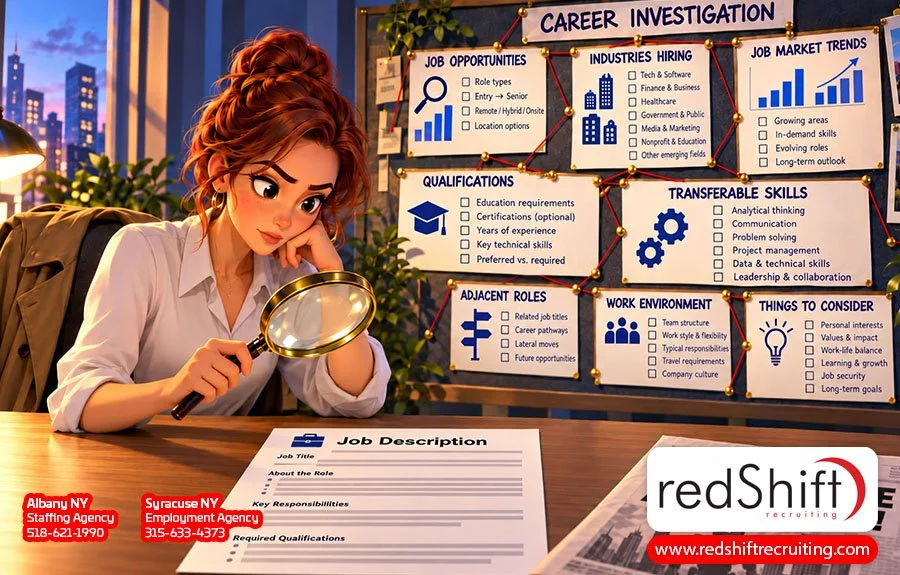
Look for reliable occupational research rather than predictions about AI alone. A good starting point is the Bureau of Labor Statistics' Occupational Outlook Handbook, which covers job duties, typical education requirements, pay, projected employment trends, and related occupations. These projections won't tell you exactly what AI will do to a profession, but they provide useful context about employment demand and career prospects.
Next, look at current job postings. Not just one or two; read enough to identify patterns and get a clearer picture of what employers are actually looking for. Watch for:
Available openings: Are employers advertising positions in the field, including jobs for people with limited experience?
Required qualifications: Which technical skills, certifications, degrees, or soft skills appear repeatedly? Are employers combining responsibilities or expecting candidates to perform work that previously belonged to other job titles?
AI expectations: Is experience with AI tools becoming a requirement, or is it simply listed as a preferred qualification?
Related opportunities: Are employers advertising new jobs or related positions that use similar skills? Are the responsibilities and requirements for those roles changing, too?
Pay rates and locations: What salaries are employers advertising, and how do they compare with your expectations and the cost of entering the field? Are there opportunities in the areas where you'd realistically work, or would you need to relocate?
Keep in mind that job postings are only one piece of the picture. They show what employers are advertising, not necessarily how many positions will be filled or how competitive the applicant pool is. More posts for a job title don't automatically mean there are more jobs available to qualified applicants.
For more firsthand advice, talk to recruiters or professionals who work in the field. Ask how hiring requirements are changing, which qualifications employers value most, and whether candidates from different backgrounds are being considered. If you're a trade school or college student, your school's career services office, instructors, or alumni network may also be able to connect you with people who can offer valuable insight.
And if hiring is slowing, don't automatically assume AI is responsible. Changes in business demand, budgets, and other market conditions can affect employment opportunities, too.
One impressive AI demonstration, one high-profile layoff, or one prediction about an occupation disappearing shouldn't outweigh everything else you've learned. Neither should a single optimistic report convince you that a career's future is guaranteed.
When Should AI Actually Change Your Career Plan?
You've looked at the work, the training requirements, your alternatives, and the job market. Now you have to decide how much AI should influence your choice.
Give AI more weight when:
AI is already changing the work or hiring requirements. Are employers automating responsibilities, combining positions, or expecting different skills? Would you still enjoy the job as those responsibilities change?
The training investment is large and highly specialized. Years of preparation for skills that may lose value quickly deserve extra scrutiny.
Entry-level opportunities are becoming harder to find or enter. Can you realistically gain the experience employers now expect?
The remaining responsibilities don't suit you. If the job shifts toward client communication, troubleshooting, or supervision, would you still want it?
A related career offers better options. If another field you would enjoy offers more flexibility, transferable skills, or a more manageable training investment, don't overlook it.
Give AI less weight when:
AI is changing how the job is done, not eliminating the need for it. Employers are incorporating AI into existing positions but still need people with the underlying expertise.
Your skills give you room to adapt. They could be useful in several specialties or related occupations.
The career still fits your circumstances. It offers realistic opportunities, acceptable pay, and work that suits your interests, abilities, and lifestyle.
AI is only one consideration. A career isn't automatically a better choice because AI is less likely to affect it. Pay, location, job availability, training costs, and whether you actually want to do the work are still important factors.
Also consider how difficult your decision would be to reverse. Changing specialties early in a degree program may be easier than leaving a stable job, taking on substantial debt, or relocating for years of training. If you're uncertain, try a short course, job shadowing, or relevant work experience before committing.
Changing your career plan doesn't have to mean abandoning the career entirely. You might choose a different specialization, adjust your training, or gain experience in an adjacent field. Sometimes a completely different career is the better choice, while other times, changing how you approach the career you want may be enough.

Frequently Asked Questions
Will Artificial Intelligence Create More Jobs Than It Eliminates?
It's too early to know how the numbers will balance out. AI is already helping companies create new roles and opportunities across many industries, even as it automates certain tasks and changes existing jobs. Rather than trying to predict the final outcome, prioritize continuous learning that prepares you for evolving job requirements, watch how opportunities develop in your field, and be prepared to adjust your skills as the market changes.
Should I Avoid a Career If AI Is Already Being Used in That Field?
Not necessarily. AI is becoming part of so many professions that avoiding it entirely may be difficult. Consider how extensively it's changing the work: Are employers still relying on human expertise and judgment, or are responsibilities and hiring requirements changing substantially? Being willing to learn how to work with AI is more practical than avoiding careers where it's already being adopted.
Should I Choose a Career That's Growing Because of AI?
Growth is a good reason to investigate a career, but not enough reason to choose it. Opportunities in AI development, engineering, and related fields may appeal to aspiring AI developers and others interested in technical careers, but consider your interests, abilities, training costs, and realistic employment prospects. AI careers will continue to evolve, too, and some positions that are needed today may look very different in the future.
How Can I Gain Experience If Entry-Level Jobs Are Changing?
Look for internships, apprenticeships, cooperative education programs, or opportunities to complete real projects before applying for your first position. Volunteer work and portfolios can also demonstrate practical abilities in some fields. Ask employers or recruiters which types of experience they value most so you can prioritize opportunities that strengthen your qualifications.
Which AI Tools Should I Learn Before Entering a Career?
Check job postings and training program curricula, and have conversations with working professionals to identify the tools used in your intended field. Prioritize those employers expect you to know rather than trying to learn every new application. To stay relevant, develop both the software skills required for the job as well as the domain expertise and decision-making needed to use those tools effectively.
Conclusion: Choose a Career That Still Makes Sense for You
So, should AI change what career you choose? Sometimes, yes. If technology is substantially changing the work you want to do, the opportunities available to beginners, or the value of a costly qualification, those are legitimate reasons to reconsider your plans. But a career shouldn't be ruled out simply because AI can perform some of its tasks. Make your decision based on what you know about the field today, while leaving room for the possibility that the work will change. You don't need to find a career that AI will never affect. You need one that offers opportunities you can realistically pursue, work that suits you, and skills that give you options as your career develops.


Article Author:
Ashley Meyer
Digital Marketing Strategist
Albany, NY