
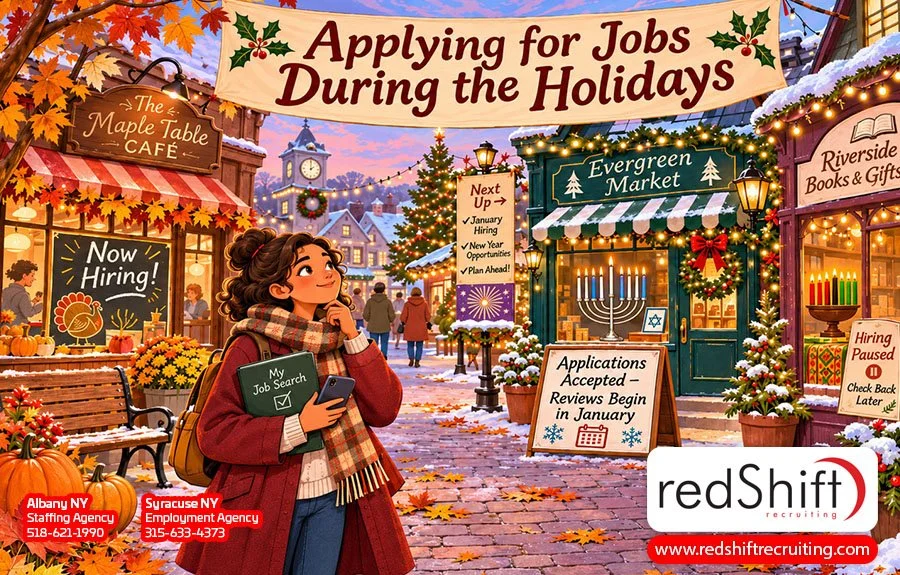
Cookie swaps, travel plans, a calendar that fills up faster than your inbox: the holiday season has a way of crowding out everything else. So when it comes to your job search, it's tempting to hit snooze until the calendar flips.
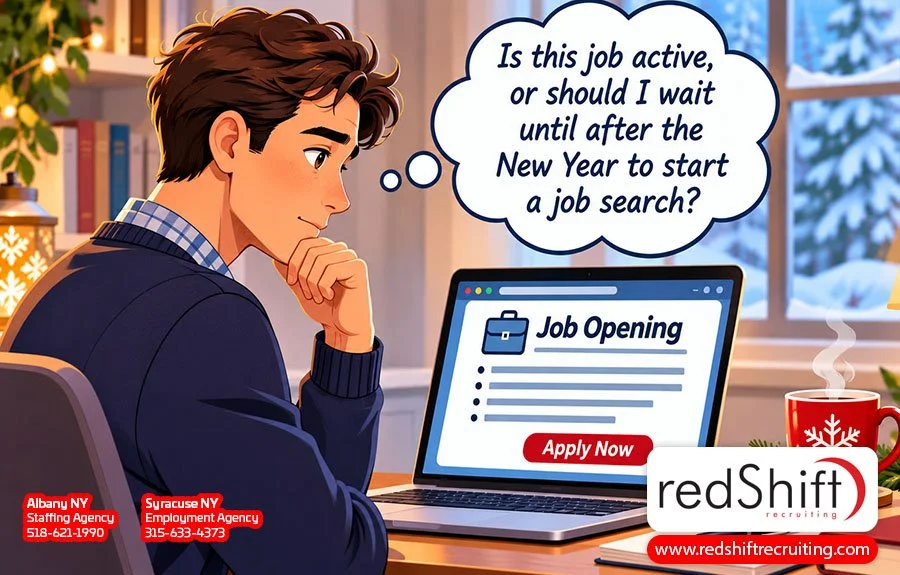
But is waiting to apply the right move? Is the festive season a golden opportunity to get ahead while many job seekers are distracted? Or will you just be sending applications into a void of automated out-of-office replies and "let's reconnect in the new year" messages?
The job market doesn't entirely clock out for December, but it isn't necessarily business as usual either. Plenty of employers keep hiring straight through, while others slow down or even pause hiring for a role until January. And while it's a popular belief that you'll face less competition when job hunting during the holidays, that isn't guaranteed for every opening.
If you're applying for jobs during the holiday season, here's what to look for in job listings, what to expect from employers, and how to keep your search moving without putting your holiday plans on hold.
How Can You Tell if an Employer Is Still Actively Hiring?
If you come across a role that matches your skills and interests, there's usually no reason to hold off on applying just because of the calendar date. Some companies are still reviewing applications and scheduling interviews as usual. Others are accepting applications now but don't expect to make much progress until after the holidays.
Although a listing won't necessarily tell you whether a job opening is still active or how quickly the employer intends to fill it, there are a few details to look for:
Posting dates: A recent posting date is generally a good sign, although it isn't a guarantee that the employer is actively hiring. Some listings are automatically refreshed or reposted, while others are evergreen postings seeking talent for ongoing or future needs. On the other hand, some positions take months to fill, so it's entirely possible that a job advertised in mid-October is still open in December. Don't let an older posting date alone discourage you from applying if you're interested in the opportunity.
Application and hiring timelines: Some employers specify when applications will be reviewed, when interviews will begin, or the anticipated start date. You may also see a note that applications are reviewed as they're received or that the employer is looking to fill the position immediately. A closing date after the holidays suggests the employer plans to continue accepting applications until then, although that doesn't necessarily mean they'll wait to start reviewing them.
If you find an older listing on a job board, check whether the position is still advertised on the employer's own careers page. Recent hiring announcements on the company's website or social media platforms may also provide some clues about its current hiring activity.
In most cases, you won't be able to tell exactly where an employer stands in the hiring process, but that isn't a reason to hold off on applying. If you're short on time, prioritize good-fit roles that show signs of recent activity. However, unless a listing is clearly outdated or the employer says it has stopped accepting applications, don't rule out a job you're genuinely interested in. Applying early can give you an advantage if employers review applications as they come in, particularly if a role attracts many candidates or the job posting is closed early. Even if reviews won't start until after the holidays, it's better to submit your application now than to come back in January and wish you'd applied before the opening closed.
Why Can the Hiring Process Be More Unpredictable During the Holidays?
Holiday hiring doesn't follow a single pattern. Some employers slow down recruiting toward the end of the year, while others may be under pressure to speed up. An employer might rush to fill an approved role before the budget year ends, or have new hires in place for projects launching early next year. Others may have used up their hiring budgets or be waiting on next year's funding and approvals.
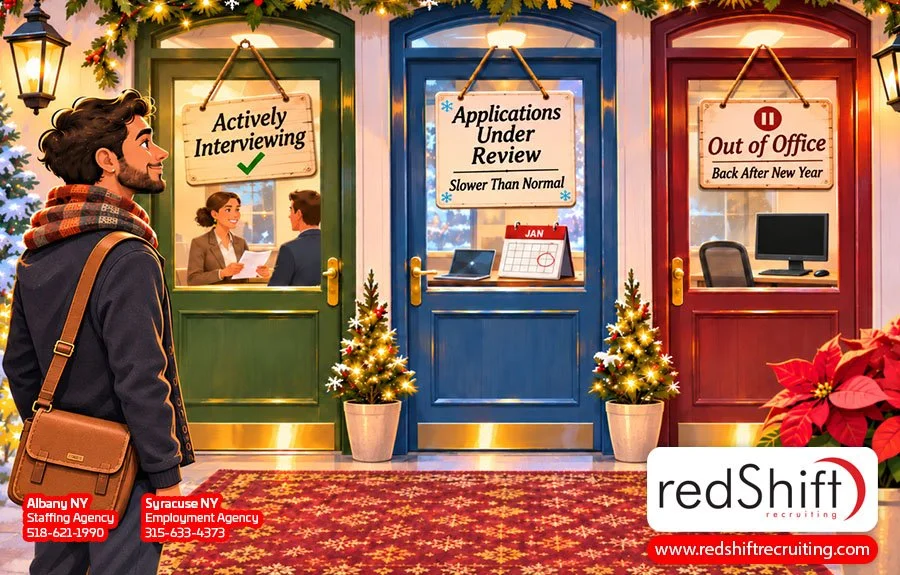
Even when there's an immediate need, holiday schedules can complicate things. Hiring managers, recruiters, and decision-makers may be on vacation or have reduced availability. Offices may close or run with reduced staffing, making it harder to schedule interviews and get approvals when fewer employees are available. Shifts in year-end priorities can also pull teams away from hiring. Timing varies by week, too: an employer might interview through much of December and then go quiet around Christmas and New Year's.
Additionally, hiring activity varies by industry and the type of role. An employer filling seasonal roles may need someone to start almost immediately, while businesses hiring for permanent positions may be looking ahead to January or later. Depending on the employer's needs, you could move quickly from an interview to an offer or wait weeks for the next step.
How Can You Tell Whether Hiring Is Moving Forward, Delayed, or Paused?
You won't always be informed of the employer's exact timeline, but if you've been in touch with a hiring manager or a recruiter, there are a few clues you can look for:
Out-of-office messages: An automatic reply can explain a gap in communication. If it gives a return date, wait until after that date to follow up. It doesn't necessarily mean the entire hiring process is on hold, though.
Specific reasons for delays: Being told the next interview needs to wait until someone returns from vacation is different from hearing the employer is waiting on budget approval. With a scheduling conflict, you have a better idea of what needs to happen before the process can move forward. A pending approval may affect whether the job stays open at all.
Continued communication: Requests for more information, scheduled interviews, or updates with specific next steps suggest the employer is still moving forward, even if there are delays. Remember that not every slow hiring process is the result of the holidays.
Repeated changes to the timeline: If interviews keep getting postponed or the employer becomes less certain about when a decision will happen, there may be issues beyond holiday scheduling.
An explicit pause: If the employer says the position is on hold, ask whether there's an anticipated date to resume hiring and whether your application will remain under consideration.
If you've applied and haven't heard back, try not to read too much into the silence. The company may simply be taking longer to review applications, or they may have moved forward with other candidates. Without an update from the employer, it's difficult to tell which is the case.
When Should You Follow Up?
Standard follow-up practices still apply during a holiday job search, but your usual timeline may need adjusting. The key is to consider how much time the employer has actually had to move the hiring process forward, not just how long you've been waiting. Between closures, year-end activities, and reduced staffing levels, they may have had very little time to review applications or make decisions.
If the employer has specified a review date, allow some time after the date passes before following up. If they specifically ask applicants not to contact them, respect that. Otherwise, if you have an appropriate contact, limit your outreach to one brief, professional message after a reasonable wait.
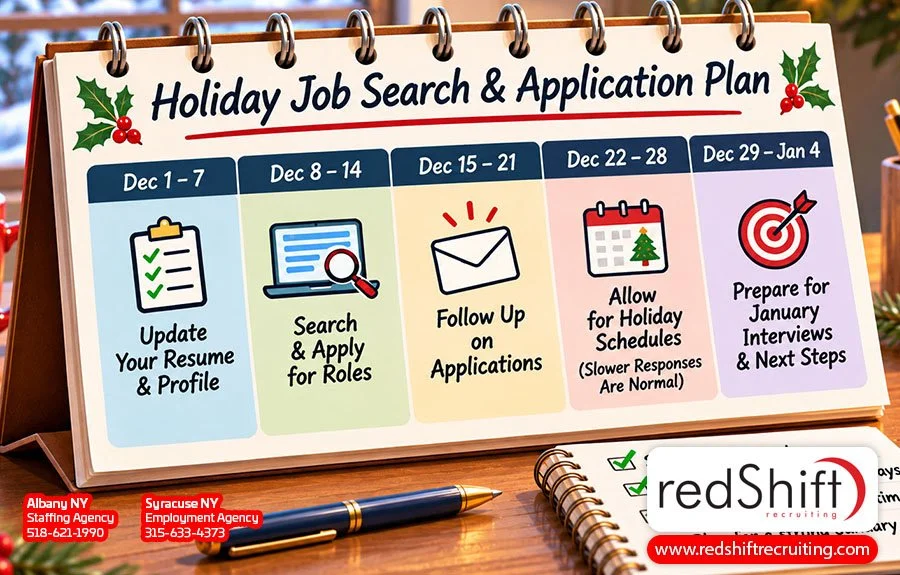
If you're already talking with a recruiter or hiring manager, the end of an interview or conversation is a good time to ask whether the holidays are expected to affect the timeline. Knowing whether they expect a decision before the break or after it helps you decide when to check in. Create a simple record of when and where you've applied, who you've spoken with, and when you expect to hear back, so you don't follow up too soon or forget to reconnect when hiring resumes.
If someone tells you they'll be in touch after the holidays, give them a few working days to settle back in before checking on your application. They may have a full inbox, rescheduled meetings, or a backlog of work to get through before they can give you an update. The exception is if you've received another job offer or have another time-sensitive decision to make. In that case, explain your circumstances and any deadlines so the employer can decide whether it's possible to speed things up.

How Should You Adjust Your Job Search During the Holidays?
Between holiday commitments and less predictable hiring timelines, you may need to adjust how you approach your job search. That doesn't mean putting it on hold or spending every spare minute looking for work. The following tips can help you manage your job search while still enjoying the holidays.
Apply Consistently Without Sacrificing Quality
The time of year isn't a reason to let the quality of your applications slip. While mobile platforms and quick-apply options make it convenient to submit applications on the go, take the time to read each posting and assess whether the role is a good fit. A tailored resume that highlights your relevant qualifications, along with a cover letter when appropriate, is still worth the effort. Generic applications can reduce response rates, so don't rush through submissions just to hit a particular number.
Keep applying to other job opportunities while you wait to hear back from employers, especially if you hope to start a new job soon. Putting your job hunt on hold while you wait for a response could mean missing out on other openings, while continuing to apply improves your chances of having more offers to consider.
Make the Most of Quieter Periods
If you're finding fewer openings that interest you or you're waiting on responses, use some of the downtime for prep work. Build a master resume you can tailor for different positions, and make sure your professional online profiles are up to date. Write down a few specific examples of your work to draw on during interviews, and put together a short list of companies you'd like to work for so you can check their careers pages regularly. You could also use the time to reconnect with former colleagues you've lost touch with. Getting some of this work done now means you'll be better prepared to act when a great opportunity comes up, whether that's in December or January.
Let Hiring Managers Know Your Availability
If you're traveling, attending holiday events, or unavailable on certain dates, let the employer know when interview scheduling comes up. You don't have to cancel plans with family and friends to show interest, but you should explain any conflicts upfront, respond as promptly as you can, and prepare a few alternative dates or times you could offer. Keep in mind, though, that very limited availability can make an already tricky schedule harder to coordinate.
The same balance applies to job hunting in general. There's no need to spend your holidays constantly checking job boards. Set up job alerts, check for new openings regularly, and apply when you spot something promising. You can stay on top of new opportunities and still set aside time to enjoy the season.
Frequently Asked Questions
Should You Apply for a Job if the Employer Says Hiring Is Paused?
It depends on whether the employer is still accepting applications and plans to resume hiring. If the posting is open and the role is a good fit, applying can still be worthwhile, especially if you're comfortable waiting. If hiring has been suspended indefinitely or applications are closed, focus on more immediate openings and check back if the role reopens.
What if a Job Posting Disappears After You Apply?
A removed posting doesn't necessarily mean the position has been filled. The employer may have hit its application deadline, received enough applicants, moved on to interviews, or decided to put hiring on hold. If you're already in contact with someone, you can ask whether the process is continuing. Otherwise, don't assume that the removal of the posting means your application is no longer being considered.
What Should You Do if You Get an Offer While Other Employers Are Still Deciding?
Thank the employer, and ask when they need an answer and when they'd like you to start. It's fine to ask for a short window to consider the offer, especially if the holidays make it harder to get the information you need.
If you're also interviewing for another role you're genuinely interested in, let that employer know you've received an offer and when you need to make a decision. Be honest about your circumstances, and don't claim to have an offer you haven't received. Timing can be crucial, especially when holiday closures or vacations could make it harder to get an answer before your deadline.
Should Students Use Winter Break to Look for Job Opportunities?
Yes, particularly if they're looking for internships, summer jobs, or full-time positions after graduation. Some employers begin recruiting months in advance, and waiting until the spring semester to start looking could mean missing application deadlines. Winter break can also give students more time to research employers, prepare applications, and interview without having to work around their usual class schedules.
Keep Applying, but Allow for Delays During the Holiday Season
Although the holidays are often touted as the perfect time to get ahead of the competition, there's no guarantee the specific jobs you're interested in will attract fewer applicants. On the other hand, plenty of employers are still actively looking for qualified candidates, so there's usually no reason to stop applying just because of the time of year.
Find a balance that works for you rather than trying to predict what employers or other candidates might be doing. Keep applying to roles that fit your goals, allow for some flexibility in hiring timelines, and make time for the friends, family, and traditions that matter to you.

Article Author:
Ashley Meyer
Digital Marketing Strategist
Albany, NY