
Why Entry-Level Jobs Now Require Experience—And What It Reveals About the Workforce Pipeline
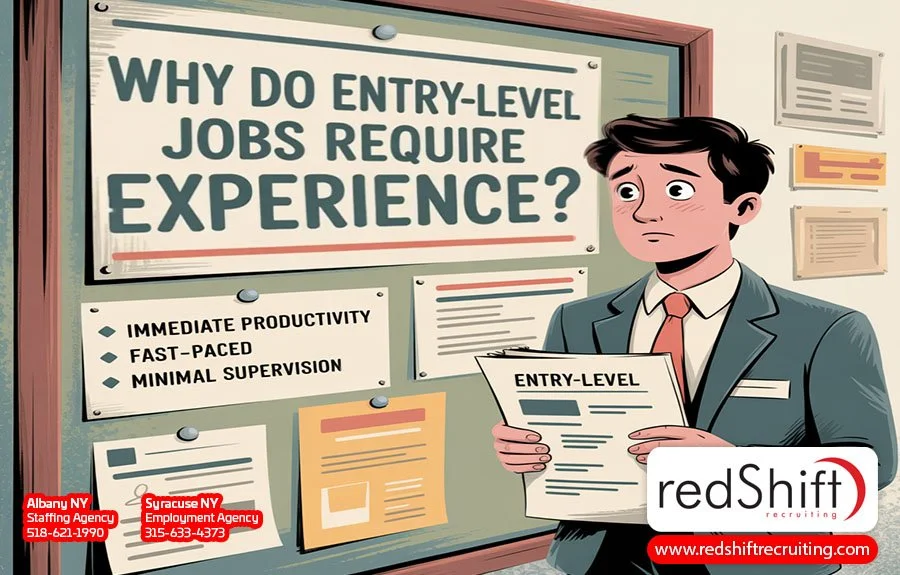
If you've been on a job board recently and noticed that entry-level postings seem to expect anything but entry-level experience, you're not misreading them. Why entry-level jobs now require experience is a real and structural question—and the answer points directly to what chronic labor shortages are doing to organizations' ability to train and support early-career professionals.
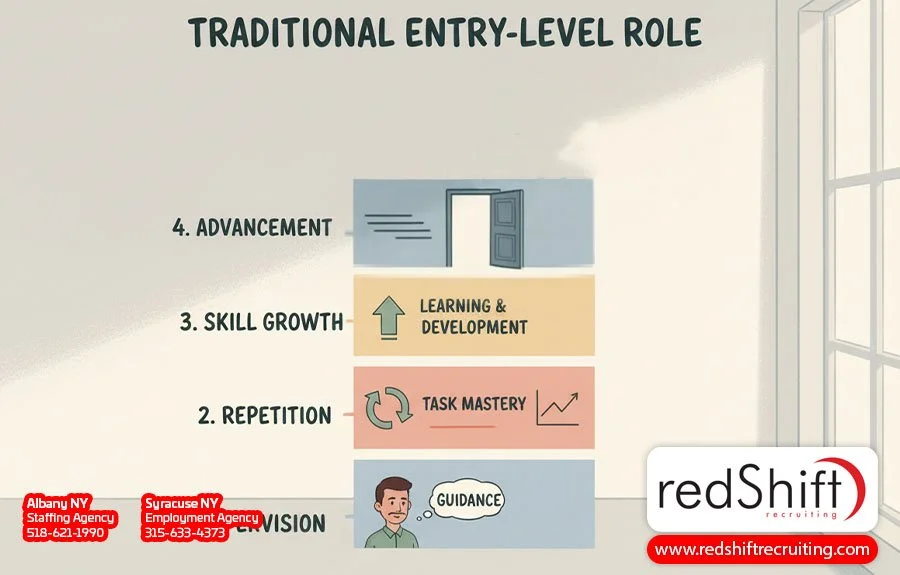
The traditional entry-level role was recognized as a development environment where less experienced employees could learn foundational skills, build technical abilities, and grow toward higher responsibility. These roles had closer supervision, a higher tolerance for mistakes, and time deliberately built into the process. They were a critical part of the workforce pipeline: the first step in developing the skilled professionals organizations would eventually depend on. But in many companies, that capacity has eroded.
The reason is visible in the staffing constraints that have reshaped how organizations operate day to day. Overstretched teams can't absorb inexperience the way fully staffed ones can. When every role needs to produce immediately, the learning curve becomes a liability rather than an expectation. This isn't a generational shift or a skills gap story. It's about what happens to workforce pipelines when the organizations responsible for building them are running low on the capacity to do it.
What Entry-Level Jobs Were Designed to Do
Historically, entry-level positions were designed to help new hires build real work experience. They created a starting point in the job market where students, recent graduates, and career changers could begin developing the essential skills needed for long-term professional growth. Because employers understood that most candidates wouldn't have extensive prior experience, a typical job description often carried lower expectations and limited responsibility. Early tasks frequently focused on repetitive or support work intended to build foundational abilities over time.
In this model, employers were investing in the next generation of workers by creating an environment where people could gain experience, receive guidance, and learn without the pressure of immediate performance. These early responsibilities helped employees develop both technical skills and fundamental soft skills like communication, problem solving, and time management, while also building familiarity with specific tools and internal processes before they were expected to operate independently.
The structure allowed employees to accumulate hands-on experience, develop professional habits, and build confidence that couldn’t easily be replicated through school alone. Over time, entry-level employees developed the necessary skills and knowledge needed to take on greater responsibilities and pursue more advanced roles.
In other words, entry-level work was never just about filling a position; it functioned as part of the workforce pipeline. Organizations invested time and resources so that inexperienced workers could grow into skilled professionals who would later step into more strategic roles, benefiting both employees and employers in the long term.
How Labor Shortages Are Reshaping Entry-Level Roles
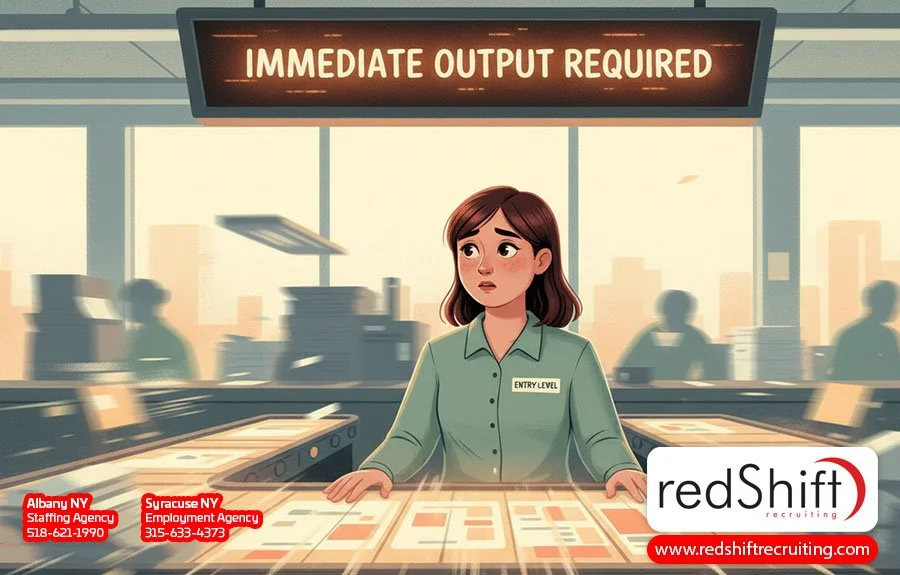
When organizations operate with fewer people than they need, the design of the entry-level role begins to change. Work that once unfolded at a manageable pace becomes faster and more demanding, leaving less room for supervision or gradual learning. Teams that are already stretched thin simply don't have the time or resources to invest in formal training programs or even informal mentorship. As a result, many entry-level jobs require employees to contribute immediately rather than develop skills over time.
This shift often appears directly in job postings. Positions that once offered extensive training to help inexperienced workers build practical experience now expect new employees to work independently and hit the ground running. In other words, the role itself is redesigned around immediate productivity rather than gradual development.
For hiring managers, that loss of training capacity directly affects the hiring process. Even when a role is labeled entry-level, many employers prioritize candidates who already bring relevant experience from internships, volunteer work, or a past job. The practical expectation shifts from learning first to contributing first, potentially shutting the door for new graduates and other early-career workers trying to enter the workforce.
The Loss of Training Capacity
An effective training program requires more than good intentions. It depends on time, stability, and the availability of experienced staff who can guide new employees through unfamiliar tasks. In a healthy work environment, leaders and senior staff provide oversight, answer questions, and help entry-level employees develop both hard skills and soft skills through daily interaction. That kind of development takes attention and consistent effort—resources that are both rarer and more valuable in busy, understaffed environments.
In many organizations, the people who would normally provide guidance and mentorship are too busy keeping operations running to spend much one-on-one time with employees who need extra support. Instead, supervisors are covering gaps, adjusting schedules, and helping teams meet immediate demands. A lack of training, clear expectations, and structured support can also contribute to high turnover, which requires more time spent recruiting and onboarding staff and leaves even less time for deeper skill development. Job descriptions that once included mentoring, coaching, or walking a new employee through a process are replaced with the expectation that people will arrive ready to perform with minimal direction.
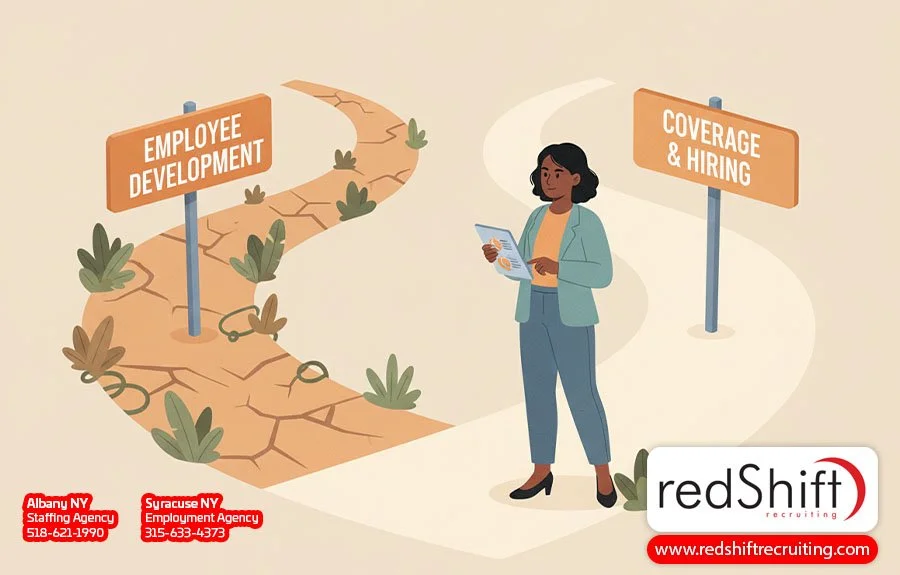
This changes how roles are evaluated and filled. When teams no longer have the bandwidth to support untrained workers, job requirements begin to emphasize significant direct experience and proven technical skills. This is the structural reality behind the changing experience requirements in entry-level jobs. Companies don't view training as less valuable; they recognize it as a significant investment that is becoming harder to deliver. In many cases, the real constraint is not willingness, but capability.
From Learning on the Job to Immediate Performance
For much of modern workforce history, the early stage of a career followed a predictable pattern: get a full-time job, learn the work, begin contributing, and gradually take on greater responsibility. An entry-level position was understood as the period where people built foundational job experience, developed professional habits, and gained a better understanding of how work functions inside an organization.
The challenge in a labor shortage is that sequence is often reversed. Many roles now expect employees to contribute immediately while still learning under real production pressure. Instead of gradually building competence, new hires are expected to perform at a high level from the start, often with little margin for error.
This altered perception is visible across job listings, where an entry-level job title may still appear accessible to early-career job seekers, but the underlying expectations tell a different story. In reality, most employers prefer experienced candidates who have already demonstrated technical skills, as well as a strong work ethic, the ability to communicate effectively, and familiarity with workplace responsibilities such as coordination or project management. This creates confusion and frustration for early-career job seekers, who search job boards only to find many so-called entry-level roles requiring two or more years of experience. The result is a frustrating cycle of needing experience to gain experience, which can push capable young professionals out of consideration before they have had the opportunity to prove themselves.
This often requires early-career applicants to look for other ways to demonstrate the capabilities employers expect, since a college degree alone may not be enough to secure a full-time job. Experiences such as freelance work, volunteer projects, academic assignments, or other practical learning opportunities can help build relevant skills, but for some employers even these may not replace direct experience in a related role. As expectations rise, fewer roles function as true starting points, making it harder for new graduates and career changers to gain the initial foothold needed to begin building a professional career.
Why This Is a Long-Term Capacity Risk
When fewer people are able to enter the workforce through true entry-level roles, the effects extend beyond present hiring challenges. Entry-level work has traditionally served as the starting point where employees build foundational job experience, develop professional judgment, and begin progressing toward mid-level responsibilities over time. When those opportunities shrink, the workforce development pipeline begins to constrict.
Over time, early-career workers struggle to gain the experience needed to move into mid-level roles, which eventually affects the supply of senior talent as well. As the pipeline narrows, organizations have a smaller pool of workers ready to step into more complex responsibilities, as the professionals who would normally move into those roles were never able to build the foundation earlier in their careers. The labor market depends on a steady process of development from entry-level learning to advanced responsibility—it cannot sustain experienced workers if it cannot produce them.
How the Entry-Level Experience Gap Becomes a Cycle
These pressures do not exist in isolation. They reinforce one another in a cycle that becomes harder for organizations to break over time.
When staffing shortages reduce the capacity organizations have to train new employees, fewer early-career workers gain the experience needed to advance. The smaller group of experienced professionals who remain must focus on keeping operations running, leaving less time to train and mentor the next generation. As work continues to pile up, the people who would normally guide new employees are already operating at full capacity. Without experienced staff who have both the ability and the time to teach the job, employers increasingly look for candidates who already meet higher experience requirements. Positions that once served as training grounds begin to expect immediate contribution instead.
The result feeds back into the problem. When fewer workers gain early career experience, fewer are ready to move into mid-level roles, and fewer experienced professionals are available to mentor the next generation entering the workforce. What begins as an entry-level hiring challenge gradually becomes a structural constraint on the workforce pipeline itself.
Thinking About Your Workforce Pipeline?
If entry-level roles increasingly require prior experience, it may signal a deeper shift in how new employees are trained and developed. When organizations lose the time and capacity to mentor early-career workers, the pipeline that produces experienced professionals begins to narrow. If you're thinking through how these changes affect your workforce planning, our team is ready to talk.
Frequently Asked Questions
Why Do Entry-Level Jobs Require Experience Today?
Many employers now operate with smaller teams and tighter workloads than in the past. That means they often need new hires to contribute quickly rather than spend long periods learning the basics of a role. As a result, some positions labeled entry-level now require experience, even though those roles historically served as training grounds for early-career workers.
However, this doesn’t necessarily mean companies expect years of deep expertise. In many cases, they are looking for candidates who already have some exposure to the type of work involved through internships, part-time roles, or projects that demonstrate real-world job experience.
How Much Experience Do Employers Expect for Entry-Level Jobs?
The amount of required experience can vary widely by industry and role. Some job listings ask for one or two years of related work, while others are simply looking for evidence that candidates understand basic workplace expectations and responsibilities.
If you’re unsure how much experience a role truly requires, look beyond the headline requirements and focus on the responsibilities listed. Many employers are willing to consider applicants who can demonstrate relevant skills or familiarity with the work, even if they haven’t held the exact position before.
What Should Job Seekers Include in a Resume for Entry-Level Jobs?
A strong resume for an entry-level role should focus on the abilities and experiences that demonstrate readiness to work in a professional environment. Even if your background comes from internships, coursework, or part-time work, these experiences can still show employers that you understand deadlines, teamwork, and accountability.
The skills section can be particularly helpful for highlighting tools, technologies, or competencies relevant to the role. Listing those capabilities clearly allows employers to quickly see how your background connects to the position.
How Can Job Seekers Highlight Transferable Skills Without Direct Experience?
When applicants lack direct industry experience, it becomes important to highlight transferable skills that apply across many roles. These might include communication, problem solving, organization, or collaboration developed through school projects, volunteer work, internships, or other experiences.
Employers often value candidates who show curiosity, initiative, and a strong work ethic, especially when they can clearly explain how those abilities would translate to the role they are pursuing.
What Are a Few Tips for Getting an Entry-Level Job Without Experience?
A few practical steps can make a meaningful difference when applying for early-career roles. First, tailor each job application so it clearly connects your experiences to the responsibilities described in the posting. This might include customizing your cover letter to explain how your background supports the role.
It can also help to keep your career goals in mind and focus on positions where your existing skills or interests align with the work. Employers are often more receptive to candidates who demonstrate genuine interest in the role and the organization.
Conclusion: The Experience Gap Starts at the Entry Level
The question of why entry-level jobs now require experience is often framed as a hiring challenge, but the underlying issue is structural. Entry-level roles have historically served as the starting point where workers gain the job experience, judgment, and skills needed to move into more complex responsibilities. When those opportunities weaken, the entire development pipeline begins to narrow.
Over time, the effects ripple outward. Fewer workers gain the experience needed to advance, fewer mid-career professionals are available to mentor the next generation, and organizations face a shrinking pool of talent ready to step into critical roles. The labor market depends on a steady process of development from entry-level learning to advanced responsibility. If that system breaks down, the shortage of experienced workers becomes harder to solve.


Article Author:
Ashley Meyer
Digital Marketing Strategist
Albany, NY