
Temp-to-Hire vs. Direct Hire: Finding the Right Fit for Your Role
You need to hire. You’ve done your research: talked to the team, gotten feedback from supervisors, and written a clear job description. But one question remains: does this role call for a permanent hire, or is temp-to-hire the better option?
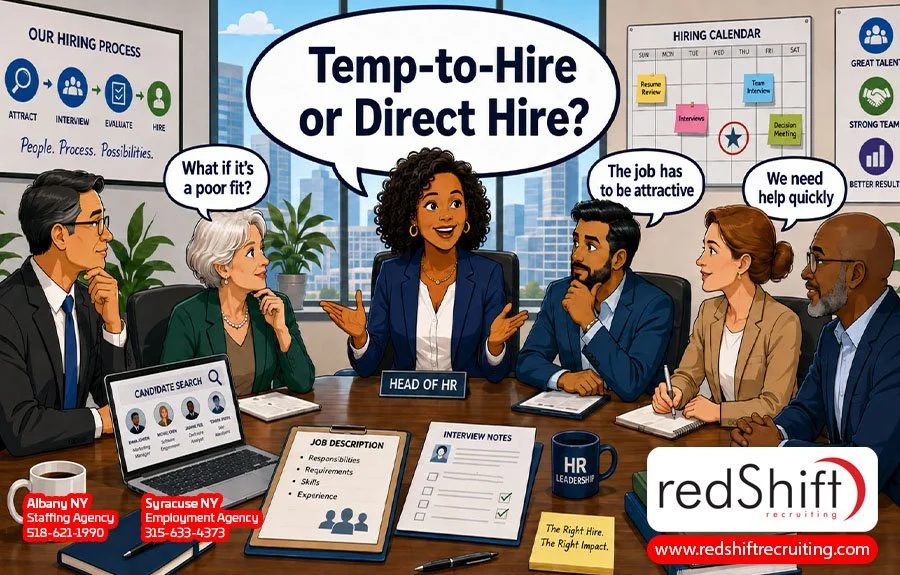
The hiring manager wants time to make sure the new employee is the right fit before making a long-term commitment. After all, when a hire leaves or doesn’t work out, the company loses the time and resources already invested in recruiting, onboarding, and training—and has to start the process over again. The team leader has a different concern: they need help quickly and are wondering whether a temp-to-hire arrangement could make it harder to attract candidates who prefer permanent opportunities.
So when does temp-to-hire make sense, and when is direct hire the better choice? The answer depends on the role, the available candidate pool, your company’s current business needs, and what both the employer and candidate still need to learn before moving forward. When comparing temp-to-hire vs. direct hire, the goal is to choose the structure that fits the situation rather than defaulting to whichever option feels safer, faster, or more familiar. This guide breaks down what to look at before you decide.
What Is the Difference Between Temp-to-Hire and Direct Hire?
Employers typically choose among three staffing models: temporary, temp-to-hire, and direct hire. Before deciding which hiring model is the better fit, it helps to understand how they differ. In direct hire roles, the candidate is hired as a permanent employee. The company may handle the search internally or work with a staffing agency, but either way, the person joins the company's payroll immediately.
In a temp-to-hire role, the worker begins in a temporary position with the expectation that, if they do well and both sides want to move forward, the role will convert to a permanent position. The employer should already have a real long-term opening to fill; the purpose of the temporary period is to give both sides time to confirm that the arrangement works before making a permanent commitment.
While employers can manage temp-to-hire arrangements themselves, many work with a staffing agency, which typically serves as the employer of record during the temporary portion of the assignment. The worker is placed on the recruiting agency's payroll and remains its employee until converting to the client company.
Unlike temporary staffing, temp-to-hire should begin with a genuine expectation that permanent employment is available. While no employer can guarantee that a particular worker will ultimately be hired, the intention should be to fill the role permanently if things go well.
In contrast, temporary roles are the more accurate choice for short-term positions created to cover an employee absence, meet seasonal demand, or complete specific project work. Situations involving uncertain demand are usually better presented as temporary as well, since the company may ultimately conclude that no long-term position is needed. If it's not yet clear whether the job will be needed in the future, present it clearly as temporary with the possibility of becoming permanent if the need continues.
No hiring model is inherently better or fully eliminates hiring risk. Each works best in different situations, depending on the role, the candidate market, and what both sides need from the hiring process.
When Temp-to-Hire May Be the Better Fit
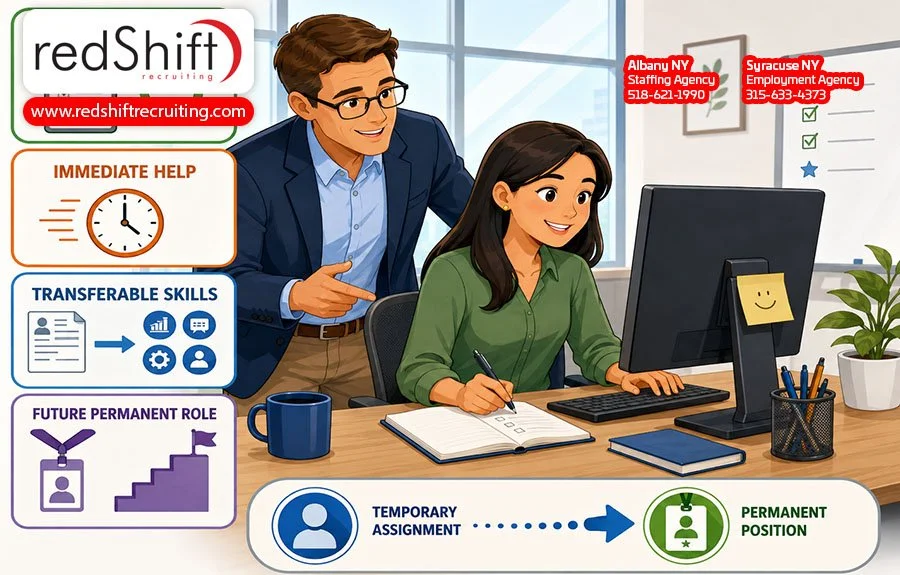
Employers may choose temp-to-hire when they know they need someone permanently, but both sides would benefit from seeing how the role and working relationship function in practice before making a long-term commitment. This staffing model may be a better fit when:
Important qualities are difficult to judge in an interview. Reliability, judgment, communication, accuracy, learning ability, and other qualities can be easier to assess through actual work done over a temporary period. This gives the employer a chance to observe performance before making a permanent decision, using job-related criteria rather than relying only on interviews or vague ideas about culture fit.
A candidate has strong transferable skills. Temp-to-hire can give someone with an unconventional background an opportunity to demonstrate that they can do the required tasks, even if they don't have a traditional career path or check every box on the job description.
Some parts of the role are still taking shape. The core need is clear, but the role may evolve once someone is in the position and the employer sees what the job actually requires.
Conversion depends on a known, reasonably certain milestone. The permanent need is established, but the company may be waiting for a new budget cycle to begin, final administrative approval, or another internal step before the employee can be added to permanent headcount. The employer should be clear with the candidate about where the role stands before the assignment begins.
What Employers Should Consider Before Choosing Temp-to-Hire
Temp-to-hire can provide useful flexibility, but it cannot compensate for problems with the job itself. If the pay is below market, the duties are unclear, onboarding is weak, or the manager is difficult to work with, treating temp-to-hire as a trial period will not solve the underlying problem. Those issues can all contribute to a poor fit and make it difficult to keep strong employees on board.
Cost is another factor to consider, but it should not drive the decision. Temp-to-hire is not automatically less expensive than direct hire, especially if the employer manages the arrangement internally. However, working through a staffing agency can reduce some of the administrative burden and employment-related costs the employer would otherwise take on directly. While the agency’s hourly rate is higher than the employee’s wage, it covers much more than wages alone—payroll administration and taxes, workers’ compensation and unemployment costs, employee support, and other employment-related responsibilities and expenses. For many companies, the potential savings, convenience, and reduced risk can make temp-to-hire an attractive option. Even so, price and convenience alone should not determine whether a company chooses temp-to-hire. The hiring model should fit the role first; assignment length, hiring expense, agency terms, and any conversion fee can then be considered as part of the total cost.
Another key consideration is whether candidates will see the value of the arrangement the same way as the company. Some people are open to temp-to-hire opportunities because they want to get their foot in the door, gain experience, explore a new industry, or evaluate an employer before making a commitment. Others may be less willing to consider a temporary role, especially passive candidates who are not actively looking for work or candidates comparing multiple permanent offers. Employers, therefore, need to consider not only the flexibility of a temp-to-hire arrangement, but whether it will help or hurt their ability to reach qualified candidates.
When Direct Hire May Be the Better Fit
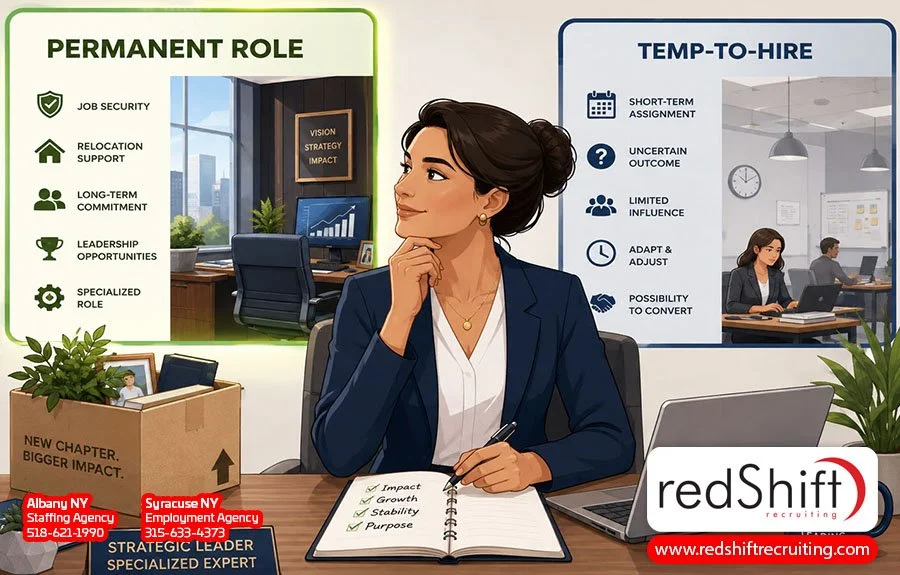
Direct hire generally makes sense when the company already knows what it needs and is ready to make a long-term commitment. It may be the stronger option when:
The role is clearly defined and permanent. The responsibilities, required experience, and long-term need are already well established, and the company expects the position to remain important to its long-term growth.
The candidate market is competitive. When demand for a skill set is high and there are fewer qualified candidates actively looking for work, employers often need to recruit passive candidates who are already in stable jobs. Those candidates may be more willing to leave for another direct-hire role than for a temporary opportunity where permanent employment isn't guaranteed.
The role is difficult to recruit for. Leadership roles, specialized positions, and other hard-to-fill roles may require a permanent commitment to attract candidates with the level of expertise the job demands.
The candidate has to make a major commitment too. Relocation, leaving a stable employer, or making another significant career move can make permanent status especially important for employees seeking job security.
The role requires long-term trust and integration from day one. An employee may need access to sensitive systems, confidential information, proprietary processes, or leadership responsibilities almost immediately. If the company is already positioning that person as a long-term employee, direct hire may make more sense than beginning with a temporary arrangement that could end after a short period.
Reasons to Pause Before Choosing Direct Hire
Direct hire works best when the employer is confident in the role, the need, and the candidate profile. If any of those pieces are still unclear, moving immediately to a long-term hire may be premature. In such situations, temp-to-hire can give both sides more information before making an informed decision.
The details of the role are not fully settled. If responsibilities, reporting structure, workload, or scope are still being worked out, the company risks making a permanent hire for a role that ultimately looks different from the one it needs.
The interview process doesn't tell you enough. If success depends heavily on qualities such as judgment, adaptability, reliability, communication, or learning ability, it may be difficult to evaluate candidates without seeing them in action.
The strongest candidate may not fit the usual profile. If someone has the right transferable skills but lacks the expected title, industry background, or credentials, temp-to-hire can give both sides a chance to see how well that experience translates to the role.
The realities of the job may take time to experience. A candidate can understand that a position requires frequent travel, weekend work, an unusual schedule, a demanding environment, or other challenging conditions without knowing what those requirements will be like day to day. Temp-to-hire gives both sides time to see whether the arrangement is realistic and sustainable long-term.
How a Staffing Agency Can Help
Temp-to-hire or direct hire can both fit an employer's staffing needs. A recruiting agency can help them determine which hiring model best fits the role, candidate market, and business need before the search begins. It can also clarify qualifications, compensation, drug screening or background check requirements, and conversion expectations so candidates understand exactly what they are considering.
During the assignment, many staffing agencies stay in regular contact with both the employee and client company, helping identify concerns and address issues early. They can also advise employers on how different hiring models may affect candidate interest, recruiting timelines, and the overall search, helping them avoid choosing the wrong hiring model for their needs. Ultimately, whichever you choose, the goal is the same: create a hiring process that gives both the employer and candidate a clear path toward a successful hire.
Frequently Asked Questions
Does Temp-to-Hire Guarantee Permanent Employment?
No. A temp-to-hire role should represent a genuine opportunity for long-term employment, but no employer can guarantee that a specific worker will ultimately convert. Performance, business conditions, budget, and the employee’s own decision can all affect whether a permanent offer is ultimately made.
However, employers should clearly communicate their expectations for the role. If there is no real intention to make a permanent hire, the position is generally better structured as temporary or seasonal work rather than temp-to-hire.
How Long Should a Temp-to-Hire Assignment Last?
The appropriate length of a temp-to-hire assignment is typically a few hundred hours, but may vary depending on the role, what the employer needs to evaluate, the staffing agreement, and any applicable employment or benefits requirements.
Employers should establish an expected conversion timeline upfront. If the worker remains in the temporary role longer than expected, explain why and set a new target. If performance is delaying conversion, tell the employee what needs to improve and give them a reasonable opportunity to address it.
Can an Employer Convert a Temp-to-Hire Employee Early?
Often, yes. If both sides are ready to move forward, there may be no reason to wait until the originally expected end of the assignment. Employers working with an agency should review the staffing agreement for any required hours, notice periods, conversion or placement fees, or other relevant terms before making the change.
Can the Same Type of Role Be Temp-to-Hire or Direct Hire?
Yes. Job title alone does not determine the right hiring structure. The same position may be filled through temp-to-hire in one company and direct hire in another depending on the candidate market, urgency, role clarity, business conditions, and the employer’s hiring risk tolerance.
The right choice depends more on the specific situation than on whether the job is entry-level, experienced, technical, administrative, or a specialized role.
Does Temp-to-Hire Reduce Hiring Risk?
It can help employers reduce hiring risk by revealing things that interviews alone may not show, such as day-to-day performance, reliability, communication, and how the working relationship functions in practice. When a staffing agency is involved, temp-to-hire can also lower the employer’s exposure by limiting some upfront costs and administrative commitments if the hire does not work out. However, it does not eliminate all risk and may introduce tradeoffs of its own, such as narrowing the candidate pool or delaying a permanent hire.
Temp-to-hire works best when it addresses a specific uncertainty in the role or hiring process, not simply as a way to postpone making a permanent commitment.
Conclusion: Choose the Hiring Model That Fits the Situation
So which hiring model is best for your job? Temp-to-hire may be the better fit when there is a real permanent opening, but both sides would benefit from seeing how the work, role, and relationship operate in practice. On the other hand, direct hire often makes more sense when the position is well defined, the candidate market is competitive, or the role requires a strong commitment from both sides.
The right choice depends on the role, the available talent, your company’s current needs, and whether both sides are ready to make a permanent decision. The goal is not to avoid commitment at all costs, but to choose the hiring structure that gives both the employer and candidate the best chance of making a strong long-term hire.

Article Author:
Ashley Meyer
Digital Marketing Strategist
Albany, NY