
Future Workforce Planning: How Employers Can Redesign Hiring for a Changing Workplace
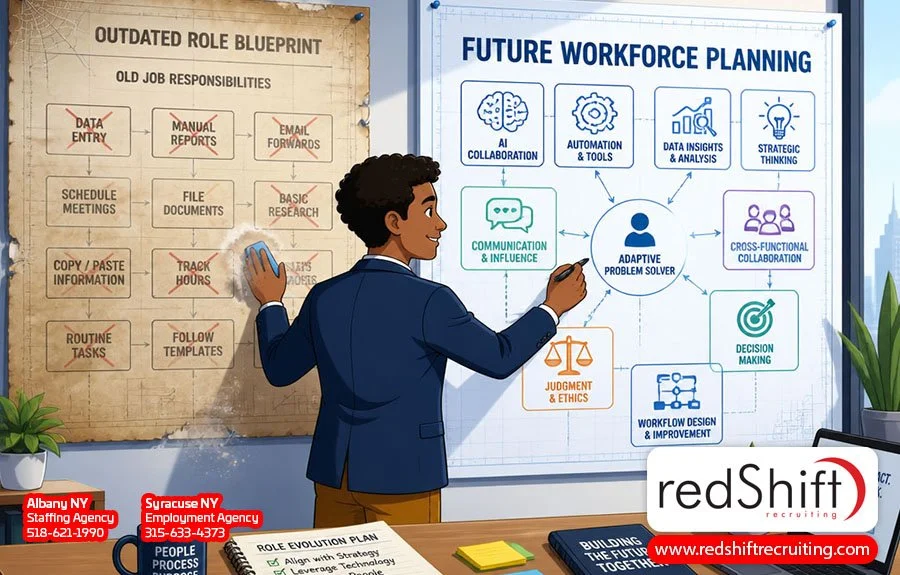
Every hiring decision begins with an assumption: the job description reflects a genuine and current need within the company.
It probably did when the role was first created. The responsibilities were carefully defined, organizational needs discussed, salary benchmarks reviewed, and a job title thoughtfully chosen. But that may have been five, 10, or even 20 years ago, and work does not stand still. Customer needs evolve. Technology advances. Business priorities shift. Gradually, even well-designed positions can drift away from what the organization actually needs.
Today, those changes are happening faster than ever. Modern companies must adapt to a fluctuating business environment shaped by market pressures, changing demographics, new business models, evolving customer expectations, and emerging technologies. Artificial intelligence is one of the most significant of those technologies, changing how many tasks are performed and how work is organized. In some roles, this is dramatically reshaping day-to-day responsibilities and altering entire workflows. In others, the changes are more gradual, but still clearly present.
All this puts employers in a challenging position. How do you plan your workforce around a future that feels so uncertain?
Faced with rapid change, it can be tempting to swing too far in either direction. One approach is to assume very little has changed and continue hiring for jobs exactly as they've existed for years. The other is to redesign or eliminate positions based on assumptions about how work may be done in the future. The first risks falling behind as work continues to evolve; the second risks solving the wrong problem by changing roles before fully understanding the work itself. The better approach starts with understanding the work before redesigning the workforce.
Start With the Work, Not the Job Title
Effective future workforce planning is a strategic process that starts by looking beyond job titles and evaluating whether each role still aligns with the organization's current and future needs.
Many operational workforce planning efforts naturally begin with organizational charts, reporting relationships, headcount, and open positions. Those are all important, but they don't always reveal whether the work itself is organized as effectively as it could be. Questions like these can help:
Does this role still support our current business strategy?
Does it still fit our organizational structure?
Do current staffing levels still match the organization's workload and priorities?
Does the position still need to exist in its current form?
When those questions go unasked, businesses risk organizing work inefficiently, hiring for outdated job descriptions, or expecting employees to carry responsibilities that no longer belong together.
Whether a company is planning for growth, reviewing its organizational structure, strengthening the succession planning process, or filling an open position, long-term business success depends on understanding not just what roles you have on your team, but how those roles fit within the company structure.
Evaluate the Responsibilities Within the Role
If a role still belongs in your workforce plan, the next question is whether its responsibilities still make sense.
Most jobs are collections of individual tasks, and, over time, those tasks naturally evolve. Technology changes how work gets done, while customer expectations reshape how companies deliver products and services. Teams expand, contract, and reorganize. Experienced employees retire, taking years of institutional knowledge with them. New products, services, and business goals change what employers need from their employees, while talent shortages or budget constraints often require them to accomplish more with limited resources. Because those changes rarely happen all at once, they often go unnoticed, but they can significantly change the work a position is expected to perform.
That being said, not every role needs a complete overhaul. In many cases, only a handful of responsibilities need to change, and often the biggest improvements come from relatively small adjustments. Reassigning one recurring responsibility, eliminating an outdated task, or changing how work flows between two positions can improve efficiency without changing job titles or headcount.
Start by asking questions like:
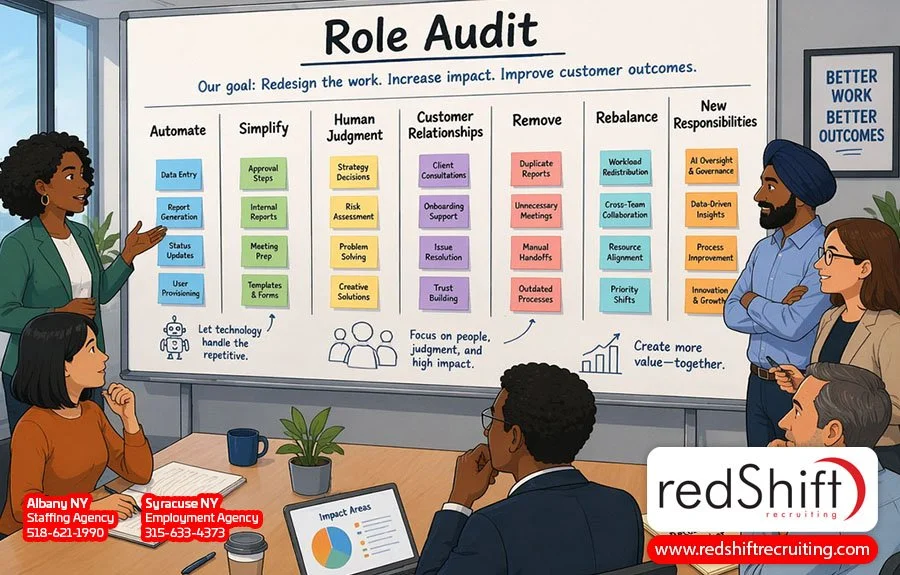
Which tasks are repetitive, rules-based, or could be streamlined through automation or technology?
Which responsibilities require judgment, relationship management, or accountability?
Which activities consume significant time without contributing enough to business outcomes?
How have technology, staffing, customer expectations, or internal processes changed this role?
Which responsibilities should be removed, added, combined, or reassigned?
For example, reporting may be largely automated, but interpreting the results and deciding what actions to take still requires human judgment. Likewise, an administrative role may slowly absorb work from across the organization: a report here, a scheduling task there, a few purchasing requests, a handful of special projects. Individually, none of those added responsibilities seems significant, but together they can completely reshape the position, leaving little time for the work the role was originally hired to do.
When these changes accumulate over time, they're easy to overlook. Periodic role reviews help employers identify them before they begin affecting productivity, hiring, or team performance. They often reveal opportunities to improve resource allocation by moving work to a different role, redistributing responsibilities across the team, or removing tasks that no longer have value. In some cases, they also uncover mismatches between current workforce capabilities and changing job requirements, giving companies time to address skills gaps before they become hiring challenges.
As part of a structured workforce planning process, these reviews help employers organize work more effectively, build positions around the tasks that actually need to be done, and improve operational efficiency.
Decide What Should Stay Human
Now that you know how the work should be organized, decide which responsibilities should remain clearly owned by people. Technology can support many aspects of modern work, but some responsibilities still require people to exercise judgment, build relationships, and take ownership of the outcome. These typically include:
Making judgment calls when there isn't a clear answer.
Handling exceptions that fall outside established processes.
Building trust with customers, candidates, employees, or business partners.
Prioritizing competing requests and shifting priorities.
Communicating across teams.
Making ethical or sensitive decisions.
Remaining accountable for the final outcome.
Technology can assist with many of these activities, but someone still needs to interpret the information, validate the results, and accept responsibility for the final decision. The goal isn't to limit tools where they can be useful, but rather to make thoughtful decisions about where people, processes, and technology each contribute most effectively instead of simply leveraging technology wherever possible.
Those decisions don't just shape how work gets done—they also define what employers should be looking for when they hire. Knowing which responsibilities require human judgment, accountability, and relationship management makes it much easier to define the skill set the role truly requires.
Hire for Capability, Not Just Credentials
After the responsibilities of the role are clearly defined, employers are in a much better position to determine what qualifications, experience, and skills actually matter. This gives hiring managers a clearer picture of the right talent for the position before they begin recruiting.
Credentials and technical qualifications remain essential in many professions, particularly where licensing, regulatory requirements, or specialized technical knowledge are involved. At the same time, the qualifications attached to a role often grow over the years. Degrees, certifications, software expertise, and years of experience may be added as responsibilities evolve, but they're not always reevaluated. Reviewing those requirements periodically helps employers distinguish between qualifications that are truly necessary and those that simply reflect how the role looked years ago. It also highlights evolving skill demands and the emerging skills that are becoming more important as technology, workflows, and business needs continue to change.
This is one of the strengths of skills-based hiring. Instead of treating every requirement as equally important, employers can evaluate whether candidates have demonstrated the abilities needed to perform the work successfully. In some cases, that capability may come through a particular degree or certification. In others, it may be demonstrated through relevant experience, project work, or another path. Regardless, every hiring requirement should have a clear purpose and connect directly to the work the role is expected to perform.
Update How You Evaluate Candidates
Candidates can only be evaluated fairly if the role itself has been clearly defined. Updated job descriptions, structured interviews, and practical assessments help ensure every candidate is measured against the same expectations.
Candidates now have access to many of the same AI tools employers do, making resumes, cover letters, writing samples, and even interview preparation less reliable as the sole measure of a candidate's abilities. Structured interviews, practical exercises, and consistent evaluation criteria provide a much clearer picture of how candidates think, solve problems, and apply their knowledge in realistic situations.
Employers should also make sure hiring managers understand what the organization is looking for and how to evaluate it consistently. That may mean updating interview guides, incorporating practical job-related exercises, or training interviewers to assess judgment, problem-solving, adaptability, communication, and the appropriate use of technology alongside technical ability.
A thoughtful evaluation process helps employers look beyond first impressions and better identify high-potential employees who demonstrate the skills needed to succeed even as job descriptions continue to change.
Prepare Your Workforce for Change
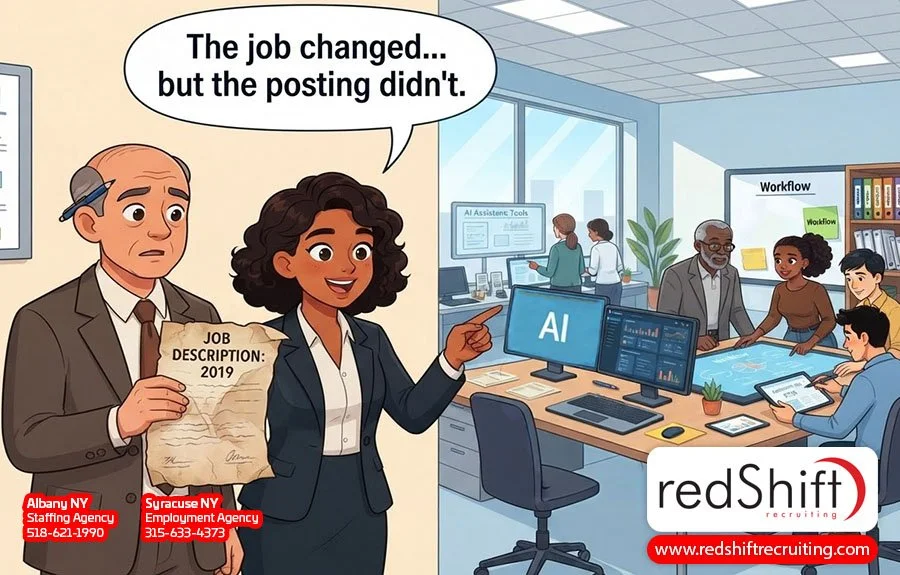
Hiring is only one part of a robust workforce plan. Organizations also need to prepare the employees they already have for changing responsibilities, new technologies, and different ways of working. An effective talent management strategy helps companies build on employees' existing skills while preparing them to adapt as the work they do changes.
To build an effective talent strategy:
Communicate how new technologies are expected to support the workforce and how they may affect specific roles and responsibilities.
Cross-train employees as workflows evolve and responsibilities shift.
Encourage employees to identify repetitive work, process improvements, and opportunities to reorganize responsibilities when business needs change.
Capture institutional knowledge before experienced employees retire.
Provide opportunities for employees to develop the niche skills most relevant to their jobs.
Align performance management with the capabilities the organization wants employees to develop, including judgment, collaboration, adaptability, and continuous learning.
These efforts become even more important as businesses respond to changing employee expectations, retirements, and ongoing workforce shifts. Organizational change is generally more successful when employees understand why changes are being made, how their roles may be affected, and how they're expected to contribute going forward. Involving team members in those conversations can also provide valuable insight into how work is actually done and where improvements can be made while strengthening employee engagement and morale.
Finally, developing talent internally gives organizations greater flexibility as job descriptions evolve. Some changes will still require external hiring, but others can be addressed by expanding the expertise of the existing team. Workforce planning should also consider the full range of talent options available, whether that's a permanent employee, a temporary or contract professional, contingent talent, or a freelancer. Matching the talent source to the business need can help employers respond more effectively to changing labor market conditions while reducing unnecessary hiring pressure.
Build for Adaptability, Not Constant Replacement
Effective workforce planning isn't a one-time project. Unlike traditional workforce planning models, which often focus on filling vacancies as they arise, forward-thinking approaches successfully build regular review into their planning process instead of waiting until a major disruption forces change. New technologies, local and global market trends, changing customer expectations, retirements, talent gaps, and shifts in the business environment will continue reshaping how companies operate, which will in turn inform workforce planning strategies.
The organizations that adapt most successfully don't treat workforce planning as a one-time project or something they revisit only when there's a vacancy. Instead, they build regular review into their planning process so positions, responsibilities, and staffing strategies can evolve alongside the business.
Looking ahead is just as important as responding to today's needs. Leadership that regularly reviews current workforce planning strategies to identify future talent needs, understand workforce skill requirements, align talent acquisition strategies, and support market expansion efforts can build an operating model that incorporates future scenario planning with workforce intelligence. Instead of reacting to every new staffing challenge or organizational change, they already have a framework for evaluating work, developing employees, and making thoughtful hiring decisions. Over time, that adaptability becomes a meaningful competitive advantage and a key measure of long-term workforce planning success.
Frequently Asked Questions
Why Is Strategic Workforce Planning Important?
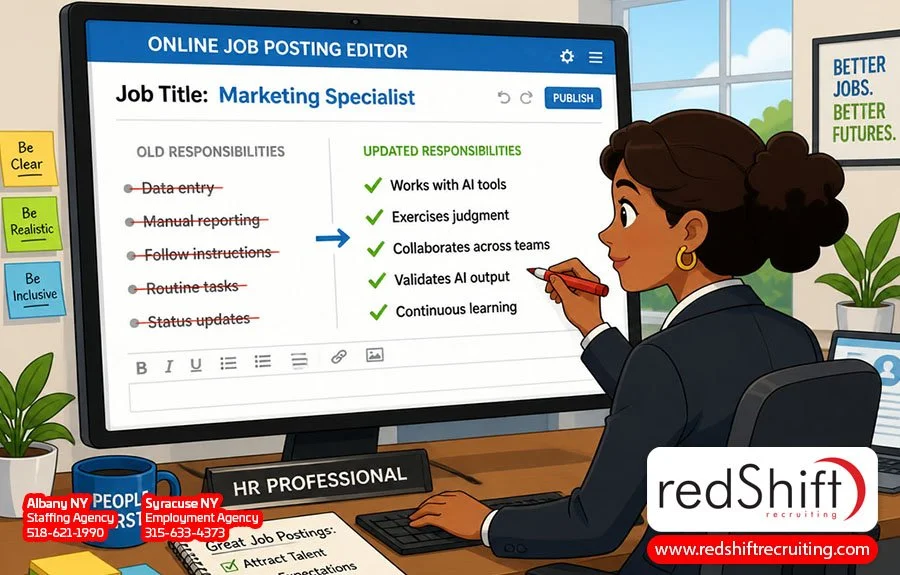
Strategic workforce planning is important because it helps employers connect hiring, training, role design, and employee development to real business objectives. Instead of reacting only when a position opens, employers can evaluate whether roles still fit the company’s needs, whether employees have the right skill sets, and where future hiring or training may be needed. An ongoing process ensures workforce planning stays aligned as priorities evolve, helping business leaders prepare for multiple future scenarios instead of reacting after the change has already occurred.
How Can Employers Tell Which Tasks Should Be Automated?
A good rule of thumb is to start with tasks rather than job titles. Repetitive, rules-based, and highly standardized work is often a good candidate for automation or technology support, while work involving judgment, relationship management, problem-solving, or accountability typically benefits from continued human oversight. The goal is to improve how work is organized, not simply automate as much as possible.
Should Employers Invest in Workforce Planning Software?
Not every organization needs sophisticated workforce planning software. Many small and midsize businesses can identify practical improvements simply through regular conversations between managers, consistent workforce planning, and thoughtful hiring practices. As companies grow, however, workforce planning tools may help anticipate staffing needs, consolidate workforce data, assist in skills gap analysis, and identify emerging trends and future growth opportunities.
Larger organizations may also use workforce intelligence and predictive analytics to better understand staffing patterns, turnover risks, retirement timelines, and future capability needs. Data-driven workforce planning ensures leaders have valuable information available, but data should support decision-making—not replace experience, judgment, or organizational context.
The best systems organize information and enable organizations to make more informed decisions, but leaders still need to apply their own knowledge and expertise to align workforce strategies with business objectives.
Should Every Position Be Reviewed Before It's Filled?
Not necessarily. However, positions that haven't been evaluated in several years, have accumulated new responsibilities, support changing business priorities, or are being filled after a long-tenured employee leaves are often good candidates for review. Even a brief discussion about how the work has changed can uncover opportunities to improve efficiency, update qualifications, or reorganize responsibilities before recruiting begins.
Should Employers Train Current Employees or Hire New Talent?
In many cases, the answer is both. Existing employees often have valuable institutional knowledge and can adapt successfully when given the right training and support. At the same time, hiring new employees can introduce specialized expertise or fresh perspectives that strengthen the team.
The most effective talent strategy combines internal development with external hiring. As part of a broader strategic workforce planning process, businesses should regularly evaluate changing responsibilities, identify opportunities to develop current employees, and recruit new talent when skills are genuinely missing rather than assuming every new challenge requires an entirely new position. By making workforce planning a strategic process instead of a reactive one, employers can respond to change gradually instead of making major staffing decisions under pressure.
Conclusion: Keep Workforce Planning Aligned With Business Strategy
Workforce planning is no longer something organizations can revisit only when there's an opening to fill. As work continues to evolve, regularly evaluating roles, developing employees, and making thoughtful hiring decisions becomes part of running the business—not just managing recruitment.
Organizations that build those habits today will be better prepared for tomorrow's challenges, whatever they may be, while consistently improving workforce agility. Over time, that adaptability becomes an invaluable competitive advantage, strengthening their workforce strategy and helping them achieve their long-term business objectives.
Every hiring decision still begins with an assumption. The difference is that business leaders practicing effective workforce planning regularly challenge those assumptions as work evolves.

Article Author:
Ashley Meyer
Digital Marketing Strategist
Albany, NY